
A multi-generational HVAC company generating $20M+ a year had been flat for years. After tying technician pay to metrics like average ticket size and callback rate, revenue grew from $23M to $26M, adding an estimated $1M in cash flow.
Plenty of trades businesses plateau for reasons everyone can see: bad reviews, a competitor undercutting on price, a service area that's maxed out. Those problems are at least easy to name, and easy to fix once someone finally names them. The harder version is the company that looks fine from the outside. Trucks are rolling, the phones are ringing, the books close in the black every month, and yet revenue has landed in almost the same place for years running. Nobody can point to a single cause. There's no crisis to fix, just a number that won't move, quarter after quarter, no matter how hard the team seems to be working.
That was the situation for a long-established regional HVAC company generating more than $20 million a year in revenue. This wasn't a startup trying to find its footing. It was a generational business, the kind that's been serving the same region for decades, with a name homeowners recognize and a reputation built over multiple owners or multiple generations of the same family. By most measures that matter in the trades, brand trust, technician headcount, call volume, this company had already won. And yet growth had stalled, sitting close to flat for a stretch of years that leadership could no longer explain away as a slow season.
The Quiet Ceiling Most Established HVAC Companies Hit
Here's the pattern that shows up again and again in legacy trades businesses, and it's worth naming because it's rarely discussed directly. A company grows for years on the strength of reputation and demand alone. Leads come in, techs get dispatched, jobs get closed, and revenue climbs because the business is simply good at what it does. Then at some point, usually once the company is large and established, that organic growth engine runs out of runway. The market isn't infinite. Reputation alone doesn't make an average ticket bigger or a callback rate lower. And technician pay, in a lot of these companies, was never built to push on those levers in the first place.
Most techs at established HVAC companies are paid some combination of hourly wages and a flat bonus structure, maybe a spiff here and there, maybe a year end bonus tied loosely to how the whole company did. It's simple to run, and it's fair in a basic sense. But it doesn't tell an individual technician anything about how their specific day-to-day choices, upselling a repair versus a patch job, following up properly so the customer doesn't call back, connecting a maintenance membership, actually move the business forward. When pay isn't wired to performance, growth stops being something the whole team is pulling toward. It becomes something ownership hopes happens on its own.
That's effectively what had happened at this company. Leadership had watched revenue sit close to flat for a while, not because the business was struggling, but because there was no real lever anyone could pull. The company had a great reputation and a large, capable team, but it didn't have a system that connected what technicians did on a call to what the business earned, or to what those technicians took home. Without that connection, performance had nowhere to go but sideways. This is a version of a problem more and more owners are starting to address with structured HVAC incentive programs that tie pay directly to the metrics that actually move revenue.
It's a pattern worth sitting with if you run a shop that's been around for a while and has quietly stopped growing. Flat revenue doesn't always mean something is broken. Sometimes it means the business has simply outgrown a pay structure that made sense ten or twenty years ago, back when the company was smaller and reputation alone was enough to fill the schedule. At $20 million a year, that's no longer true. Growth from that point forward has to be engineered, not assumed.
The company's leadership eventually made a change that sounds simple on paper but is rarely implemented well in the trades: they tied technician pay directly to the metrics that actually drive the business, and gave themselves real-time visibility into how those metrics were trending. They did this by adopting ShareWillow's incentive platform, which syncs with the field service software the company already used to run its day-to-day operations, the same system dispatching techs and tracking every invoice, and turns that raw operational data into incentive pay calculated automatically.
Why Visibility Changes Behavior Faster Than a Pep Talk
Before the change, ownership had a general sense of how the business was doing, but not a clear, current read on the specific metrics that predict revenue growth. Average ticket size. Callback rate. The kind of numbers that live somewhere in a field service platform's reporting but rarely get surfaced in a way that connects to what an individual technician earns that week. Once those numbers were tied directly to pay and made visible in real time, two things happened at once, and both of them mattered more than any single policy change the company had tried before.
First, technicians could finally see the connection between their own daily decisions and their paycheck. A tech who understands that a properly diagnosed repair, a thorough explanation of options, and a clean follow up all show up in their own incentive pay has a completely different reason to care about ticket size and callback rate than a tech who's just trying to get through the day's calls on an hourly rate. That's not a motivational trick. It's basic alignment. People respond to what they're measured and paid on, and if the only thing a pay structure measures is hours worked, hours worked is what you'll get more of, not necessarily better outcomes per hour.
Second, and just as important, ownership got a dashboard instead of a hunch. Instead of waiting for a monthly or quarterly review to find out whether average ticket size was trending up or down, leadership could see it in something close to real time, broken out in a way that showed which levers were actually moving and which weren't. That's the part that tends to get underrated when people talk about incentive pay. The pay plan itself matters, but the visibility it forces into existence matters just as much. You can't manage what you can't see, and most trades businesses running on hourly plus flat bonus structures simply can't see performance at the level of an individual metric, let alone an individual technician.
This is the general mechanic behind how ShareWillow's performance-based pay software works across the trades companies it serves. It connects to ServiceTitan, Housecall Pro, or whatever platform a company already runs its operations on, pulls the metrics that matter for that specific business, whether that's average ticket, callback rate, membership sales, or something else entirely, and calculates incentive pay automatically based on those numbers. No spreadsheets reconciled by hand at the end of the month, no guessing at whether a bonus check is even correct. The technician sees their numbers. Ownership sees the trend lines. And because the calculation runs off the same system that's already tracking every job, there's no separate reporting process for anyone to maintain.
None of this required the company to reinvent what it does. The trucks, the techs, the service area, the reputation, all of that stayed exactly the same. What changed was the wiring between performance and pay, and the visibility that wiring created for leadership. In a business that had already proven it could win the reputation game, that turned out to be the missing piece. It's a reminder that a lot of untapped growth in the trades isn't sitting in some new market or new service line. It's sitting inside the existing team, waiting for a pay structure that actually points at it.
Profit sharing
made simple.
Give your team a stake in the company’s success. ShareWillow helps you create and manage profit-sharing programs that motivate employees and drive business results.
What $3 Million in New Revenue Actually Looked Like
The results showed up where they matter most: on the top line. Since adopting the platform, the company's annual revenue grew from $23 million to $26 million, an increase of roughly $3 million. ShareWillow's founder, who worked directly with the company on the rollout, estimated that this shift added approximately $1 million in incremental cash flow to the business. For a company that had been sitting close to flat for a while beforehand, that's not a marginal bump. It's the kind of jump that usually only comes from opening a new location, winning a major contract, or making an acquisition. This one came from changing how existing technicians were paid for the work they were already doing.
The context is what makes the number worth paying attention to. This wasn't a small shop turning around a rough patch. It was a company already generating over $20 million a year, already established, already respected in its market. Businesses at that scale don't typically find another 13 percent of revenue sitting around waiting to be picked up. The fact that this one did, and that leadership could trace it back specifically to giving technicians clear, real-time visibility into metrics like average ticket size, says something about how much room for growth can be hiding inside a pay structure that was never built to reward the right behavior. It also says something about how much a business can leave unclaimed simply because nobody had a clean way to measure it before.
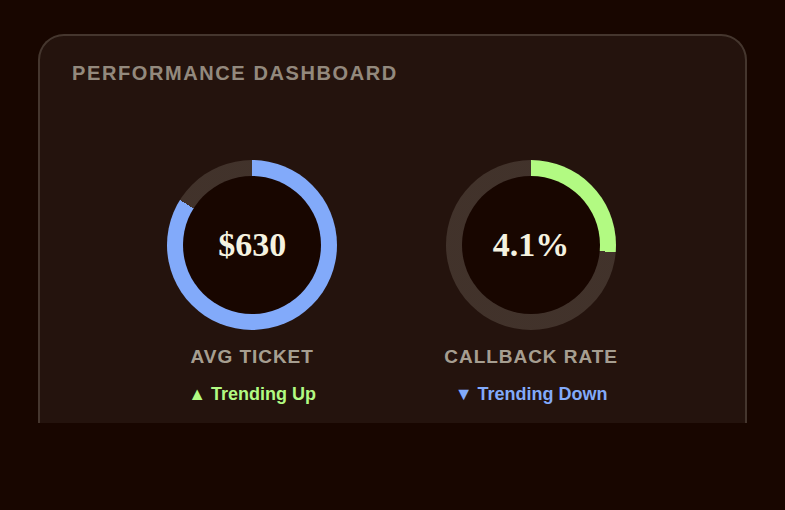
It also says something about the ceiling a lot of established trades businesses assume they've hit. When a company has been flat for a few years, it's easy to conclude that's just what maturity looks like, that the easy growth has already happened and what's left is defending market share. This story suggests otherwise, at least for companies where pay and performance were never properly connected in the first place. The plateau wasn't a market limit. It was a visibility limit. Once leadership could see the metrics that mattered and technicians were paid based on them, growth that had been sitting untapped for years started showing up in a single fiscal year.
This isn't unique to HVAC, either. The same disconnect between pay and performance shows up across skilled trades teams in plumbing, electrical, and facilities services, anywhere a technician's daily decisions quietly compound into the company's bottom line without anyone measuring the connection. The mechanics change slightly by trade, but the underlying problem is the same: hourly and flat bonus pay structures don't give anyone, tech or owner, a reason to focus on the handful of metrics that actually drive growth.
For an owner or facility manager looking at a business that's been steady but stagnant, the lesson here isn't complicated. Revenue that's been flat for a while doesn't mean the business has topped out. It might just mean nobody's technician pay is pointed at the metrics that would move it. Fixing that wiring doesn't require a bigger service area or a new product line. Sometimes it just requires paying people for the outcomes that already matter, and finally being able to see them.
Looking ahead, the companies that pull away from the pack in the trades over the next few years probably won't be the ones with the best reputations. Reputation gets a company to $20 million. What comes after that increasingly depends on whether pay, data, and performance are actually connected, or whether they're just sitting in the same building.
Related reading
Conclusion
A $23M HVAC company sat flat for years until tying pay to performance metrics added $3M in revenue and roughly $1M in cash flow.
Create incentives
that
drive results
You shouldn't need complex equity plans to align your team. ShareWillow makes it simple to create transparent profit-sharing programs that motivate employees and grow your business.

Incentive plans to help
small businesses thrive.
.png)
"I was able to leverage the knowledge of the ShareWillow team to learn how other companies were designing their bonus plans. The template was extremely helpful."

Brian Tustin
Owner, First Rate Movers
