
A window treatments retailer's sales team saw two different numbers for the same commission, one already paid through payroll and one still showing as owed inside their incentive software, plus a display bug that told a rep short of her goal she was owed a $600 bonus she hadn't earned. Here's how consolidating to one threshold-gated quarterly bonus program fixed both problems for good.
An incentive plan that pays a little less than a rep expected is annoying. An incentive plan that shows two different numbers for the same paycheck is corrosive. Reps start doing their own math on the side, comparing notes with coworkers, and asking managers questions nobody can answer cleanly. Once that happens, it doesn't matter how generous the plan actually is. People stop trusting the number, and once trust is gone, the incentive program stops motivating anyone.
Most of the time this isn't malicious. It's a leftover plan nobody deleted, a spreadsheet formula that got copied wrong, or a KPI that pays out partial credit when it shouldn't. Small stuff, technically. But in a business where commission is a meaningful chunk of someone's take-home pay, small stuff turns into rent-check stuff fast.
That's exactly what happened at a residential window treatments and blinds company with an in-house sales team of about twenty reps selling and installing custom blinds, shades, and shutters for homeowners. The team was hitting their numbers. The company was growing. And yet every pay period, someone on the sales floor was confused about what they were actually owed.
Two Commission Lines, One Pool of Money
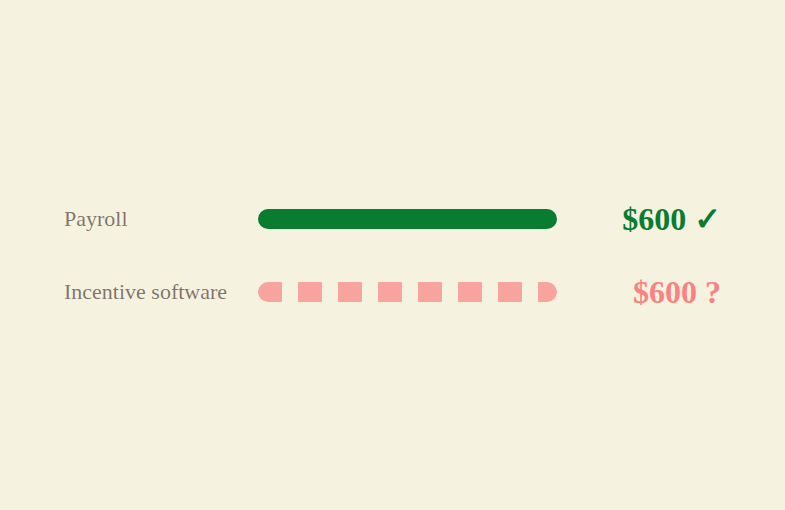
The root problem was structural. Reps earned a standard commission on completed sales, and that commission was calculated and paid out through the normal payroll process, the same way it had been for years. Separately, the company had rolled out an incentive-plan software platform to track bonus programs and sales performance. Somewhere in that transition, the original commission structure got mirrored inside the new software as its own line item, still showing as pending or owed.
The result was that the exact same commission dollars showed up twice. Once as a payroll line that had already been paid out. Once as a software line that looked like a second, separate amount still coming. Nobody had built this on purpose. It was a leftover from migrating systems, and nobody had gone back to delete the redundant plan once payroll took over the calculation.
One of the reps put it about as plainly as it gets: "I don't know if I'm about to get paid again or if I already got paid and this is just sitting there for no reason. I stopped trying to figure it out and just started asking my manager every single time."
That's the real cost of a duplicate line. It's not that anyone got overpaid or underpaid on this particular issue, it's that every single rep had to treat their own commission statement as unreliable. Managers spent hours each pay cycle fielding the same question from different people, and the honest answer was usually some version of "ignore that second number, it's an artifact from the old system." An artifact that nobody had removed.
The $600 Bonus Nobody Had Actually Earned
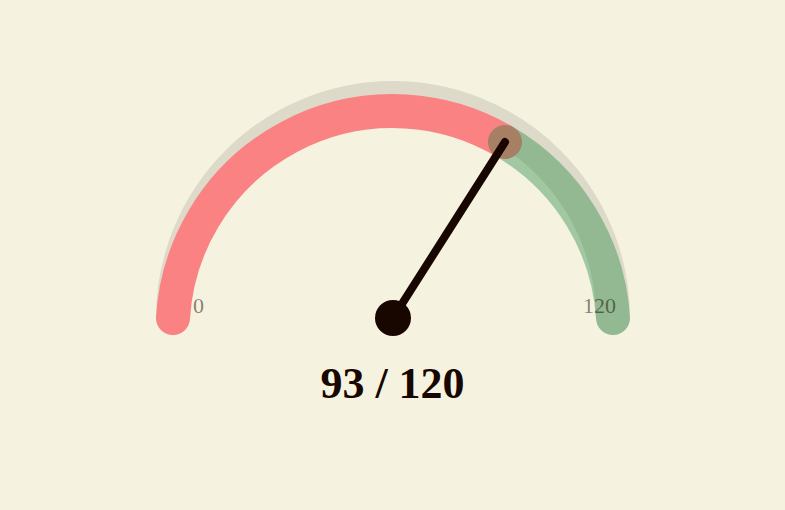
The duplicate commission line was confusing enough on its own, but a second, more serious bug was layered on top of it inside the same incentive software. The company ran a quarterly sales bonus tied to close ratio, a core performance metric measured against a 120-point quarterly goal. One of the top-performing reps on the team was sitting at 93 out of 120 points for the quarter, solidly good work, but short of the threshold required to actually earn the bonus.
The dashboard didn't show it that way. It displayed her as on track for a $600 quarterly bonus payout, money she had not earned and was not on pace to earn at her current point total. It wasn't a rounding error or a rare edge case. It was the system treating partial progress toward a threshold goal as if it were already a partial or pending payout, when the plan was only ever designed to pay out once the full 120-point bar was cleared.
Put yourself in her position for a second. You're doing good work, you check your dashboard, and it tells you $600 is coming. Then payday arrives and it isn't there, or worse, someone in accounting catches it before it goes out and has to walk it back. Either version of that conversation damages trust in the plan, and it damages it with your best performer, which is exactly the person you can least afford to frustrate.
Deleting the Redundant Plan Instead of Patching It
When ShareWillow came in to rebuild the incentive structure, the fix for the duplicate commission line wasn't a patch or a reconciliation report. It was deletion. The old payroll-mirrored commission plan inside the incentive software was removed entirely. Not hidden, not flagged as inactive, removed, so there was no possible way for it to resurface as a phantom second payment in a future pay cycle. If a plan doesn't exist, it can't confuse anyone.
This is worth sitting with for a second, because the instinct in a lot of software fixes is to add something: a note, a filter, a disclaimer explaining which number is the real one. That approach still leaves two numbers on the screen and asks the rep to remember which one to trust. The better fix here removed the redundant number completely, so there was only ever one line to look at.
One Single Quarterly Bonus Program
With the duplicate commission plan gone, everything the sales team earned outside of their base pay got consolidated into one quarterly sales bonus program. One plan, one calculation, one number per rep, updated on a predictable biweekly cadence so people always knew when to check and what they'd see when they did.
This is a smaller change than it sounds, but it matters more than it sounds too. Every additional plan, spreadsheet, or side calculation you stack on top of a sales team's pay is another place for numbers to drift apart. Good incentive plan design tends to move in the opposite direction: fewer moving parts, fewer plans running in parallel, one clear source of truth that both the rep and the manager are looking at.
Making the Close Ratio a Real Threshold, Not a Sliding Scale
The second fix addressed the $600 phantom payout directly. Close ratio, the core KPI behind the quarterly bonus, was rebuilt as an all-or-nothing threshold gate at the full 120-point goal. Partial progress, 93 points, 100 points, 115 points, whatever the number, simply does not trigger any payout, partial or otherwise. The bonus exists on the other side of the threshold and nowhere before it.
That single design choice is what makes phantom payouts structurally impossible instead of just less likely. A system that calculates "pace" or projects a partial bonus based on progress toward a goal is, by definition, showing someone money tied to work they haven't finished yet. If the plan changes, if the rep's numbers dip in the final weeks of the quarter, if there's any wrinkle at all, that displayed number becomes wrong the moment circumstances shift. A threshold gate has no such failure mode. Below the line, the payout is zero. At or above it, the payout is earned. There's no in-between state for a bug to misrepresent.
This matters just as much for HVAC and plumbing teams running field technician incentive pay as it does for a retail sales floor, or for skilled trades teams tracking install quality and completion metrics. Any time a KPI reports incremental progress toward a bonus goal, ask whether that in-progress number could ever be mistaken for money owed. If the answer is yes, that's a bug waiting for the right combination of timing and bad luck to become a real, public problem.
Profit sharing
made simple.
Give your team a stake in the company’s success. ShareWillow helps you create and manage profit-sharing programs that motivate employees and drive business results.
What Changed After the Fix
The results were immediate and easy to verify. The rep sitting at 93 of 120 points now correctly shows $0 owed on her quarterly bonus, exactly matching where she actually stood against the threshold. No projected payout, no pending amount, no confusion about whether she was close to something she hadn't yet earned. Once she crosses 120 points, the number appears, and not a moment before.
The duplicate commission confusion disappeared just as cleanly. With the redundant payroll-mirrored plan deleted, there's exactly one commission figure per rep and one quarterly bonus figure per rep, both updated on the same predictable biweekly schedule. Nobody on the sales floor is asking a manager whether they're about to get paid twice or not at all, because there's no longer a second number sitting on the screen to raise the question in the first place.
The manager time saved matters too, even if it's less visible in the story. Every pay cycle used to include a round of individual conversations explaining why a number on a screen didn't mean what it looked like it meant. That overhead just went away. It's hard to put a precise dollar figure on hours a manager didn't have to spend re-explaining a broken dashboard, but anyone who has run a sales floor knows that time adds up fast, and it's time that could have gone toward coaching, ride-alongs, or actually growing the business.
The Lesson for Any Trades Business Running Incentive Pay
Owners tend to think about incentive plans in terms of generosity: how much am I paying out, is it enough to motivate people, can I afford a richer bonus structure. Generosity matters, but it's not the first thing that determines whether an incentive program actually works. Trust in the number is. A rep who sees a clean, accurate $400 bonus every quarter will believe in the plan and work toward it. A rep who sees a confusing $600 that may or may not be real will stop believing in any number the system shows them, no matter how generous the underlying plan actually is.
This isn't unique to residential sales floors. Facility managers running technician bonus programs, HVAC and plumbing shop owners paying out on service calls and install quality, and field service teams of every kind run into the exact same failure mode. Two systems tracking the same metric. A KPI dashboard that shows partial credit for a goal that's actually all-or-nothing. A legacy spreadsheet that never got shut off after a new tool went live. Each of these looks small in isolation. Each one is capable of quietly costing you your best people's trust.
The fix isn't more explanation. It's fewer places for the number to live, and clearer rules for when it's allowed to move.
Takeaways Any Owner Can Apply
- Audit for duplicate plans after any system migration: if you moved from payroll-calculated commission to incentive software, or vice versa, check whether the old calculation is still running somewhere in the background.
- Delete redundant plans instead of just hiding them: a deactivated or hidden line item can still resurface. Full removal is the only guarantee it won't confuse someone later.
- Make threshold-based KPIs truly all-or-nothing: if a bonus is only supposed to pay out once a goal is fully met, don't let the dashboard display partial progress as a partial or projected payout.
- Give every rep one number, updated on a predictable schedule: consistency in timing builds as much trust as accuracy in the math.
- Treat pay confusion as an urgent bug, not a minor annoyance: every question a rep has to ask about whether they're getting paid correctly is a small withdrawal from their trust in the whole program.
None of this required a bigger bonus pool or a more complicated plan. It required fewer numbers, clearer rules, and a system that only shows a rep money once they've actually earned it. That's a smaller lift than most owners expect, and it pays for itself the first time it stops a confused, frustrated conversation with your best performer before it starts.
Related reading
Conclusion
One rep, one number, one plan: how a window coverings retailer killed a phantom $600 payout and a trust problem at the same time.
Create incentives
that
drive results
You shouldn't need complex equity plans to align your team. ShareWillow makes it simple to create transparent profit-sharing programs that motivate employees and grow your business.

Incentive plans to help
small businesses thrive.
.png)
"I was able to leverage the knowledge of the ShareWillow team to learn how other companies were designing their bonus plans. The template was extremely helpful."

Brian Tustin
Owner, First Rate Movers
