
Crew leader bonus structure: how an 80-person landscaping company is testing a 10% lead and 20% crew split on labor savings, with hourly pay protected.
A crew leader bonus structure sounds simple until you try to write it down. Who gets paid when a 30-hour job finishes in 24 and a half? The lead who ran it? The whole crew? How much does the company keep? A landscaping company with 80 to 90 employees in the green season is working through exactly those questions right now, and the numbers it is comparing are worth borrowing.
This is a plan in progress, not a finished victory lap. The company has not paid its first bonus under the new design yet. What it does have is a clear problem, a current formula, and a set of alternatives it wants to test against historical jobs before anyone gets a check. That makes it a useful case study for any owner who is about to design a crew bonus and wants to see the thinking before the results.
The Problem: Hourly Pay Hides the Overrun
The company runs about 15 crews, and its maintenance crews typically have five people. Everyone is paid hourly. That is a perfectly normal way to run a landscaping company, but it has a side effect the owner knows well: when a job runs over its estimate, nobody's paycheck changes.
The owner described the usual culprits plainly. Long stops and lunches. Slow starts in the morning. Crews that stretch the work to fill the time they were given. One example the owner gave was an 82 man-hour job that can drift to 100 or 110 hours without anyone feeling a penalty. That is 18 to 28 hours the company paid for and never planned on.

The cost shows up in margin. Enhancement and construction jobs at this company average a gross margin of 50 to 60 percent. The owner believes better time management could push that to 60 to 70 percent, and irrigation work looks similar. On a $10,000 job, ten points of margin is $1,000. Multiply that across a season and the overrun is not a rounding error.
The Current Plan: 10% to the Lead, 20% to the Crew
The company already has a labor-savings plan, and it is the starting point for everything else. The math works like this:
- Compare the estimated labor on the job to the actual labor used
- Subtract any material overage from the savings
- Give 10% of what is left to the crew lead
- Give 20% to the crew, usually split by hours worked
- The company keeps the remaining 70%
It is a sound structure. It rewards the people who control the clock, it protects the company from paying a bonus on a job that burned money on materials, and it splits the crew share by who actually showed up and worked. It is the same logic behind a landscaping company that fixed its mowing incentive and landed on a clean rate for every hour saved.
Why a Percentage of Savings Pays So Little
Here is the catch the owner is wrestling with. A percentage of savings only feels like a bonus when the savings are large. Take a 30-hour job with a three-person crew that finishes in 24 to 25 hours. That is a good day. It is also only 5 to 6 saved hours.

Run the illustration with a $40 loaded labor cost per hour. Saved labor is about $220. The lead's 10% is $22. The crew's 20% is $44. The company keeps $154. Those figures are not the company's real rates, just arithmetic to show the shape of the problem. A $22 bonus for finishing a job early is not going to change how anyone behaves on Tuesday morning.
That is the tension the owner wants to test. Percentages protect the company, but small payouts do not motivate. A plan that is too stingy gets ignored. A plan that is too generous eats the margin it was supposed to protect.
Crew Leader Bonus Structure Options the Company Is Comparing
Rather than guess, the owner asked for the same historical jobs to be run through several plan designs so the owner can see what each one would have paid. The options on the table:
- Percentage of net savings. The current 10% lead and 20% crew split. Simple, tied to real dollars, but small on short jobs
- Fixed payout per hour saved. A flat dollar amount for every hour a crew finishes under estimate. Easy for a crew to understand and easy to calculate on the truck
- Fixed payout scaled by gross margin. The same hourly reward, but it grows when the job closes at a healthy margin and shrinks when it does not
The margin-scaled version deserves attention. It ties the reward to the thing the company actually cares about, which is profit on the job, not just speed. A crew that saves six hours but burns through materials should not collect the same bonus as a crew that saves six hours and protects margin. If you want more examples of how other companies structure this, our guide to bonus structure examples walks through several models side by side.
A close cousin of this design shows up in an outdoor living company that pays $50 for every hour its crews save. Different trade, same idea: a clear dollar figure per saved hour that a crew can calculate in its head.
Protecting Long-Tenured Hourly Employees
The owner was direct about one risk: they do not want to move long-tenured employees from steady hourly pay to performance-only compensation. The concern is that it would be poorly received and that some of the best people would leave.
That concern shapes the whole design. The bonus sits on top of hourly pay rather than replacing it. Crews keep the paycheck they count on and gain a chance to earn more by finishing efficiently. For a company with a stable, experienced team, that is a far easier conversation than asking people to bet their income on a new formula.
It also explains the rollout order. The company is starting with smaller groups in irrigation, chemical applications, and enhancement work, where a handful of leads and crews can learn the plan together. The larger maintenance operation, where the owner sees the biggest efficiency opportunity, comes later, targeted for March 2027. By then the plan will have been tested on real jobs and adjusted.
Paying for the Upsell, Too
Efficiency is only half the picture. The owner also expects the irrigation manager to spot and sell upgrades during a service visit, such as relocating sprinkler heads. That is the kind of extra work that raises revenue on a customer who is already paying for a visit.
The current upsell commission is 10%. In the planning call, a range of 3 to 7% was suggested as an alternative, and the owner asked to test one to three jobs under different rates before settling. That is the right instinct. A commission rate that sounds fine on paper can look very different once you apply it to actual line items from real jobs.
The principle matches what we see across home service companies: pay for the behavior you want to see more of, and prove the numbers against history before you announce them to the team.
Profit sharing
made simple.
Give your team a stake in the company’s success. ShareWillow helps you create and manage profit-sharing programs that motivate employees and drive business results.
What the Company Is Measuring
The goal is clear even though the results are not in yet. The company wants crews to finish efficiently, cut down on unproductive time and overtime, and keep job margins healthy while making the bonus feel worth chasing. Here is what the plan is built to move:
- Hours saved per job against the estimate, after material overage
- Gross margin on enhancement and irrigation jobs, from the current 50 to 60% range toward 60 to 70%
- Overtime and idle time on crews that are enrolled
- Upsell revenue identified during service visits
The target is to have the first groups live within 30 to 45 days, with the rest of the company following in stages. We will not claim outcomes until the numbers exist. When they do, the first thing to check is whether the typical payout is large enough that a crew notices it.
How to Apply This to Your Own Crew Leader Bonus Structure
- Keep hourly pay as the floor. Add the bonus on top so experienced people do not feel they are gambling their income
- Model the payout before you announce it. Run six months of real jobs through each formula and look at what a typical crew would have earned
- Net out materials. A bonus that ignores material overage rewards fast work that wastes money
- Decide how the crew share is split. Hours worked is the fairest default
- Start small. One or two crews, a few weeks, then expand
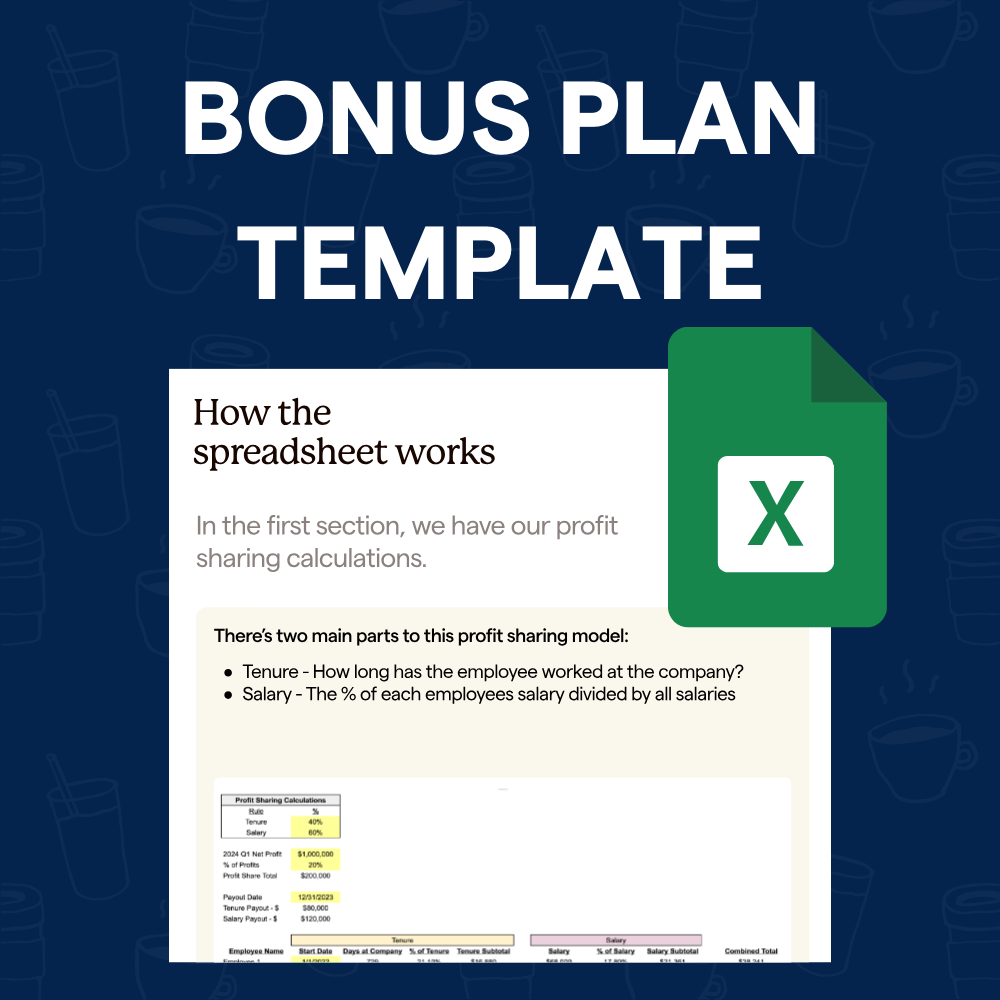
If you are building the calculation from scratch, our step-by-step guide on how to calculate bonus pay covers the formulas. And if you would rather not run it in a spreadsheet every pay period, ShareWillow's product features show how plans like this are calculated and shown to crews automatically.
Frequently Asked Questions
How much should a crew leader earn compared to the rest of the crew?
There is no universal ratio. This company gives the lead 10% of net labor savings and the whole crew 20%, which puts extra weight on the person who runs the job. Test the split against past jobs so you can see the actual dollars each person would have earned before you commit.
Should a crew bonus replace hourly pay?
For most established teams, no. Keeping hourly pay as a base and adding a bonus on top is easier to roll out and much less likely to push experienced employees out the door. Pure performance pay works better when you add a guaranteed floor.
What happens to the bonus when materials go over budget?
Subtract the overage from the labor savings before calculating anyone's share. That way a crew cannot earn a large bonus by finishing quickly while wasting material, and the company is protected on jobs where margin slipped.
Related reading
- From 340 Fake Hours to a Real Bonus: How a Landscaping Company Fixed Its Mowing Incentive
- Crew Bonus Plan: How an Outdoor Living Company Is Paying $50 for Every Hour Its Crews Save
- Landscaping Crew Bonus Plan: Why a 31.83-Hour Savings Report Turned Into 54.25 Real Hours on a 50-Hour Bid
- The Job Was Budgeted At $1,400. It Cost $518.
Conclusion
Keep hourly pay as the floor, net out materials, and model every formula on real past jobs before you tell a crew what they will earn.
Create incentives
that
drive results
You shouldn't need complex equity plans to align your team. ShareWillow makes it simple to create transparent profit-sharing programs that motivate employees and grow your business.

Incentive plans to help
small businesses thrive.
"I was able to leverage the knowledge of the ShareWillow team to learn how other companies were designing their bonus plans. The template was extremely helpful."

Brian Tustin
Owner, First Rate Movers
