
A six-technician fire protection company services more than fifty buildings and had never offered a single incentive in its history. Here is how a simple, invoice-tied first plan turned "I just want the guys to want the next job" into a real system.
Six Techs, Fifty Buildings, No Bonus Plan Ever
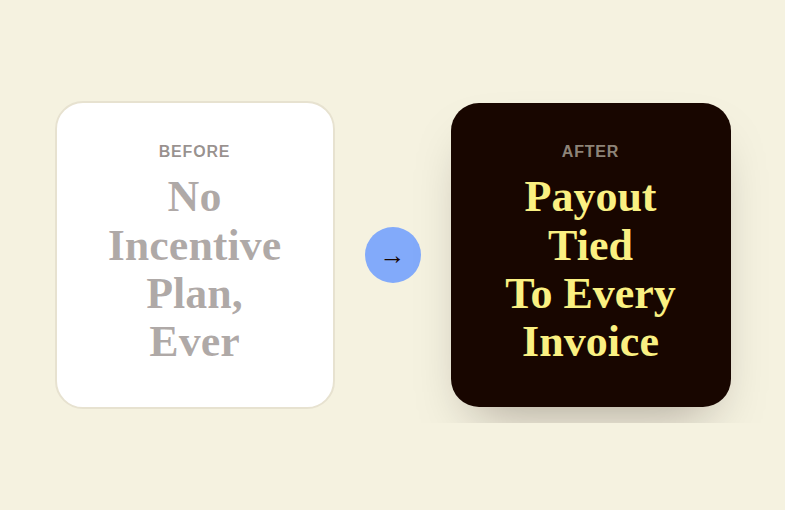
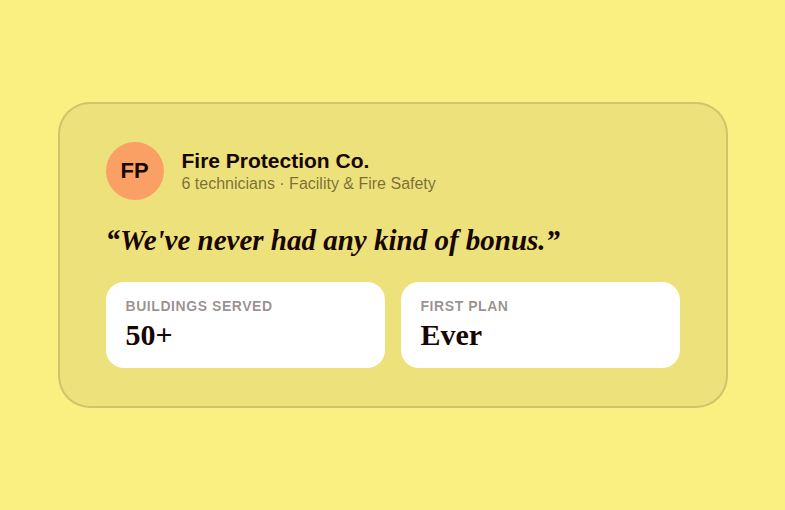
Some companies come to a conversation about incentive pay looking to fix a plan that is not working. A small fire protection company came to theirs with a much simpler starting point: it had never had a plan at all. Six technicians, more than fifty buildings under service across its portfolio, and in the entire history of the business, not a single formal incentive for the people doing the work.
That is not unusual for a company of this size in facility and life-safety services. Fire protection, inspection, and testing businesses tend to run lean, with owners focused on compliance schedules, inspection windows, and keeping trucks on the road. Incentive pay often gets filed under "someday," right alongside the other projects that matter but never feel urgent enough to bump ahead of the next inspection deadline.
The owner's own words summed up the motivation clearly: "I just want the guys to want the next job." Not a complicated ask. Not a demand for a sophisticated compensation model. Just a simple wish that the technicians closing out an inspection or a repair felt something more than a paycheck that would arrive the same size no matter what they did that day.
Why "No Plan" Is Its Own Kind Of Problem
It is worth pausing on why the absence of an incentive plan is a real business problem, not just a missed opportunity. When pay is flat regardless of performance, a company is not being neutral. It is quietly rewarding the same behavior whether a technician rushes through a building or does the job right, whether they flag an issue that could turn into a bigger repair or let it slide, whether they build a relationship with the property manager or treat the visit as one more stop on the list.
For a field service business built on recurring inspections across dozens of buildings, that gap compounds. The same six technicians visit the same fifty-plus properties, month after month, quarter after quarter. Small differences in how thoroughly they do the work, how they handle the property manager relationship, or whether they proactively flag a fix, add up over a year into a meaningfully different business. Flat pay does not punish anyone for average work, but it does not reward anyone for great work either, and over time, average is what a flat system produces.
There is also a retention risk hiding in "no plan." Technicians in fire protection and life-safety trades are in demand, and a company offering zero performance upside is competing for talent on base pay alone. That is a hard way to keep your best people once a competitor down the road offers even a modest bonus on top of a similar hourly rate.
Building A First Plan From Zero
Starting from nothing is, in one sense, the easiest place to design an incentive plan. There is no legacy structure to untangle, no fragmented history of one-off deals to reconcile. The company built its first plan around a simple, direct principle: tie payout to the invoice. When a technician closes out inspection or repair work, that job becomes the basis for a bonus they can see and understand, tied to work they can point to.
That directness matters more for a first-time plan than almost any other design choice. Technicians who have never worked under an incentive plan before need to trust it quickly, and the fastest way to build that trust is to make the connection between work and pay as short and visible as possible. A bonus that shows up two months later, calculated by a formula nobody has seen, will not build the habit the owner wanted. A bonus that is clearly tied to the invoice a tech just closed will.
The company also kept the rollout scoped to something a six-person team could absorb immediately, rather than designing an elaborate multi-tier structure that would take months to fully explain and adopt. For a first plan, momentum matters more than sophistication. It is easier to add complexity to a plan people already trust than to earn trust for a complicated plan on day one.
What Changes When Techs Can See The Payout
The shift here is not just financial. It is behavioral, and it starts small. A technician who knows a completed job ties directly to a payout has a reason to close it out well, to flag the extra fix, to leave the building in a state that makes the next visit smoother. None of that requires a lecture about company values. It falls out naturally once the incentive is visible and immediate.
For an owner, the bigger win is a subtler one: a first incentive plan turns pay into a lever instead of a fixed cost. Before the plan existed, there was no way to reward the technician who consistently goes above the minimum, short of an informal raise or a one-off bonus that felt arbitrary to everyone else on the team. Now there is a structure that does that automatically, consistently, and fairly across all six techs and every building they touch.
It also changes how the company can grow. A fire protection business scaling from six technicians to ten or fifteen needs a compensation structure that scales with it, not one that has to be invented from scratch at each new headcount milestone. Building the first plan now, while the team is small enough to onboard easily, sets the foundation for that growth instead of leaving it as a problem for later.
Companies weighing their own first incentive plan often assume they need to get the structure perfect before launching anything. This story argues the opposite. A simple, visible, invoice-tied plan beats a perfect plan that never ships. For more on what a first incentive plan can look like in a small field service business, see From Zero Incentive Pay to a Real Commission Plan: A Small Field Service Story and The Window-Cleaning Company That Has Paid Performance Pay Every Week for 23 Weeks Straight.
Profit sharing
made simple.
Give your team a stake in the company’s success. ShareWillow helps you create and manage profit-sharing programs that motivate employees and drive business results.
A Simple Checklist For Your First Plan
If your team has never run an incentive plan, whether you are in fire protection, HVAC, plumbing, or another facility service trade, a few principles from this story travel well to almost any small crew.
- Start with one clear trigger. Tie the bonus to something concrete and visible, like a closed invoice, rather than a blended formula nobody can hold in their head.
- Make the payout visible fast. The shorter the gap between doing the work and seeing the reward, the faster your team builds trust in the plan.
- Scope it to your team size. A six-person crew does not need a twelve-tier structure. Build something your whole team can understand in one conversation.
- Expect to expand it later. Your first plan does not have to anticipate every future scenario. It has to work now and be flexible enough to grow as your team does.
Six technicians. Fifty-plus buildings. Zero bonus plans, for the entire history of the company, until now. Sometimes the biggest incentive pay win is not a redesign. It is simply starting.
Questions Small Teams Ask About Their First Incentive Plan
Can a company this small actually afford a bonus plan? This is usually the first worry, and it is worth reframing. An invoice-tied plan does not create new costs out of nowhere. It shares a portion of the value the technician just generated, on work that was going to happen anyway. The company is not paying for nothing. It is paying for the same work it always paid for, plus a reason for that work to be a little better.
What if techs game the system by rushing through jobs to close more invoices? This is exactly why the details of what triggers a payout matter. Tying the bonus to a completed, quality invoice rather than raw job count discourages rushing. Most owners find that once a tech's pay is visibly connected to their work, the bigger behavior shift is more care, not less, because a sloppy job that generates a callback costs them the very payout they are now paying attention to.
How do you introduce a first plan without it feeling like a gimmick? Keep it simple and be direct about why it exists. This owner's own framing, wanting the team to want the next job, is a good example. Technicians can tell the difference between an incentive plan built to genuinely share success and one built to squeeze more output for the same money. Starting from a place of fairness, with a payout tied to real, visible work, is what makes a first plan land as a genuine improvement rather than a trick.
Does a plan like this work outside fire protection? The mechanics travel well to almost any facility or field service trade built on recurring visits, from HVAC maintenance contracts to pest control routes to landscaping accounts. Anywhere a small team revisits the same properties on a schedule, tying pay to the quality and completion of that recurring work tends to produce the same kind of shift this fire protection company saw.
Related reading
Conclusion
You do not need a perfect incentive plan to start. You need a simple one your team can trust on day one. This fire protection company waited years to build any kind of bonus structure, then did it in a way small enough for six technicians to understand immediately and direct enough to change how they showed up to the next building. If your crew has never had a formal incentive plan, the lesson here is not to overthink the design. It is to tie pay to real, visible work and give your team a reason to want the next job too.
Create incentives
that
drive results
You shouldn't need complex equity plans to align your team. ShareWillow makes it simple to create transparent profit-sharing programs that motivate employees and grow your business.

Incentive plans to help
small businesses thrive.
.png)
"I was able to leverage the knowledge of the ShareWillow team to learn how other companies were designing their bonus plans. The template was extremely helpful."

Brian Tustin
Owner, First Rate Movers
