A hard 8:00 AM cutoff was flagging nearly a whole HVAC install crew as chronically late. A 30-minute grace window fixed it in one call.
A Bonus Metric That Was Lying to Everyone
A heating, cooling, and plumbing contractor running install crews, service crews, and outside sales had just added a new incentive to its pay plan: an on-time arrival bonus for install technicians. The idea was simple and, on paper, fair. Show up when you're supposed to, get rewarded for it. The company tracks everything through ServiceTitan, so the data to measure arrival times was already sitting there. All they had to do was decide what "on time" meant and let the numbers do the rest.
They picked 8:00 AM as the cutoff. Clock in before 8:00, you're on time. Clock in after 8:00, you're not. Clean, easy to explain, easy to audit.
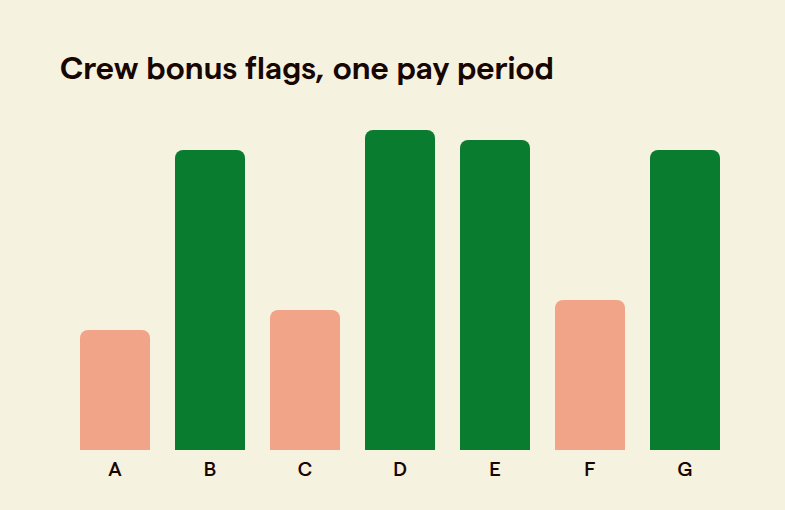
Except when the first month of real data came back, something was clearly broken. Almost every technician showed close to 0% on-time arrivals for the entire month. One technician showed 100%. Nothing in between. When a metric that's supposed to measure a spectrum of behavior instead sorts everyone into two piles, chances are the metric is the problem, not the crew.
That mismatch came up directly on a call with ShareWillow's customer success manager, when the company's ops partner said it plainly: "I don't think a lot of our guys do arrive on time." Read that carefully. He wasn't agreeing with the data. He was explaining why the data had to be wrong. Anyone who has run install crews in the trades knows that a team showing 0% on-time arrival, month after month, isn't a team with a punctuality problem. It's a team getting graded by a ruler that doesn't match how trucks actually roll out in the morning.
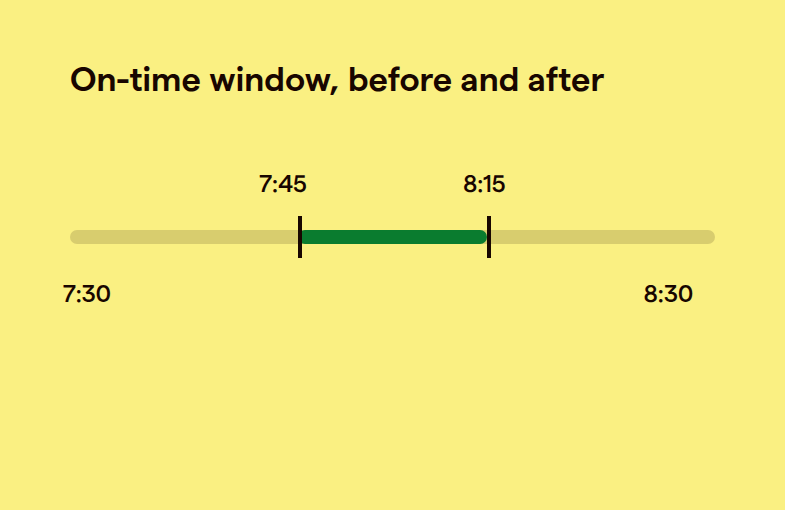
This is the trap with binary, threshold-based KPIs in incentive pay. A hard cutoff looks precise because it produces a clean number, either you cleared the bar or you didn't. But precision and accuracy aren't the same thing. A strict 8:00 AM line treats a technician who clocks in at 8:04, because a truck was still being loaded or a light caught him wrong two blocks from the shop, exactly the same as a technician who rolls in at 10:00 AM. Both get marked "late." Both get zero credit. The metric can't tell the difference between four minutes of normal morning variance and two hours of a real problem, and when it can't tell the difference, it isn't really measuring lateness anymore. It's measuring whether you happened to clear an arbitrary line on any given day, which is closer to a coin flip than a performance signal.
That's a costly mistake to build into a pay plan. Once a bonus metric starts returning results that don't match what an HVAC ops leader knows to be true on the ground, two things happen, and both are bad. The crew stops trusting the bonus, because it doesn't feel connected to anything they can control. And the company can't actually award it with confidence, because paying out on broken data is its own kind of risk. You end up with a metric nobody believes and a bonus dollar amount nobody wants to sign off on. That's the worst version of incentive pay: it exists on paper, costs planning time, and moves no behavior at all.
The Fix Took One Number and Five Minutes
The CSM diagnosed the problem live on the call, and the diagnosis was almost anticlimactic in how simple it was. The metric wasn't broken because the concept of an on-time bonus was flawed. It was broken because the threshold was too rigid for how trades work actually happens. Trucks load at slightly different paces every morning. Traffic isn't the same on a Tuesday as it is on a Thursday. A tech who's four minutes past a hard cutoff hasn't done anything that matters to the homeowner waiting for the install or to the business's bottom line. Punishing that tech identically to one who's two hours late doesn't make the metric stricter. It makes the metric meaningless, because it stops separating real problems from normal noise.
The fix was a single change: widen the grace window from 8:00 AM to 8:30 AM. Not a redesign, not a new metric, not a committee. Thirty minutes of reasonable buffer, added to a threshold that had been set with no slack built in at all.
What happened next is the part worth paying attention to if you're building or auditing your own incentive plan. The CSM backfilled August's data live on the call, using the new 8:30 cutoff against the same raw arrival timestamps that had already been sitting in the system. Nobody had to wait for a future pay period to find out whether the fix worked. The corrected numbers rendered right there in the meeting, and technicians who had shown close to 0% on-time arrival under the old rule jumped to 100% for the month under the new one. Not a modest improvement. A complete flip, because the underlying behavior had never actually been the problem. The measurement was.
That's the value of being able to test a metric against real historical data before you commit to paying on it, rather than discovering six weeks in that you've been rewarding almost nobody or, just as bad, rewarding everybody regardless of effort. Being able to see the corrected numbers in the room, instead of guessing and hoping the next pay cycle looks better, is what turns plan design from a leap of faith into something you can actually stand behind when a technician asks why his check looks the way it does. That kind of live iteration, adjusting a rule and immediately seeing its effect on real payroll data, is exactly what ShareWillow's plan-building and dashboard tools are built for. A metric that can't be tested against history before it's trusted with money is a metric you're flying blind on.
The lesson generalizes well past arrival times. Any threshold metric in a pay plan, a call-back rate cap, a close-rate minimum, a review-score floor, carries the same risk. If the cutoff doesn't have room for ordinary variance, it will eventually punish normal performance as if it were failure, and the people closest to the work will notice long before the spreadsheet does. The ops partner noticed it in one sentence. The fix took thirty minutes of grace window and one live data pull to confirm.
Profit sharing
made simple.
Give your team a stake in the company’s success. ShareWillow helps you create and manage profit-sharing programs that motivate employees and drive business results.
When a Hire Doesn't Fit the Template
The same call surfaced a second problem, and it's the flip side of the same coin. Where the on-time bonus was too rigid a rule applied to normal people, this next issue was a normal role structure applied to a person who didn't fit it. The company had recently hired someone who splits his time between install work and selling the job himself. He's not a pure technician, and he's not a pure salesperson. The company's standard install-tech plan didn't account for the selling he does, and the standard sales-rep plan didn't account for the installs he completes. Forcing him into either template would have underpaid him for half of what he actually does every day.
The ops partner's description of the hire, on the same call, captured the mismatch better than any org chart could: "He's like a salesperson in a technician's uniform." That's not a compensation category most companies have sitting on the shelf, and this is what tends to happen as trades businesses grow past a certain size. Roles stop staying in their lanes. A technician starts closing his own jobs. A CSR starts doing light dispatch. A service tech starts upselling on every call. None of that shows up cleanly in a one-size-fits-all commission structure built for a smaller, simpler org chart, and when a business tries to bolt a hybrid role onto an existing plan anyway, the usual result is either underpayment that drives the person out the door, or a workaround so complicated nobody can explain it in one sentence.
The fix here wasn't a new rule added to an existing plan. It was a plan built from scratch around what the person actually does, designed in the same call rather than punted to a future planning cycle. The structure they landed on: fifty dollars an hour in base pay, twelve percent commission on work he sells that hasn't been completed yet, and sixteen percent commission on work that is both sold and completed by him personally.
"I don't think a lot of our guys do arrive on time."
"He's like a salesperson in a technician's uniform."
The gap between twelve and sixteen percent isn't arbitrary, and it's worth sitting with why it's there. A hybrid tech-salesperson could, in theory, just sell jobs and hand them off to someone else on the crew to install. That's a perfectly legitimate way to work, and it would still generate revenue for the business. But the two-tier structure makes it more profitable for him to follow the job all the way through, from sale to finished install, than to sell it and walk away. That keeps the incentive tied to delivered work instead of just booked revenue, which matters a lot in a trade where a sold job that gets installed poorly, or installed late by someone else, can cost more in callbacks and reputation than the commission ever paid out. The plan rewards closing the loop, not just opening it.
This is the deeper version of the on-time bonus lesson. It's tempting to think the fix for a messy incentive plan is more structure: more tiers, more conditions, more rules to cover more edge cases. Usually the better fix is the opposite. Fewer, better-calibrated rules, built around how the job is actually done rather than how the org chart says it should be done. A thirty-minute grace window instead of a rigid cutoff. A two-tier commission instead of forcing a hybrid hire into a box built for someone else's job. Similar in spirit to how another HVAC company redesigned its plan around sold hours instead of raw job count, the goal isn't a more complicated formula. It's a formula that actually reflects the work.
As a trades business adds hybrid roles, whether it's a tech who sells, a CSR who dispatches, or a lead installer who also estimates, the companies that keep their crews motivated aren't the ones with the most detailed comp manual. They're the ones willing to sit down, look at what a specific person actually does all day, and build the plan around that reality instead of the other way around.
Related reading
Conclusion
A cutoff too rigid to allow normal variance, and a role too unique for a template, both get fixed the same way: build the plan around reality, not around convenience.
Create incentives
that
drive results
You shouldn't need complex equity plans to align your team. ShareWillow makes it simple to create transparent profit-sharing programs that motivate employees and grow your business.

Incentive plans to help
small businesses thrive.
.png)
"I was able to leverage the knowledge of the ShareWillow team to learn how other companies were designing their bonus plans. The template was extremely helpful."

Brian Tustin
Owner, First Rate Movers