
A plumbing technician billable hours bonus needs clean data first. See how one company found techs bill 4 of 8 hours and set a 6 to 8 hour target.
A plumbing technician billable hours bonus sounds like the fairest bonus there is. Pay techs for the hours they bill, and the ones who work efficiently earn more. The catch is that the plan only works when everyone trusts the hours behind it. One plumbing company recently sat down to build exactly this kind of plan and found two problems in the data before a single bonus dollar was calculated.
The company is a plumbing business that switched from dynamic to static pricing. Its technicians sell and complete jobs, and a 1% to 3% revenue incentive is split between the seller and the techs on the job. On a review call, the owner and a ShareWillow specialist looked at the hours behind those jobs. The headline number was hard to ignore: technicians were billing about 4 hours in an 8-hour day. The goal is 6 to 8.
This post walks through what they found, how they are defining billable efficiency, and what any plumbing owner can borrow before launching an efficiency bonus of their own.
The Starting Point: Revenue Pay That Ignores Time
Revenue-based incentives are the most common way plumbing companies pay for performance. They are simple, easy to explain, and they reward selling. This company already had one in place: 1%, 2%, or 3% on nearly every job, split between the seller and all technicians on the ticket.
The owner's concern was what revenue pay cannot see. A technician can hit a revenue number while losing hours to drive time, repeat visits, and idle gaps between calls. Revenue pay rewards the invoice. It says nothing about how long the day took to produce it.
That is the gap an efficiency bonus is meant to close. If you want a primer on how bonus math works in general, our guide on how to calculate bonus pay covers the building blocks.
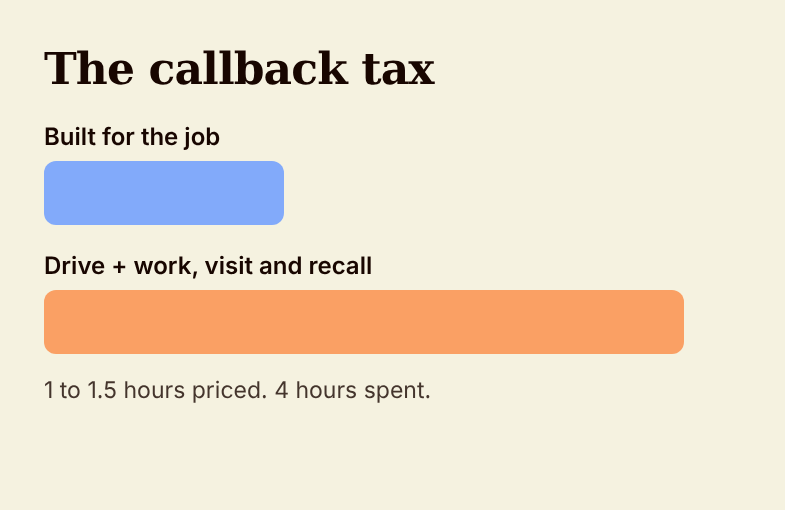
Finding One: A Callback Turned a 1.5-Hour Job Into 4 Hours
The first problem was a callback. A job built for 1 to 1.5 hours ended up consuming 4 hours once the original visit, the drive, and the return trip were added together. Under the company's static pricing, flat rates already include drive time and work time. When an unforeseen issue extends a job, the extra time is added back into the price. A recall is different. Nobody bills the customer for it, but the technician's day still absorbs the hours.
This matters for a billable hours bonus in two ways:
- It drags down efficiency for the technician who did the work. Four hours spent on a job priced for 1.5 is a real loss of billable time.
- It can hide behind a healthy revenue number. The same tech might still show strong sales for the week.
The owner said it plainly: revenue-based rewards alone would not account for that kind of inefficiency. That is the reason to track time as its own metric instead of assuming revenue covers it.
Finding Two: A 24-Hour Job Credited Entirely to the Plumber
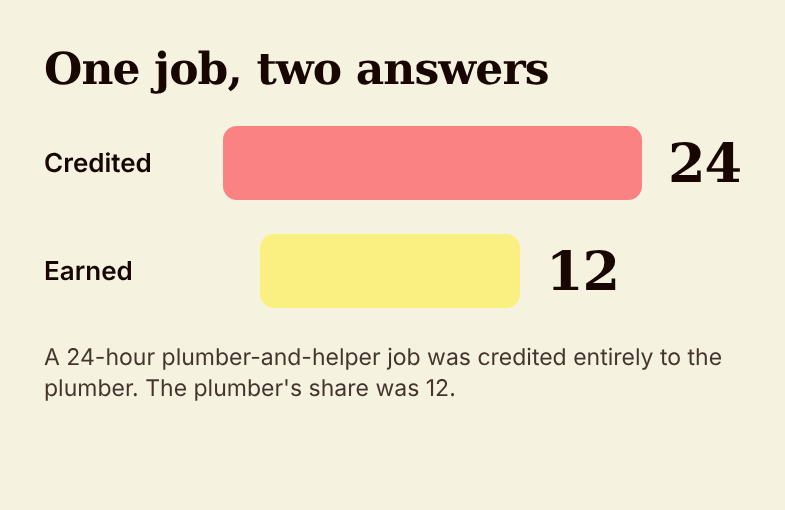
The second problem was a labor-hour allocation error. A 24-hour job involved a plumber and a helper. All 24 sold hours had been assigned to the plumber. The plumber's real share was 12.
That is a 100% overstatement on one job. Left alone, it would have inflated the plumber's billable hours, and any bonus tied to those hours would have paid on time the plumber never worked. The owner confirmed the allocation was corrected once it surfaced.
This is the quiet risk with any hours-based plan. The formula can be perfect and the payout still wrong if helper time lands on the wrong person. We have seen the same pattern in a company that rebuilt its pay plan for helpers and apprentices: shared jobs need a clear split rule before a bonus plan can sit on top of them.
How the Company Is Defining Billable Efficiency
Rather than argue about feelings, the team agreed on a formula. Billable efficiency is actual billable hours divided by total hours worked. Total hours worked includes drive time, work time, and any idle time in between.
Using the current numbers, a technician who bills 4 hours in an 8-hour day sits at 50% efficiency. Moving to 6 billable hours would put that same day at 75%.
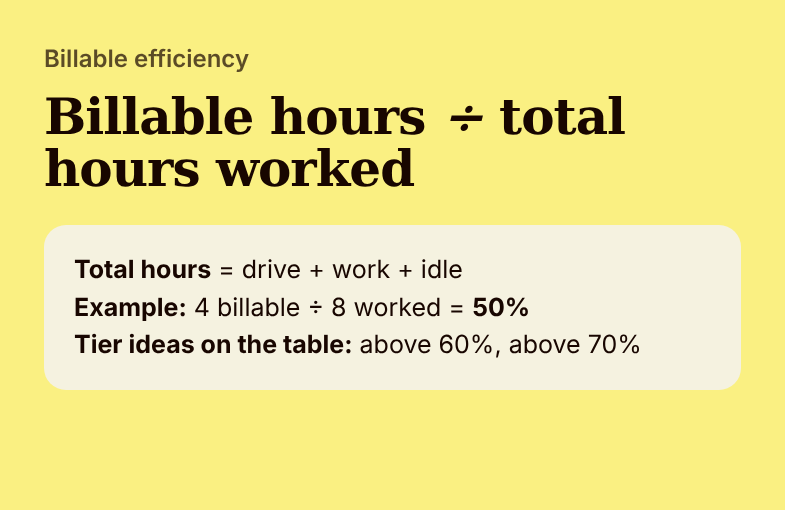
The ShareWillow specialist floated fixed reward rates once efficiency crosses thresholds such as 60% or 70%. The owner did not commit to those numbers, and that was the right call. The owner wants the reporting to improve before discussing any rewards with the technicians. The metric will first be built from ServiceTitan job hours in the master pay file and monitored with no money attached, then adjusted based on the owner's feedback.
If you are weighing a similar plan, that sequence is worth copying:
- Build the metric first. Calculate efficiency for every tech without paying on it.
- Audit the outliers. Check the highest and lowest numbers against real jobs. This is how the 24-hour error got caught.
- Share the numbers with the team. Let technicians see their own efficiency before it affects pay.
- Attach rewards last. Pick thresholds that most of your team can realistically reach.
A similar story played out at an HVAC company that questioned its own efficiency figure. Their experience is covered in the 65 percent efficiency number nobody trusted, and the lesson is the same: verify the data before you pay on it.
Plumbing Technician Billable Hours Bonus: What to Put in Place Before You Launch
Based on what this company found, here is a short checklist for any plumbing owner thinking about a billable hours bonus.
1. Decide what counts as billable
Write down whether recalls, warranty work, and training time count. A recall that is never billed should not quietly lower or raise anyone's number without a rule behind it.
2. Fix helper and apprentice splits
If two people work a job, the hours must be divided, not duplicated. The 24-versus-12 error is exactly what happens when they are not.
3. Include drive and idle time in the denominator
Efficiency only means something if it reflects the whole day. Counting only on-site hours makes everyone look better than the schedule really is.
4. Keep revenue pay and efficiency pay separate
This company's 1% to 3% revenue incentive rewards selling. An efficiency bonus rewards time. Mixing them into one formula makes it hard to tell which behavior is paying off. For a plan that sets a margin floor around a quarterly bonus, see how one plumbing company built around a 50% gross margin.
5. Use software that pulls hours from your field system
The metric in this case comes straight from ServiceTitan job hours. When the data flows in automatically, you can update the metric as often as you like instead of rebuilding a spreadsheet. You can see how that works on the ShareWillow product features page.
Profit sharing
made simple.
Give your team a stake in the company’s success. ShareWillow helps you create and manage profit-sharing programs that motivate employees and drive business results.
The Takeaway for Plumbing Owners
The billable hours bonus is not the hard part. The hard part is trusting the hours. This company found a callback that tripled a job's time and a labor allocation that doubled a plumber's credit before it paid anyone a cent. Both would have distorted a bonus plan built on top of them.
If your technicians bill 4 hours in an 8-hour day, that is a profit lever worth pulling. Measure it first, clean the data, and only then decide what a better day is worth.
Frequently Asked Questions
How do you calculate a plumbing technician billable hours bonus?
Start with billable efficiency: billable hours divided by total hours worked, including drive time, work time, and idle time. Then set fixed reward rates at efficiency thresholds your team can realistically hit, such as 60% or 70%. Run the metric for a few weeks with no money attached before you pay on it.
What is a good billable hours target for a plumber?
It depends on your pricing model and route density. This company's technicians bill about 4 hours in an 8-hour day, and its goal is 6 to 8. Start by measuring your own baseline instead of copying a number from another company.
Should a billable hours bonus replace commission?
Usually not. Commission rewards selling and efficiency rewards time. This company keeps a 1% to 3% revenue incentive split between the seller and the techs on the job, and is looking at efficiency as a separate metric.
Related reading
- The 65 Percent Efficiency Number Nobody Trusted, Until They Checked
- Plumbing Technician Bonus Plan: How a Plumbing Company Built a Quarterly Plan Around a 50% Gross Margin Floor
- How to Pay HVAC Helpers and Apprentices: A 26-Person Plumbing and HVAC Company's Fix for a 'One-Size-Fits-All' Bonus Plan
- How to Calculate Bonus Pay: A Step-by-Step Guide to Fair and Motivating Compensation
Conclusion
A billable hours bonus only works when you trust the hours, so measure efficiency first, fix the data, and then decide what a better day is worth.
Create incentives
that
drive results
You shouldn't need complex equity plans to align your team. ShareWillow makes it simple to create transparent profit-sharing programs that motivate employees and grow your business.

Incentive plans to help
small businesses thrive.

"I was able to leverage the knowledge of the ShareWillow team to learn how other companies were designing their bonus plans. The template was extremely helpful."

Brian Tustin
Owner, First Rate Movers
