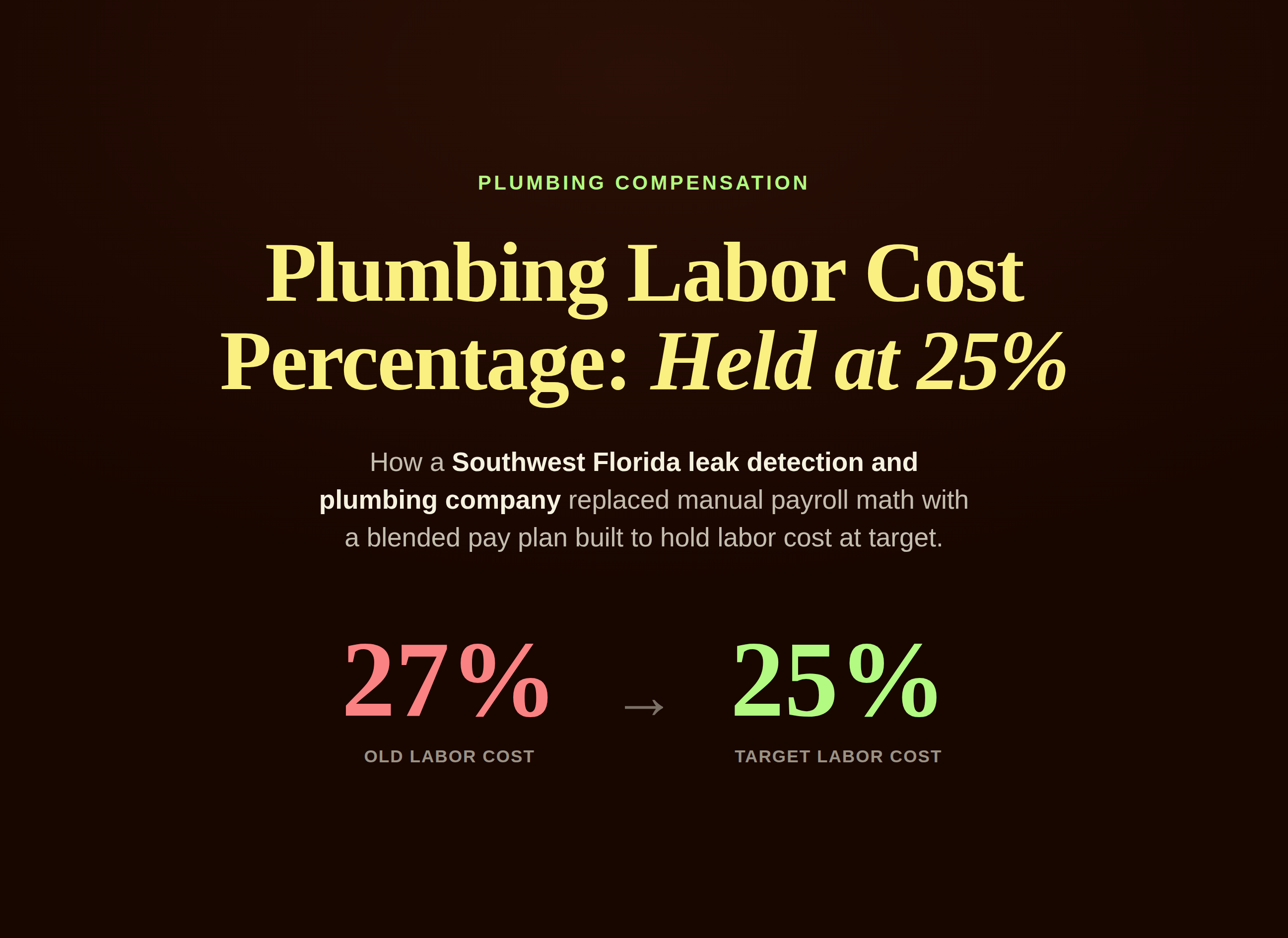
A small home services and remodeling company kept losing money to underbid jobs and unreliable time tracking. Here is how a revenue-tiered bonus plan, built around real Housecall Pro data, fixed both problems at once.
The Bonus Plan That Was Quietly Working Against Itself
Picture a home services and remodeling company running fewer than ten trucks. Good reputation, steady lead flow, techs who have been around for years. On paper, everything about the business looks healthy. But underneath the day-to-day, two problems were eating margin that nobody had a clean way to see, let alone fix.
The first was bidding. Technicians in the field were the ones quoting jobs, and there was no real incentive tied to getting a bid right. So bids ran conservative, jobs stretched longer than they needed to, and the company quietly lost out on sales opportunities it should have won. Some techs also got creative in the other direction, adding line items to a job mostly to pad their own numbers rather than because the customer actually needed them. Neither behavior is malicious. It is just what happens when nobody is measuring the thing you actually want more of.
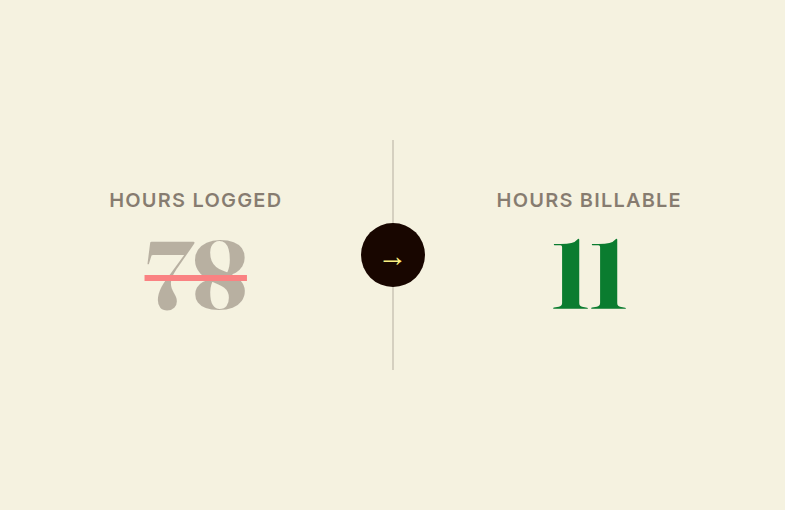
The second problem was time tracking, and this one was worse than anyone had realized. Techs would forget to clock out between jobs, or leave the app running overnight, or just lose track entirely on a busy day. In one stretch the company pulled from its own Housecall Pro data, a technician had 78 hours logged against a job that only recognized 11 hours as actually billable. That is not a rounding error. That is a system where the numbers on paper have almost no relationship to the numbers that matter.
You cannot build a fair performance pay plan on top of data like that. If a tech's bonus depends on hours worked, and the hours worked number is fiction half the time, the bonus plan becomes fiction too. Techs stop trusting it, owners stop trusting it, and eventually somebody just goes back to flat hourly pay and calls it a day. That is the quiet failure mode for a lot of home services and construction companies: not that they never tried incentive pay, but that the first version broke on bad data and nobody rebuilt it.
This particular owner wanted to fix both problems at once. Not with a new piece of software, and not with a stricter memo about clocking in and out on time. He wanted a plan where the incentive itself made the honest behavior the profitable behavior, so the data problem and the bidding problem could both get solved by the same redesign.
If you run an HVAC company, a plumbing outfit, or any trade business where techs quote their own work, this will sound familiar even if the specific numbers are different. Flat hourly pay does not reward a tech for bidding a job accurately. Flat commission on the invoice total does not reward a tech for finishing efficiently. And neither one gives an owner or a facility manager reliable data to plan around, because the underlying job data was never clean enough to build a real incentive on top of. The gap between what techs log and what actually gets billed is one of the most common, least talked about profit leaks in the trades, and it rarely shows up until someone goes looking for it.
Building a Plan Around Revenue Tiers, Not Just Hours
The redesign started with a simple question: what number, if it went up, would actually mean the business was healthier? Not hours logged. Not jobs closed. Revenue collected, on time, without leaning on discounts to get there.
So the new plan is a revenue-tiered monthly and biweekly bonus, pulled directly from the company's existing field service data rather than a spreadsheet someone updates by hand. To even qualify for a payout, a technician's completed revenue has to clear a threshold: $20,000 for the month, or $10,000 for the biweekly cycle. Once a tech clears that bar, they move into a tiered payout structure where the percentage they earn increases as their revenue climbs into higher bands.
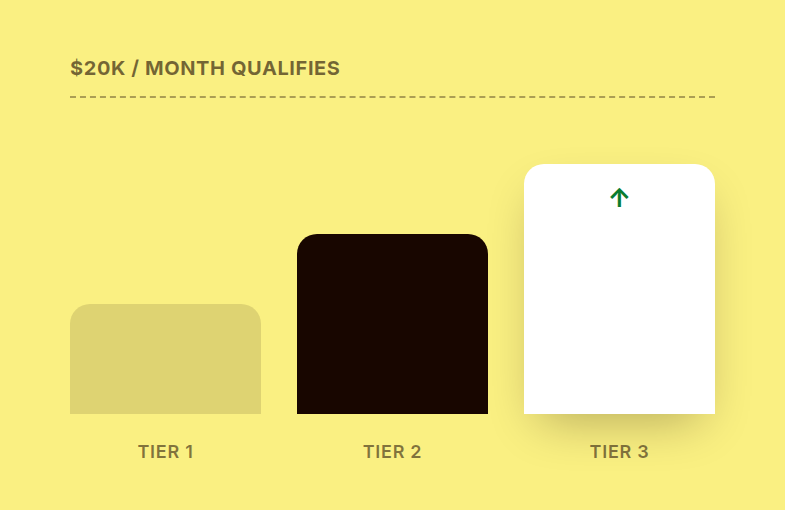
That threshold does two things at once. It filters out noise, so a single unusually large job does not accidentally make a slow month look like a great one. And it gives every tech a specific, concrete number to aim for instead of a vague sense that they should "sell more." A tech who is $2,000 short of the monthly threshold on the 25th knows exactly what is standing between them and a bigger check, and that clarity changes behavior in the field in a way that a generic commission percentage never quite does.
Three other design choices did the real work of fixing the underlying data and bidding problems:
- Payouts trigger on "paid in full," not "job completed." That single change flips the incentive away from booking work and toward collecting on it. A tech who used to hand a customer an invoice and move on to the next job now has a direct reason to make sure the payment actually clears before they consider the job finished.
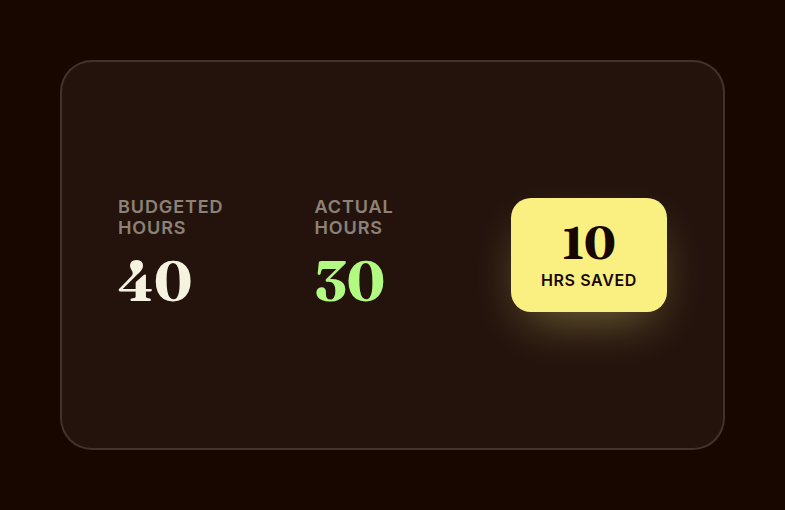
- An hours-saved efficiency bonus rewards speed and accuracy together. For every job, the plan compares budgeted hours against actual hours worked. When a tech finishes under budget, they earn a bonus calculated on the hours saved. This is the piece that indirectly fixed the clock-in problem: sloppy time tracking now costs a tech real money, so the incentive to log hours accurately lines up with the incentive to work efficiently, instead of fighting against it.
- A monthly close-rate KPI gives the owner visibility he never had before. Estimates younger than seven days are excluded from the calculation, so a tech does not get dinged for a quote a customer simply has not responded to yet. What is left is a close rate the owner can actually trust and coach against.
It is worth pausing on why a revenue tier structure beats a flat commission percentage for a team this size. A flat percentage treats a technician's tenth job of the month exactly the same as their first, which means there is no extra pull to keep pushing once the day feels "good enough." Tiers change that math. Once a tech can see they are close to the next band, the last job of the day stops feeling optional. It also gives the owner a lever that a flat rate does not: if margins tighten on a particular service line, the tiers can be adjusted without blowing up the entire compensation philosophy the team has already bought into.
None of these pieces are complicated on their own. What makes the plan work is that they were designed together, so that fixing the bidding problem and fixing the time-tracking problem became the same project instead of two separate initiatives competing for attention. That is also the difference between a bonus plan that lives in a policy document and one that actually changes what happens on a job site. If you are earlier in that process and still comparing incentive structures for a trades business, the sequencing matters more than the exact percentages: decide what behavior you want first, then build the math around it.
Profit sharing
made simple.
Give your team a stake in the company’s success. ShareWillow helps you create and manage profit-sharing programs that motivate employees and drive business results.
What the Plan Looks Like Once It's Actually Running
A few pay periods in, the plan is live and paying out, and it is already surfacing numbers the owner never had a clean view of before. Monthly close rate came in at 20%, a figure that simply did not exist as a trustworthy metric under the old system. Now it is a number he can watch move over time and coach individual techs against.
The efficiency bonus is where the redesign shows up most clearly in day-to-day work. In one pay period, a technician came in ten hours under budget on a job and earned a specific, itemized bonus for it, calculated straight from the gap between budgeted and actual hours. That is the plan doing exactly what it was built to do: rewarding a tech for finishing clean and fast, with numbers precise enough that the tech can see the connection between the work and the payout.
Across the crew, blended pay per period is now landing in the range of roughly $1,500 to $2,100, made up of base pay plus the layered bonuses stacking on top of it. That is not a dramatic overnight jump in take-home pay. It is something arguably more valuable for a small team: a pay structure where the techs can trace every dollar of bonus back to something specific they did, which is exactly the kind of transparency that was missing when the old bonus math was murky and the time-tracking data underneath it could not be trusted.
A few things about this rebuild are worth pulling out if you are looking at your own plan:
- Fix the data problem and the incentive problem together. A performance pay plan is only as honest as the numbers feeding it. If your time tracking, your job costing, or your close-rate data has known gaps, patching the incentive plan alone will not hold.
- Tie payout timing to the behavior you actually want. Moving the trigger from "job completed" to "paid in full" cost nothing to implement and immediately changed how techs handled collections.
- A revenue threshold does more than gate eligibility. It gives every tech a concrete number to chase, which tends to do more for motivation than a flat percentage ever does.
- Efficiency bonuses can double as a data integrity fix. When accurate time tracking is worth real money to a tech, the clock-in and clock-out habits tend to improve on their own.
If you are considering something similar for your own team, the order of operations matters more than people expect. Start by pulling a few months of job data and looking honestly at where it breaks down: hours that do not match invoices, discounts nobody approved, close rates nobody has actually calculated. Decide which one or two of those gaps are costing you the most, and design the incentive to close that specific gap rather than trying to fix everything in one plan. A revenue threshold, a payout trigger tied to collection, and an efficiency bonus are three separate tools. You do not need all three on day one, but each one earns its place by solving a problem you can point to in your own numbers.
If this pattern sounds familiar, you are in good company. A multi-trade home services business went through a similar rebuild and added three million dollars in revenue with one incentive redesign, and a plumbing and leak detection company made a similar move away from commission-only chaos in this tiered pay plan rebuild. The common thread is not a specific percentage or threshold. It is treating the incentive plan as infrastructure worth maintaining, not a policy you write once and forget.
Related reading
Conclusion
None of this required a new software system or a finance hire. It required pulling the numbers that were already sitting in Housecall Pro, deciding what actually deserved a bonus, and building a plan simple enough that a tech could explain it back to you in one sentence. If your team is underbidding jobs, fighting with time tracking, or just running on a bonus structure nobody remembers the logic behind, that is usually a sign the plan was built once and never revisited. It might be time to look at what your own job data is trying to tell you.
Create incentives
that
drive results
You shouldn't need complex equity plans to align your team. ShareWillow makes it simple to create transparent profit-sharing programs that motivate employees and grow your business.

Incentive plans to help
small businesses thrive.
.png)
"I was able to leverage the knowledge of the ShareWillow team to learn how other companies were designing their bonus plans. The template was extremely helpful."

Brian Tustin
Owner, First Rate Movers