
Technician KPI bonus plan: how a home services company is replacing weekly spreadsheets with 4 qualifiers (60%, 25%, 75%, under 5%) and a double-dollars tier.
A technician KPI bonus plan sounds simple until someone has to run it by hand every week. A home services company on ServiceTitan is finding that out. Its weekly incentive process is detailed, fair, and almost entirely held together by one person and a stack of spreadsheets. The company is now moving that process into automated software, and the way it is doing it offers a clean template for any owner who wants KPI-based pay without the Friday-night math.
The plan is still being built, so there is no payout history to report yet. What exists is a clear design: four weekly qualifiers, an individual revenue goal for every technician, and a double-dollars tier for the weeks when someone goes far beyond the target. Each piece is worth understanding on its own.
The Weekly Scorecard: Four Qualifiers and an Individual Revenue Goal
Every service technician has a revenue goal that is set individually, based on that person's hourly pay. A technician earning more per hour has a higher goal, which keeps the bonus fair across experience levels. The bonus itself depends on how much revenue a technician produces above that personal goal.
To collect that bonus, the technician also has to hit the weekly qualifiers:
- Conversion: at least 60%
- Memberships: at least 25%
- Billable efficiency: at least 75%
- Recalls: below 5%

One detail makes the plan forgiving in a smart way: a payout can still be awarded when a technician misses one qualifier. That keeps a single off week on one metric from wiping out an otherwise strong week, which is a common reason technicians stop trusting a KPI plan. The qualifiers act as guardrails, not tripwires.
Each of the four measures a different behavior. Conversion rewards closing the sales that technicians run. Memberships reward building recurring revenue; a related story on HVAC membership sales commission shows how one company caught a payroll gap on exactly that metric. Billable efficiency rewards working a full day instead of a half one. Recalls protect quality, the same idea behind tying pay to a 3% callback bar.
Double Dollars: Rewarding the Weeks That Beat the Plan
The company also has a top tier it calls double dollars. When a technician doubles their revenue goal, the payout is doubled too. The bar is higher on quality as well: conversion has to reach 65% instead of 60%, and the other KPIs still have to be met.

That structure does two things well. It gives high performers a reason to keep going after they pass the goal, and it raises the quality requirement as the reward grows, so a big revenue week cannot come from sloppy selling. If you are designing something similar, tiered bonus structures are a good model for deciding how steep each step should be.
The Hidden Cost of a Manual Technician KPI Bonus Plan
A plan like this is easy to describe and hard to run. The person who owns payroll at this company keeps an individual weekly spreadsheet for every technician, with that technician's revenue goal, KPI results, and bonus calculation. Each week they review the completed-job reports for zero-dollar invoices. When a technician handles another technician's recall, they manually credit the technician with their average weekly revenue for that job, so a callback visit does not drag down their numbers.
The payroll system's built-in options are a percentage or a flat cash amount. Neither matches an hourly-rate incentive approach, so the payroll owner uses a configurable payroll report, then calculates the payout amount by hand.
The biggest risk is not the hours. It is dependence on one person. When the payroll owner was unavailable, no one else had run payroll in about a year, and they came back to work because otherwise employees would not be paid. A plan that only one person can calculate is a plan that can fail on any given Friday.
The Rest of the Team: Office Staff, Installers, and Managers
The KPI approach extends beyond service technicians, and each group has its own rule.
- Office staff: Commissions count calls that turn into real jobs, excluding canceled, on-hold, and recall jobs, plus membership sales. The calculated total is divided by 40 and added to the employee's hourly pay each week.
- Installers: The plan compares hours assigned to a job with hours actually worked, then adjusts the weekly hourly rate. Leads can add to the payout, and on-call work earns an extra $1 per hour.
- Managers: Bonus data currently comes from the company's accounting software.
Dividing office commission by 40 is a useful trick for any owner who wants incentives to show up as an hourly add-on instead of a separate check. It keeps the pay stub simple while still tying part of the paycheck to outcomes.
How the Company Is Making the Switch Safely
The company is not changing its plan on day one. The first step is to build the existing incentive structures in the new software, mirroring the current spreadsheets exactly, including separate groups for technicians with different revenue goals. Nothing about the pay design changes until the math matches.
After the plans are built and the data is flowing, the team will reconcile calculations against prior payouts. The process includes backfilling past weeks or months and then comparing results against the old spreadsheets for the next two or three weeks. The payroll owner will run both side by side. The software pulls the job data, shows the payout calculation for review, and lets staff finalize it.
Technicians get something new from this as well. Instead of seeing results only after the week ends, they can see live progress on revenue, conversion, and memberships through a dashboard, with enough time left in the week to change the outcome. That visibility is a large part of what makes a KPI plan feel motivating instead of mysterious. A related example, The Number That Was Off By 40, Caught Before Payday, shows why testing the data before the first payout matters so much.
One open item remains as of this writing. The connection between the field service system and the incentive software had not been completed, so the team is working through the integration steps. Any owner planning a rollout should leave room for that kind of hiccup in the timeline.
Profit sharing
made simple.
Give your team a stake in the company’s success. ShareWillow helps you create and manage profit-sharing programs that motivate employees and drive business results.
Building Your Own Technician KPI Bonus Plan: What to Copy
- Set goals per person. Tie each technician's revenue goal to their pay level so the bonus is fair across experience.
- Use qualifiers as guardrails. Four KPIs protect quality and sales mix; allowing a payout when one is missed prevents one bad metric from erasing a good week.
- Raise the quality bar at the top tier. The double-dollars tier asks for 65% conversion instead of 60%, so the biggest payouts come with the best selling.
- Write down the credit rules. Who gets revenue credit on a recall, and how $0 invoices are handled, should not live in one person's head.
- Run the old and new systems side by side. Two to three weeks of parallel results will find the mismatches before technicians do.
- Remove the single point of failure. If only one person can run payroll, automate it before something goes wrong.
If you are choosing which KPIs to track in the first place, the guide to 10 HVAC key performance indicators is a solid starting list. To see how plans like this are calculated and shown to technicians, visit the ShareWillow product features page.
Frequently Asked Questions
What KPIs should a technician bonus plan include?
Most plans start with a revenue measure, then add guardrails for the behaviors that protect profit. This company uses conversion rate, membership rate, billable efficiency, and recall rate. Pick a small number that you can measure accurately; four is plenty.
Should a technician lose the whole bonus if one KPI is missed?
Not necessarily. This company can still award a payout when one qualifier is missed, which keeps one weak metric from wiping out a strong week. Whether you use that rule depends on how important each KPI is to your margin.
How do you test a new bonus plan before launching it?
Build the new plan to mirror the current one, backfill past weeks, and compare the results with the existing payouts. Then run both in parallel for two or three weeks. Launch only when the numbers match and the team trusts the data.
Related reading
Conclusion
Four weekly qualifiers, a double-dollars tier, and a side-by-side test against the old spreadsheets give this company a technician KPI bonus plan that no longer depends on one person.
Create incentives
that
drive results
You shouldn't need complex equity plans to align your team. ShareWillow makes it simple to create transparent profit-sharing programs that motivate employees and grow your business.

Incentive plans to help
small businesses thrive.
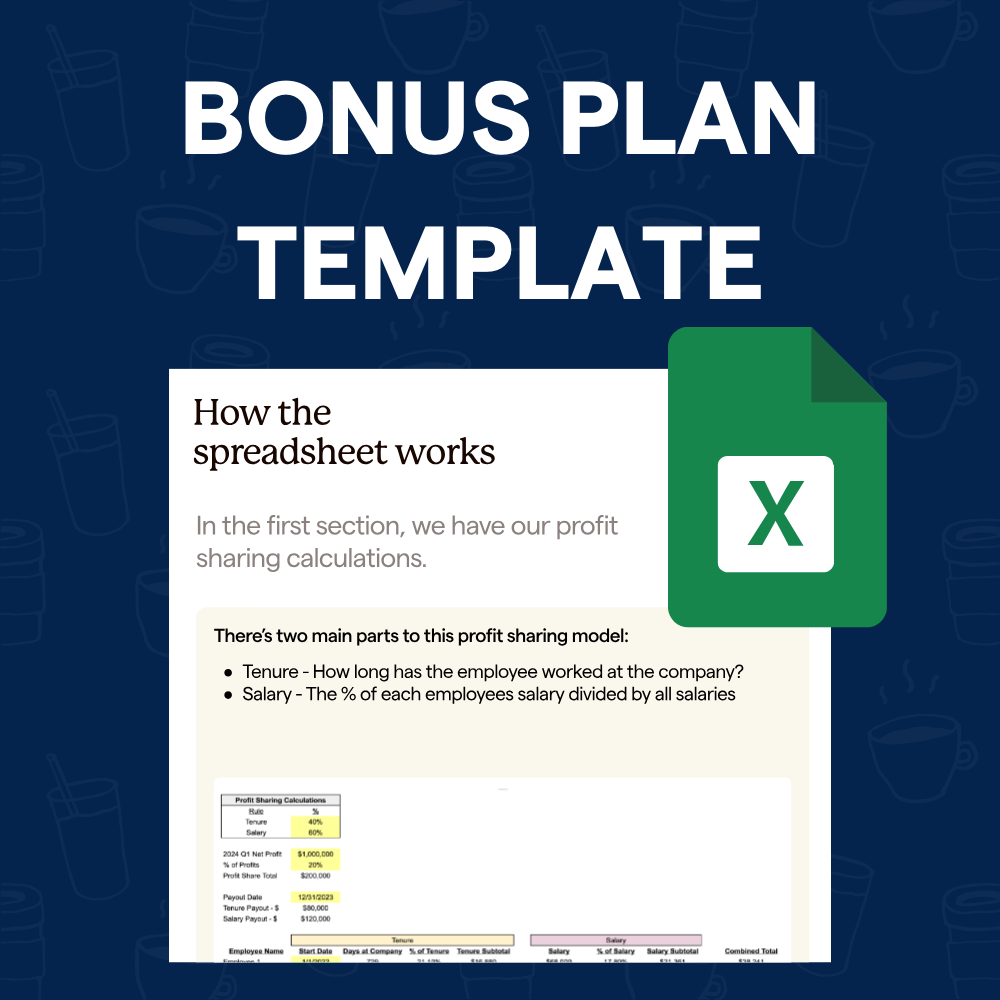
"I was able to leverage the knowledge of the ShareWillow team to learn how other companies were designing their bonus plans. The template was extremely helpful."

Brian Tustin
Owner, First Rate Movers
