A 55-person electrical company's software dashboard showed a 55 percent phone conversion rate, right up until someone counted the raw calls by hand and found the real number was 5.9 percent. Here is how that discovery reshaped a struggling commission structure into a gross-profit-based scorecard built for sales, dispatch, the call center, and project managers.
By the time this electrical company's owner sat down with ShareWillow, he had already tried three different ways to pay his team, and none of them had stuck. The company runs a roughly 55-person operation, mostly residential electrical work with a smaller slice of larger commercial projects, using Workiz for job management and QuickBooks for the books. On paper, that's a sizable, established business. In practice, the owner described his own compensation history in almost exactly those words: a string of experiments, each one solving one problem while creating another.
It started with straight hourly pay, and the owner didn't soften how that went: "I started with everybody hourly, and I found it to be really, really bad." Hourly pay removed any incentive tied to outcomes, and it showed up in behavior on the job. One technician, he recalled, would sell a job for as little as $180 because that happened to be the company's stated minimum, regardless of what the job was actually worth or what a fair price would have captured. When pay isn't tied to the value of the work, there's no reason for a technician to fight for the value of the work.
So he tried the opposite extreme: a 50 percent commission pilot with one technician. That fixed the incentive problem and created a profitability problem instead. "I started by 50% commission with my pilot guy, and I found out that it's not worth it for me. I'm barely making money on this scenario." A commission rate that generous can feel motivating to the person earning it while quietly eating the company's margin down to almost nothing, especially once material costs, overhead, and the rest of the team's pay are factored in. From there he moved to a 10 to 14 percent tiered commission with a $500 weekly bonus for crossing $5,000 in sales, a more moderate structure that still left him without the one thing he actually wanted. "It's going well, but not the way I want it. I don't really have a kind of control on it. Workiz is giving me kind of information, but it doesn't seem to work, actually."
A Failed Platform Migration, Then A Data Surprise
Somewhere in the middle of all this, the owner also spent four to six months and real money attempting to migrate the company onto ServiceTitan, a heavier field service platform than Workiz. The team never fully adopted it, and he eventually reverted back to Workiz rather than force a tool nobody was using. It's a familiar story in electrical and home services companies at this size: a platform migration looks like the fix for unreliable reporting, until the real bottleneck turns out to be something the new platform can't solve either.
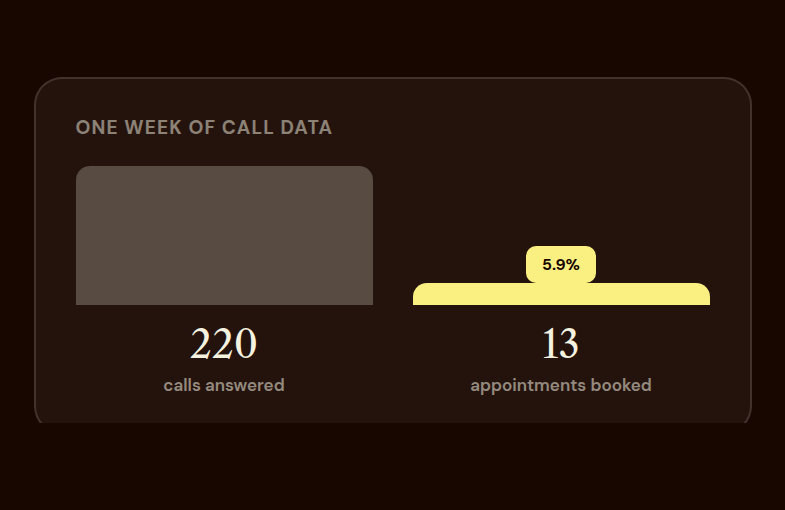
That bottleneck became visible once ShareWillow started an operations review using the company's existing Workiz data. The dashboard displayed a phone-to-appointment conversion rate of roughly 55 percent, a number the owner had been looking at for a while. When the raw call export was pulled and counted by hand, the real figure was nowhere close: 13 booked appointments out of 220 calls, a conversion rate of about 5.9 percent. Not a rounding difference. Not a bad week. A metric the software was reporting as roughly nine times better than what the underlying calls actually showed.
It's worth pausing on how that kind of gap happens, because it's rarely a case of software lying outright. Conversion dashboards in most field service platforms are built on assumptions: which calls count as a lead, how a missed call gets categorized, whether a call transferred internally counts once or twice. Those assumptions can drift quietly out of sync with how a business actually operates, and the dashboard keeps reporting a clean, confident number the whole time. Nobody has to make an error for the metric to go wrong. The definition just has to stop matching reality, and nothing in the software flags that on its own.
The Metric That Almost Got Built Into Pay
This is the detail that makes the story worth telling, more than the specific gap between 55 percent and 5.9 percent. The company was actively considering building compensation around that dashboard number. If a call-center or sales incentive had been tied to the software's reported conversion rate, the team would have been getting rewarded for a metric that bore almost no relationship to what was actually happening on the phones. Worse, once real money is riding on a number, there's a natural pull to keep reporting it the same flattering way, whether or not anyone intends to game it. Catching the gap before building pay around it, rather than after, is the difference between a minor data-cleanup project and a compensation structure that quietly rewards the wrong behavior for months before anyone notices.
It also reframes what the owner had been describing for months as vaguely "not enough control." He didn't have a commission-rate problem. He had a measurement problem. No tiered percentage, however carefully calibrated, was going to fix outcomes that were being tracked by a number that wasn't real in the first place.
Building A Scorecard Around Gross Profit, Not Job Value
With the measurement gap exposed, the plan ShareWillow built shifted the whole foundation of how pay gets calculated. Instead of commission on raw job value, the structure calculates commission on gross profit. A $600 permit fee and roughly $50 an hour in per-employee labor cost are stripped out of a job's total before any percentage applies. That single change closes the same loophole the $180 minimum-price job exposed under the old hourly system: a technician can no longer look good on a top-line sales number while quietly running a job that barely breaks even once real costs are accounted for.
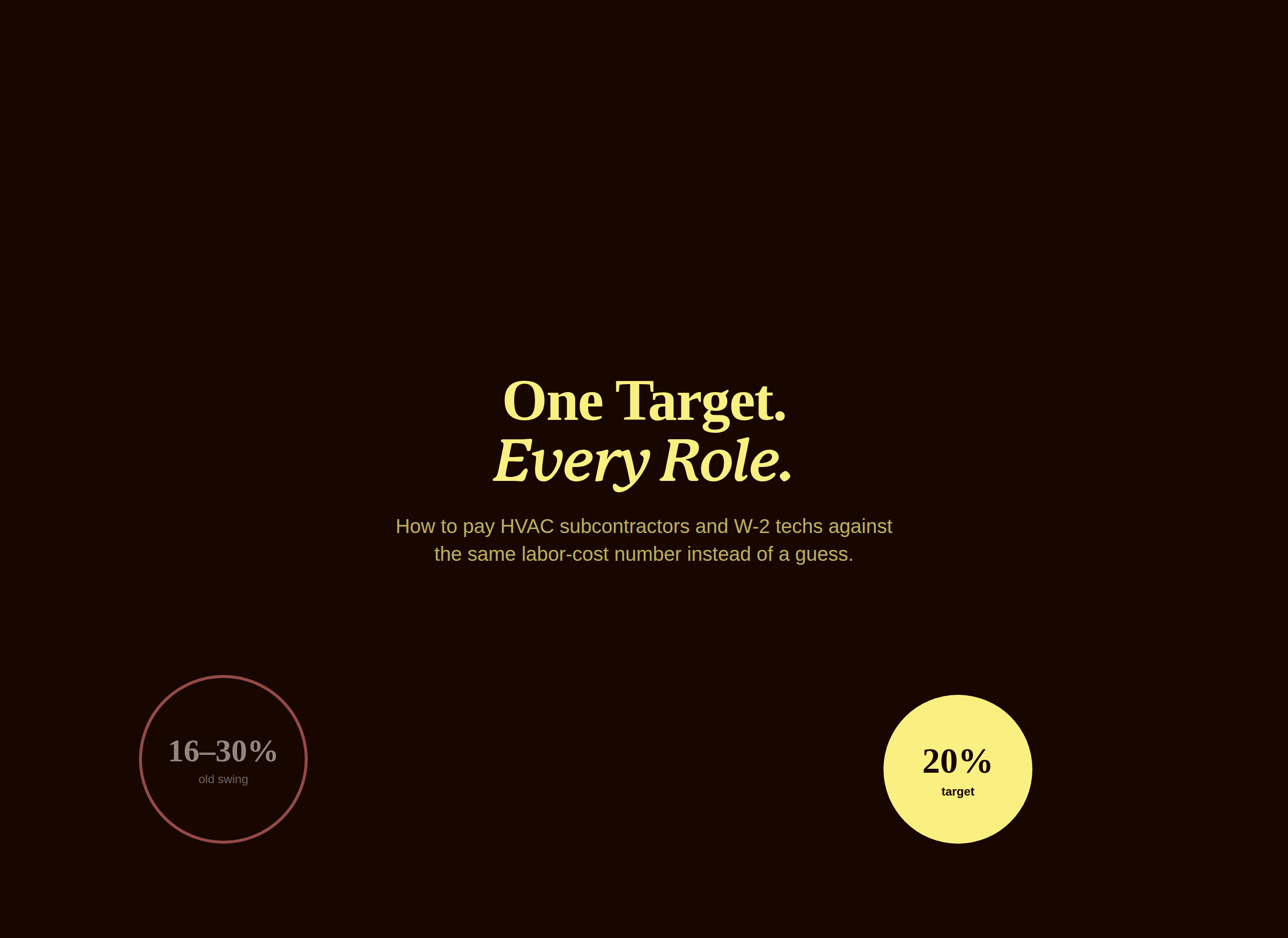
The sales role gets a tiered commission structure, a bonus tied to average ticket size, and a qualifier tied to overtime hours, all pointed at the same underlying target: 10 percent total commission payout on sales, gated by a 40 percent gross profit margin target per sale and a lead-conversion target above 30 percent, a number now measured against real, hand-verified call data instead of a dashboard figure that turned out to be unreliable. Dispatch gets a simpler pair of goals built for a different kind of role: a callbacks goal of zero, and a total completed-jobs goal of at least 50, metrics that reward keeping the schedule moving without introducing rework.
Project managers, overseeing larger commercial-leaning jobs, get their own scorecard tied to on-time completion and keeping parts costs within budget, using two new fields the plan introduced specifically to make that trackable: estimated labor hours and estimated material cost, entered up front so actual performance has something real to be measured against. None of these are the same generic commission percentage stretched across every role. Each one is built around what that specific job actually controls.
That role-by-role approach is a direct answer to the "not enough control" feeling the owner described about his previous plans. A single blended commission rate, applied the same way to sales, dispatch, and project management, forces one metric to represent three different jobs with three different levers. A salesperson controls the deal they close. A dispatcher controls how tightly the schedule runs. A project manager controls whether a job stays on budget and on time. Paying all three against the same number was never going to feel fair to any of them, because for at least two of the three roles, that number wasn't really measuring their job.
Profit sharing
made simple.
Give your team a stake in the company’s success. ShareWillow helps you create and manage profit-sharing programs that motivate employees and drive business results.
A New Metric For The Call Center: Lost Leads
The call-center scorecard needed a metric that didn't exist yet. The plan introduced a new "lost leads" measure: the count of leads marked lost in the system where no technician was ever assigned to follow up, specifically excluding leads tagged "unqualified" so the number reflects leads that were genuinely dropped rather than ones correctly screened out. The target was set at no more than 5 lost leads per week, tied to a $20 award layered on top of the call center's existing $20 productivity award and $10 deduction structure.
Before finalizing that target, the team ran a real test pull against the account's own data and found 3 to 4 qualifying unassigned leads in the sample, real leads that had fallen through with nobody following up. That test run did two things at once: it validated that 5 per week was a realistic, achievable target rather than an arbitrary number pulled from thin air, and it gave the owner his first honest look at exactly how many leads were slipping through before a single dollar of incentive was attached to fixing it.
Starting Small On Purpose
Rather than flipping the entire scorecard live across all 55 people at once, the rollout started with a small pilot group of 5 salespeople before expanding to dispatch, the call center, and project managers. That sequencing matters more than it might seem. A gross-profit-based commission structure is a real behavioral shift from a flat or job-value-based rate, and rolling it out to a handful of people first gives an owner room to catch a miscalculation, a confusing report, or an unexpected edge case before it's affecting an entire team's paycheck at once. It's a far cheaper place to find a mistake than a full company-wide payroll run.
The Real Baseline Behind The New Plan
Because this scorecard is still in its early rollout, there isn't yet a multi-month track record of payouts to report, and presenting one would be premature. What does exist is a real, current performance baseline pulled directly from the account: last month, the company closed 180 leads for a total of $230,000 in revenue across all technicians and sales staff combined, an average ticket size of roughly $1,000. That is the number the new gross-profit-based commission structure is now built against, not a projection or a best-case scenario, but the company's actual recent performance, measured accurately for what may be the first time.
What Owners Running The Same Cycle Should Take From This
This owner's path, hourly, then aggressive commission, then a moderate tiered rate, then a platform migration that didn't take, is a familiar loop for electrical companies at this size. Each step usually feels like the fix, right up until it reveals the next layer of the actual problem. The lesson from this account isn't which specific commission rate to copy. It's that before adjusting a percentage again, it's worth asking whether the metric behind that percentage is actually measuring what it claims to measure. This company was one dashboard number away from building real pay decisions on a figure that was off by a factor of nine.
The other piece worth noting is what happened once the team saw a working example of transparent, role-specific pay tracking during the sales process. Shown a preview of how technicians could see their own numbers in real time, the owner's reaction was immediate: "Man, honestly, I'll be honest with you, that's the thing I was looking for." Not a lower commission rate. Not a different software vendor. A way for his team to see, clearly and in real time, how their own work connects to their own paycheck. That's the piece a percentage alone can never deliver on its own, and it's often the actual gap underneath a compensation problem that looks, on the surface, like it's about the rate. Companies weighing a similar rebuild can look at the underlying plan mechanics before assuming the fix is a bigger or smaller percentage.
Related reading
Conclusion
The company's dashboard claimed a 55 percent phone conversion rate. The real number, counted by hand from 220 calls, was 5.9 percent. Catching that gap before building commission around it led to a gross-profit-based scorecard now measured against a real baseline of 180 closed leads and $230,000 in monthly revenue, with a piloted lost-leads metric already catching real gaps in follow-up.
Create incentives
that
drive results
You shouldn't need complex equity plans to align your team. ShareWillow makes it simple to create transparent profit-sharing programs that motivate employees and grow your business.

Incentive plans to help
small businesses thrive.
.png)
"I was able to leverage the knowledge of the ShareWillow team to learn how other companies were designing their bonus plans. The template was extremely helpful."

Brian Tustin
Owner, First Rate Movers