HVAC installer bonus plan: one company pays $300 to $1,000 per install by job type, minus labor, split by hours, and cut its upsell rate from 6% to 3%.
An HVAC installer bonus looks easy on paper: pick a number, pay it when the system goes in. It stops looking easy the first time a three-person crew finishes a job and everyone has a different idea of who earned what. One residential HVAC company with a handful of technicians, three primary installers, a CSR, and a salesperson decided to settle that question before the first payout instead of after the first argument.
The company runs on ServiceTitan and sends review requests through Podium. Until now, the service manager calculated upsell commissions by hand in Excel, scanning repair descriptions for the words Platinum, Gold, Silver, and Bronze. That worked while the team was small. It does not work when you want technicians to see what they could earn, and it does not work when payroll prep eats hours every pay period.
The Problem: Installs Were Paid on Feel, Not on the Job
Installs are the hardest work to pay fairly. A complete system, a condenser swap, and a condenser-and-coil job all show up as "install" on the schedule, but they take different hours, carry different risk, and leave different margins. Pay them all the same and the crews chase the easy jobs. Pay them all by the hour and nobody has a reason to finish early.
Three specific gaps showed up in the first planning call:
- Multi-technician jobs were not split consistently, so revenue credit depended on who happened to be named on the ticket
- Helpers' hours were part of the real cost of a job, but helpers were not supposed to share the installer bonus
- Upsell pay was calculated manually, which made it slow and easy to get wrong
If any of this sounds familiar, the case study on an install split that almost paid zero shows how quietly these gaps can wipe out a payout.
The HVAC Installer Bonus: Job Type Sets the Amount, Labor Comes Off the Top
The design has three moving parts. First, the amount is fixed by the type of install, not by who sells it. Second, the company subtracts the real labor cost of the job. Third, what remains is split by clocked hours among the primary installers.
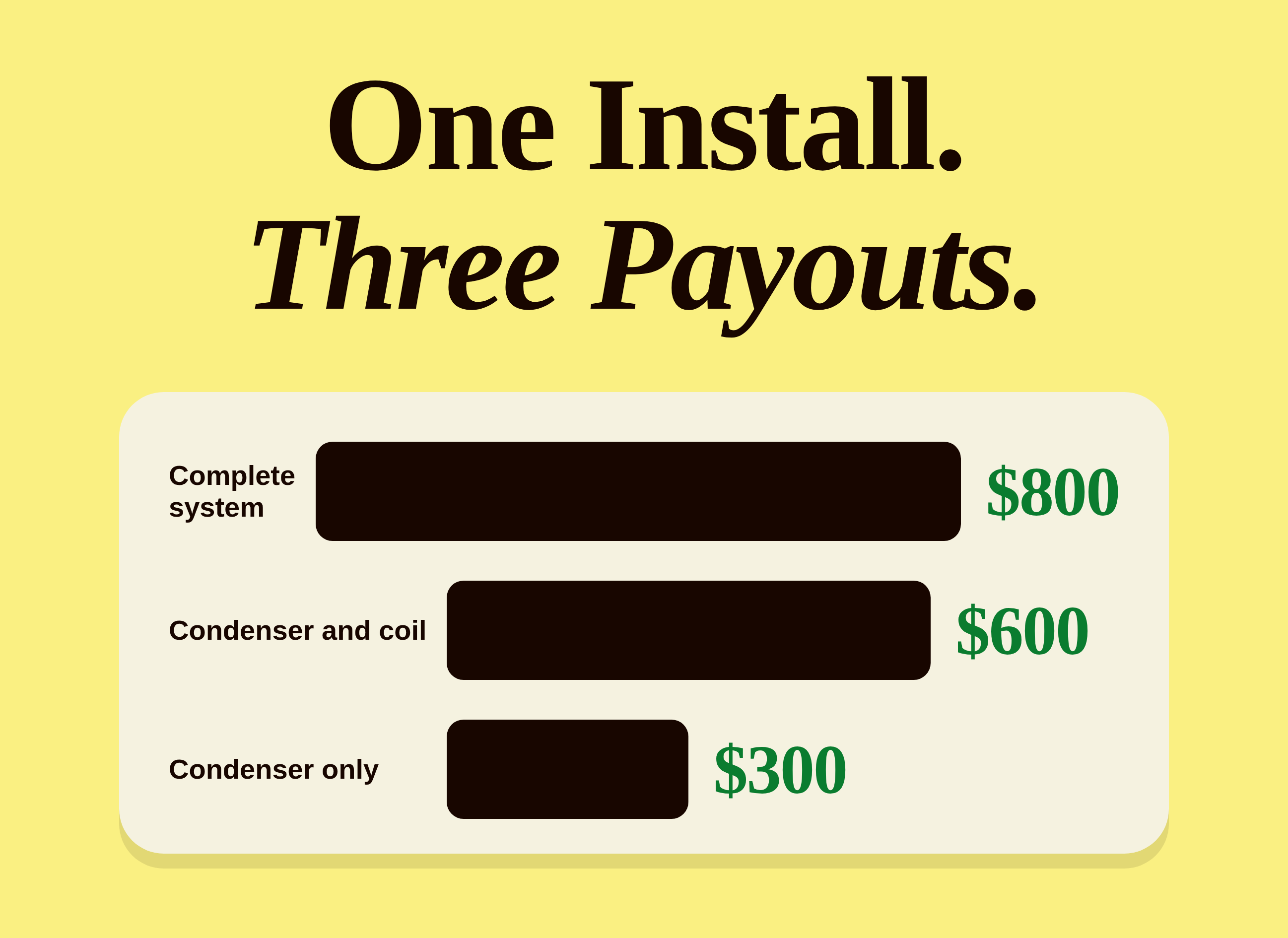
The first draft separated work by location: $800 for a closet install and $1,000 for an attic install, each reduced by labor. A later call with the service manager sharpened it into scope of work. The company now pays $800 for a complete system, $600 for a condenser and coil, and $300 for a condenser-only job. Both versions use the same logic: the bigger and more complex the install, the bigger the pool.
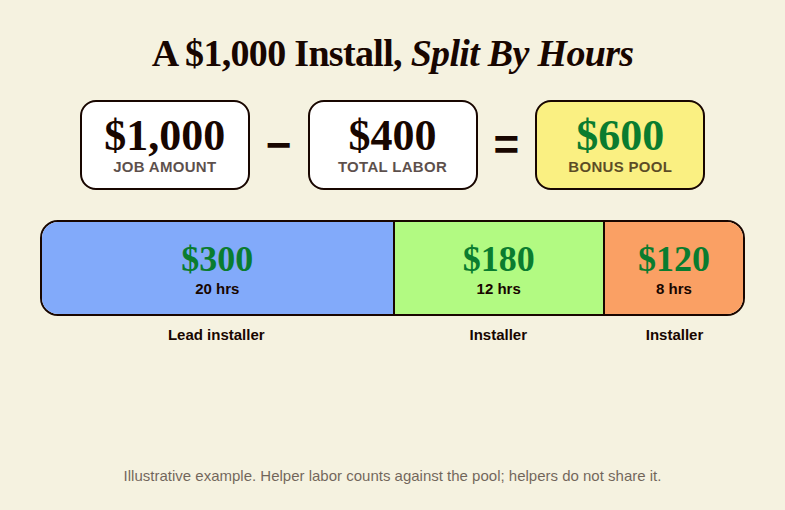
Here is how the math works, using an illustrative example. A $1,000 award on a job with $400 of total labor leaves a $600 pool. If the three primary installers clocked 20, 12, and 8 hours, they split that pool 50%, 30%, and 20%, which is $300, $180, and $120. The helper's hours still count toward the $400, so the company protects its margin, but the helper does not take a share of the pool.
Two details make this work in practice. The company creates separate job types in ServiceTitan for each kind of install, so the system can classify a job without a human guessing. And the plan filters to residential installs only, so commercial work does not sneak into the calculation.
Why Subtract Labor From an Installer Bonus
Owners often ask why the labor comes off the top. The answer is that a flat bonus ignores what the job actually cost. If an install runs long, a flat award pays the crew the same amount while the company eats the overrun. Subtracting labor turns the bonus into a shared stake in finishing efficiently, which is the behavior you want from installers in the first place.
It also keeps the plan honest about helpers. Helpers cost real money, and a bonus pool that pretends they are free would reward crews for loading jobs with extra hands. Counting their hours against the pool, without paying them from it, removes that temptation. If you want a deeper look at how helper pay and lead pay interact, this HVAC commission structure case study walks through a hidden install-helper payroll leak.
The Service Side: A 20% Labor Target and a 3% Upsell Rate
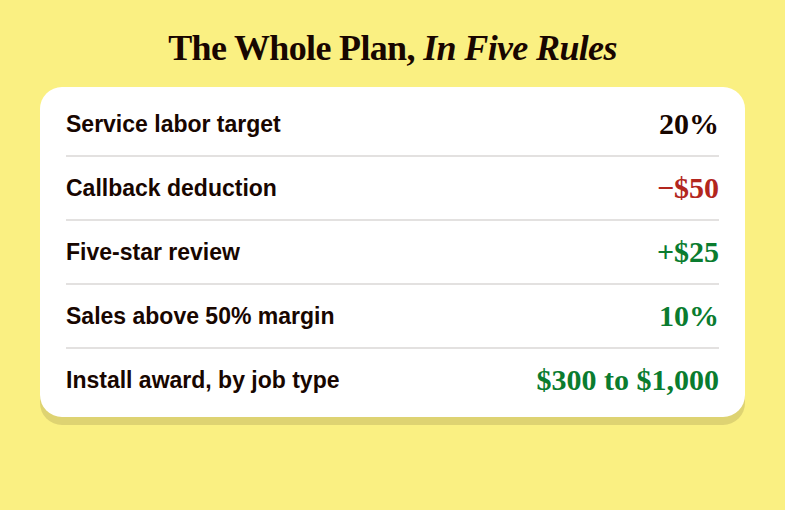
The installer bonus is one piece of a bigger plan. Service technicians work toward a 20% labor-rate target, with hourly-rate tiers documented at $28, $22, and $20. Service revenue on multi-technician jobs is split by hours worked, which solves the credit problem the same way the install plan does.
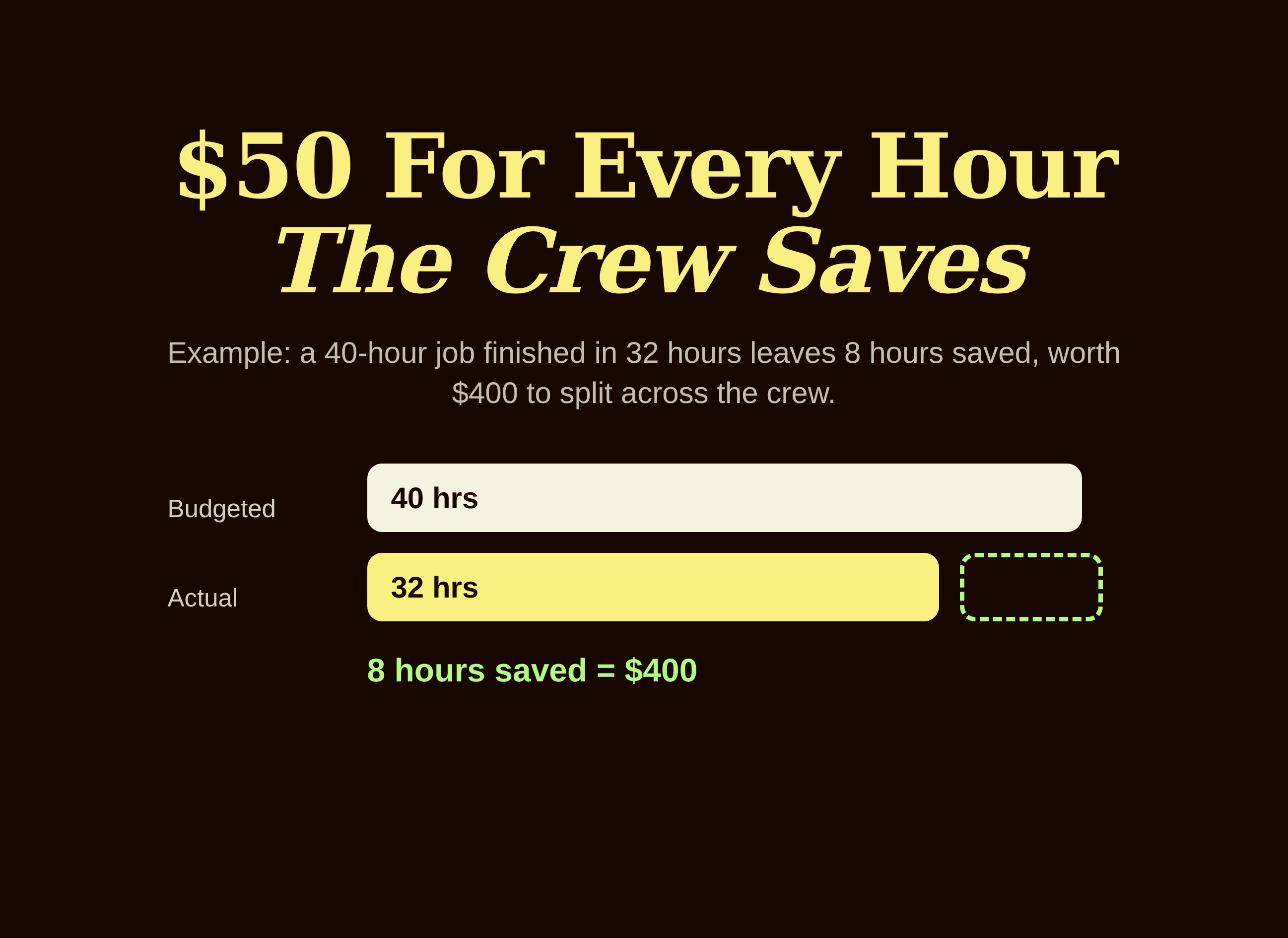
Upsells are where the company changed its mind in the room. The existing Excel formula paid 6% of the repair portion of a job, excluding labor, when the job cleared a 50% margin. During the planning call, the team realized that stacking a 6% upsell on top of a revenue incentive could push effective labor cost past the target. They cut the rate to 3% and agreed to test it against historical payouts before go-live.

The upsell rules are tight on purpose. The award goes to the sold-by technician, applies to non-Band-Aid options, and requires the job to exceed a 50% gross margin. That is a good template for anyone thinking about HVAC spiffs: pay for the behavior you want, and gate it with a margin check so a big number never hides a bad job.
Callbacks and Reviews: One Penalty, One Reward
Two small rules round out the service plan. Each callback carries a fixed $50 deduction, tracked through the recalls field. Each five-star review earns $25. The two numbers are deliberately close in size, so a good review roughly offsets half a callback and a pattern of callbacks is hard to ignore.
Reviews turned out to be the awkward part. Podium sends review invitations but does not provide a report that breaks reviews down by employee and date. The company granted access so the team could investigate, and in the meantime reviews are entered manually. Automating that through Google Business Profile or an internal sync tool is the longer-term plan. It is a useful reminder that a bonus is only as good as the data feeding it. A similar lesson shows up in how another HVAC company protected base pay while launching a 5% service and 3% install plan.
Profit sharing
made simple.
Give your team a stake in the company’s success. ShareWillow helps you create and manage profit-sharing programs that motivate employees and drive business results.
The Result: A Plan Priced Before the First Payout
This is a story about a plan that has not paid out yet, and that is the point. The company is building historical payouts first, so it can see what technicians would have earned over prior pay periods and compare that to what it actually paid. Payouts run twice a month, on the 11th to the 25th and the 26th to the 10th, which required a configuration change because the standard twice-monthly setup only allowed the 1st or 15th as a start date. Go-live is targeted for about two weeks after the planning call.
What is already measurable is the design: a $300 to $1,000 install range by job type, a 20% labor target, a $50 callback deduction, a $25 review award, a 10% sales commission above a 50% margin, and an upsell rate cut in half before it cost the company a dollar. Replacing a manual Excel process with automated, auditable payouts also removes the payroll hours spent hunting through repair descriptions.
How to Build Your Own HVAC Installer Bonus
Start with the job types, not the dollar amounts. If your system cannot tell a complete replacement from a partial one, the bonus cannot either. Then pick amounts you could afford on your thinnest-margin install, subtract real labor, and decide who shares the pool. Test the whole thing against last quarter's jobs before anyone sees a paycheck.
For a broader menu of structures, the guide to HVAC commission pay covers the main models, and ShareWillow for HVAC companies shows how plans like this one are tracked and paid automatically from your field service data. You can also see the full list of product features.
Frequently Asked Questions
How much should I pay HVAC installers per job?
There is no universal figure. This company pays $800 for a complete system, $600 for a condenser and coil, and $300 for a condenser-only job, then subtracts labor cost. Start from what your thinnest-margin install can afford, not from what sounds generous.
Should helpers share the installer bonus?
In this plan they do not. Their hours count against the pool so the company sees the true cost of the job, but the bonus goes to the primary installers, split by hours worked.
How do I split an installer bonus among a crew?
Split it by clocked hours. After subtracting labor from the award, each primary installer receives a share equal to their hours divided by the crew's total hours. It is simple to explain, and it is hard to argue with.
Related reading
Conclusion
Set the install award by job type, subtract real labor, split the rest by hours, and test it on past jobs before the first payout.
Create incentives
that
drive results
You shouldn't need complex equity plans to align your team. ShareWillow makes it simple to create transparent profit-sharing programs that motivate employees and grow your business.

Incentive plans to help
small businesses thrive.
.png)
"I was able to leverage the knowledge of the ShareWillow team to learn how other companies were designing their bonus plans. The template was extremely helpful."

Brian Tustin
Owner, First Rate Movers