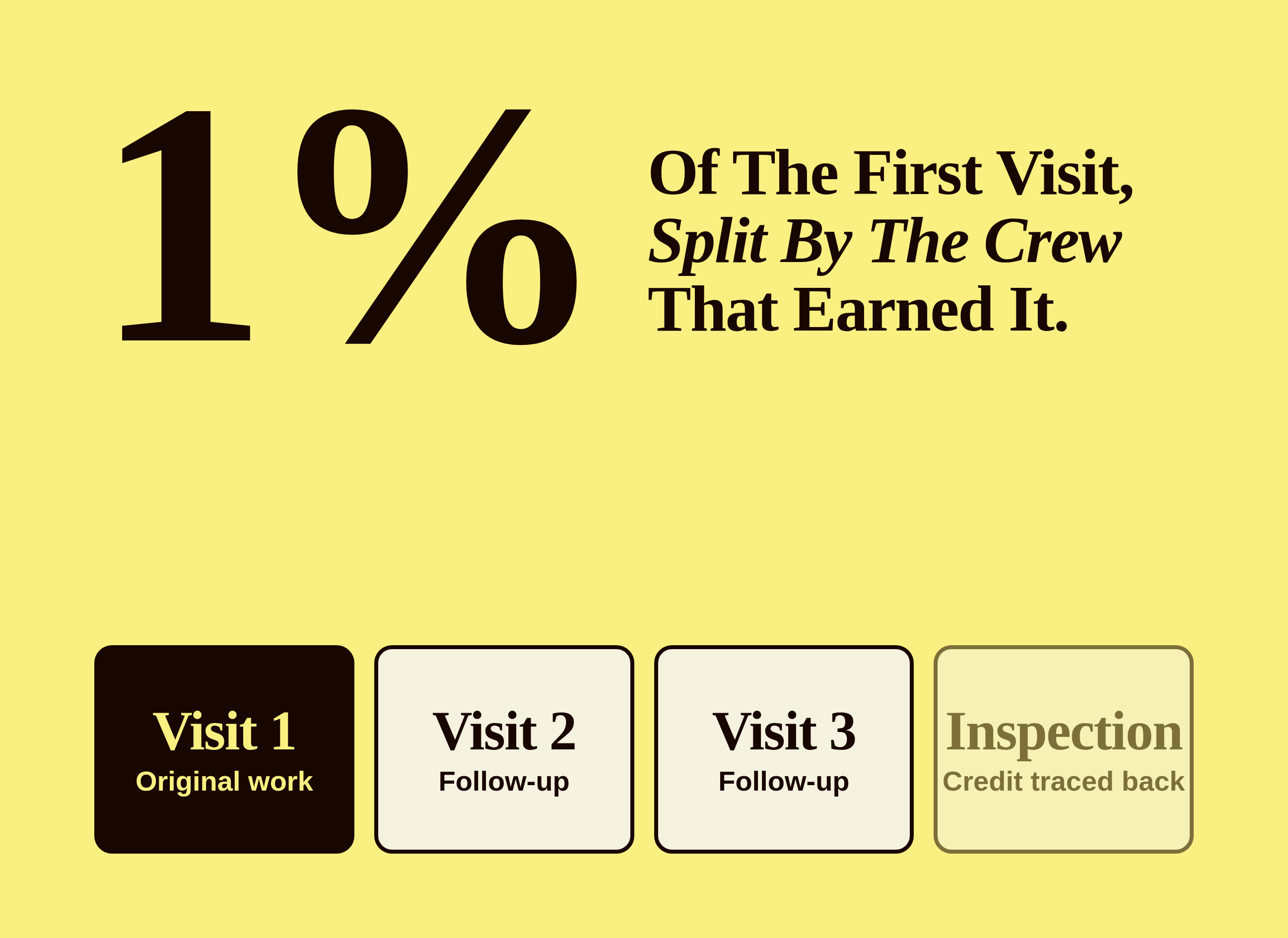
Technician commission vs hourly pay solved: an HVAC company protects base pay, pays 5% on service and 3% on install, and charges callbacks to the original tech.
The technician commission vs hourly pay debate usually gets framed as a choice, and owners who frame it that way tend to stall. Commission promises upside but scares good techs who like a steady paycheck. Hourly feels safe but rewards showing up over producing. A small HVAC company found a third option: keep base pay protected, calculate performance pay next to it, and pay whichever is higher.
The company runs its jobs through Jobber, and the owner wanted something simple: a mostly automated weekly workflow to review base pay against performance pay and finalize awards. The plan is designed to improve profitability and accountability after recurring problems with callbacks, incomplete job records, and technicians earning commission without any visibility into whether the job made money.
The Problem: Commission Without Visibility, Hourly Without Upside
Before the plan, the company had the familiar split. Some pay felt disconnected from results, and some job records were left open or uninvoiced, which meant revenue reports could not be trusted. Callbacks were a running sore: the tech who fixed a callback was often not the tech who caused it, and nobody was tracking the difference.
Owners in this spot often reach for a bigger commission percentage, thinking the incentive will fix the behavior. It rarely does. Bad records produce bad commission, and a bigger percentage on bad records is just a bigger mistake. The company started with the data instead.
Jobber already provides regular hours, overtime hours, callback line items, service revenue, and installation revenue. The plan uses all five. What it lacked was a reliable way to tell a service job from an install, and that gap decided the first design choice.
Technician Commission vs Hourly Pay: Pay the Higher of the Two
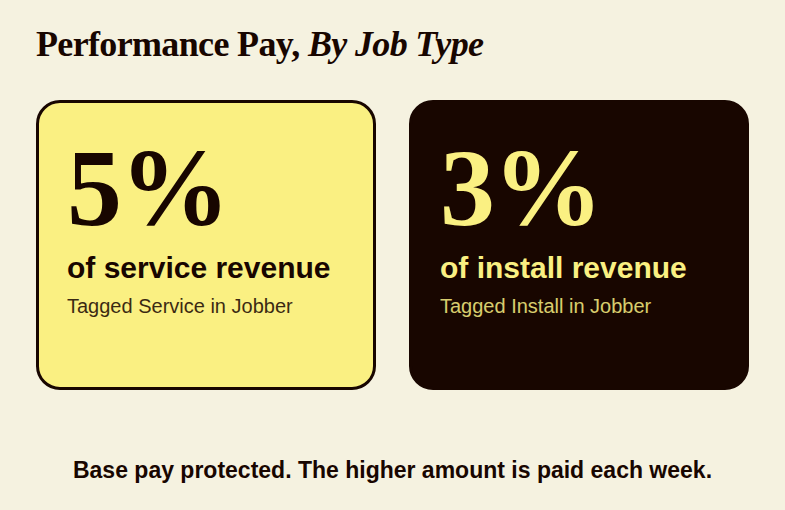
Every week, each technician's protected base pay is compared with calculated performance pay, and the higher amount stands. Base pay protection removes the fear that keeps good technicians from trying a new plan. Performance pay gives the strong technicians a reason to push. The owner reviews the current pay period each week, compares the two figures, and finalizes the award, and technicians see finished awards in the app. The launch also includes additional raises from the owner, so the plan is not a way to sneak in a cut.
Performance pay is built from two rates: 5% of service revenue and 3% of installation revenue. The rates were entered backward at first, 3% on service and 5% on install, and caught during the review call before launch. It is a small example of why a review pass matters. Service revenue is usually quicker and more repeatable than install revenue, and paying the higher rate on service nudges technicians toward the work the company runs the most.
Overtime hours are tracked alongside regular hours, and callback deductions come out of performance pay. Together those inputs let the weekly comparison answer a real question: did this technician's production beat the guaranteed floor, and by how much? Owners who want to see how other companies tested the same idea can read how one company found techs earned up to 55% more on commission than hourly.
What Base Pay Protection Costs, and Why It Is Worth It
Owners worry that a protected floor means paying twice. The math is friendlier than it sounds. Suppose a technician's hourly amount for a week is $1,000 and performance pay comes to $1,250. The company pays $1,250, not $2,250; the two are compared, not added. If performance pay is $900, the company pays the $1,000 base. The extra cost only appears in weeks when the technician produced enough to earn it, and those are the weeks the company is glad to pay for.
The real cost of protection is the weeks when hourly wins. Those weeks are information. If they show up for one technician repeatedly, the conversation is about training or dispatch. If they show up for everyone, the rates or the job mix need attention. Either way, the comparison is a diagnostic tool as much as a payroll tool.
Callbacks: Charge the Tech Who Did the Original Job
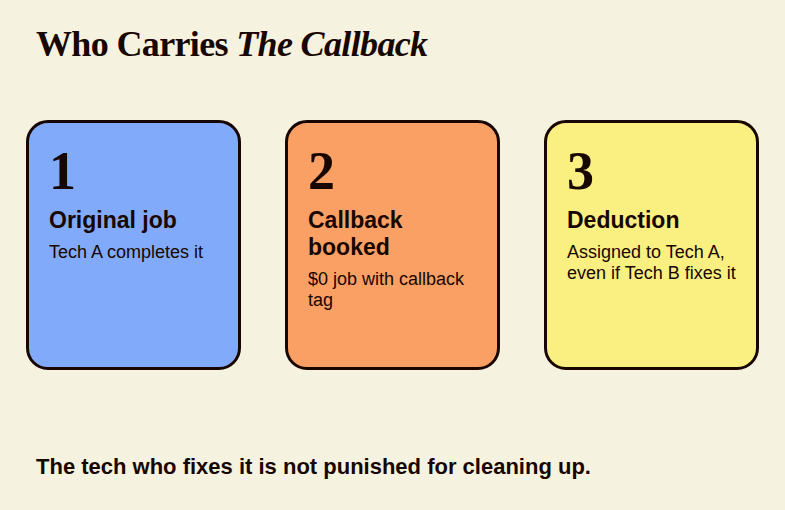
Callback handling is where most technician pay plans get muddy. Here the rule is clean. A callback is recorded as a $0 job with a callback tag, and the deduction is assigned to the technician on the original job, even if a different technician handles the return trip. The person who caused the callback carries it; the person who fixes it is not punished for cleaning up.
The rule only works when jobs are tagged, so the owner is adding an explicit Service or Install tag to every job. Before, service jobs were identified by things like a diagnostic line item or a maintenance activity, which invites mistakes. A tag is unambiguous, and it prevents double-counting or misclassifying revenue. The owner is also holding a team meeting before launch to reinforce correct Jobber usage: close every call, invoice every customer, apply the tag. The plan cannot be more accurate than the records under it. Another company found the same thing in a bonus tied to a 3% callback quality bar.
Profit sharing
made simple.
Give your team a stake in the company’s success. ShareWillow helps you create and manage profit-sharing programs that motivate employees and drive business results.
The Result: A Simple Weekly Review and a Built-In Adjustment Period
The plan is scheduled to go live the week of October 1, and the company is treating the first three to four weeks as an adjustment period. That is a sound habit. Any pay plan will have a wrinkle that only shows up in a real pay period, such as a job type nobody tagged, a technician who did a callback on a job that was never closed, or a week where hourly beat commission for everyone. Deciding in advance to review and adjust takes the drama out of those discoveries.
The owner's weekly process is short: open the current pay period, compare base pay with performance pay for each technician, check the callback tags, finalize. Payroll happens on Thursday or Friday, so the review fits inside the normal week. There is no payout total to report yet, since the plan has not run a full period, but the structure is fixed: 5% of service, 3% of install, callbacks charged to the original tech, and the higher of base or performance pay wins.
Why Simple Beats Clever
The owner asked for a workflow with as few steps as possible, so the plan comes with a short step-by-step guide and a supporting video for the weekly review. That request is a good design test. If a pay plan takes an hour of explanation, it will be skipped in a busy week, and a skipped review is how errors get paid. A five-minute review that actually happens beats a perfect plan that is too tedious to run.
Three mistakes are worth avoiding when you build something similar:
- Turning on performance pay before jobs are tagged as service or install
- Letting callbacks land on whoever happened to be dispatched instead of whoever did the original work
- Skipping the adjustment period, then treating the first odd week as a failure of the whole plan
If you are weighing the same choice, do the record cleanup first, then the percentages. A useful next read is HVAC commission pay: how to design a plan that drives profit, and the case study on how to pay HVAC technicians when installs are split covers what happens when more than one person touches a job. HVAC companies that want the weekly comparison built and automated can look at ShareWillow's product features.
Finally, tell the team what will not change. Base pay stays protected, the owner's raises still happen, and the weekly review is the same every week. People accept a new plan faster when the list of unchanged things is longer than the list of changes.
Frequently Asked Questions
Is commission or hourly pay better for HVAC technicians?
Neither wins on its own. Hourly protects stability and commission rewards production, so many companies pay the higher of the two each week. That keeps good techs from feeling exposed while still paying real money for strong weeks.
What commission rate should I pay on HVAC service and install work?
There is no universal number. This company uses 5% of service revenue and 3% of installation revenue, then reviews the results after three to four weeks. Start with a rate you can afford in a bad week, and adjust with actual data.
How should callbacks affect a technician's pay?
Assign the callback to the technician who did the original job, not the one who returns to fix it. Tag callbacks as $0 jobs so they are easy to find and deduct from performance pay.
Related reading
- How to Pay HVAC Technicians: The Install Split That Ended Pay Disputes
- Technician Pay Plans: How One Home Services Company's Techs Earned Up to 55% More on Commission Than Hourly
- Same Bonus, Any Callback Rate: How an HVAC Company Tied Pay to a 3% Quality Bar
- HVAC Commission Pay: How to Design a Plan That Drives Profit (Not Problems)
Conclusion
Protect base pay, pay the higher of the two each week, and clean up job records before you tune the percentages.
Create incentives
that
drive results
You shouldn't need complex equity plans to align your team. ShareWillow makes it simple to create transparent profit-sharing programs that motivate employees and grow your business.

Incentive plans to help
small businesses thrive.
.png)
"I was able to leverage the knowledge of the ShareWillow team to learn how other companies were designing their bonus plans. The template was extremely helpful."

Brian Tustin
Owner, First Rate Movers