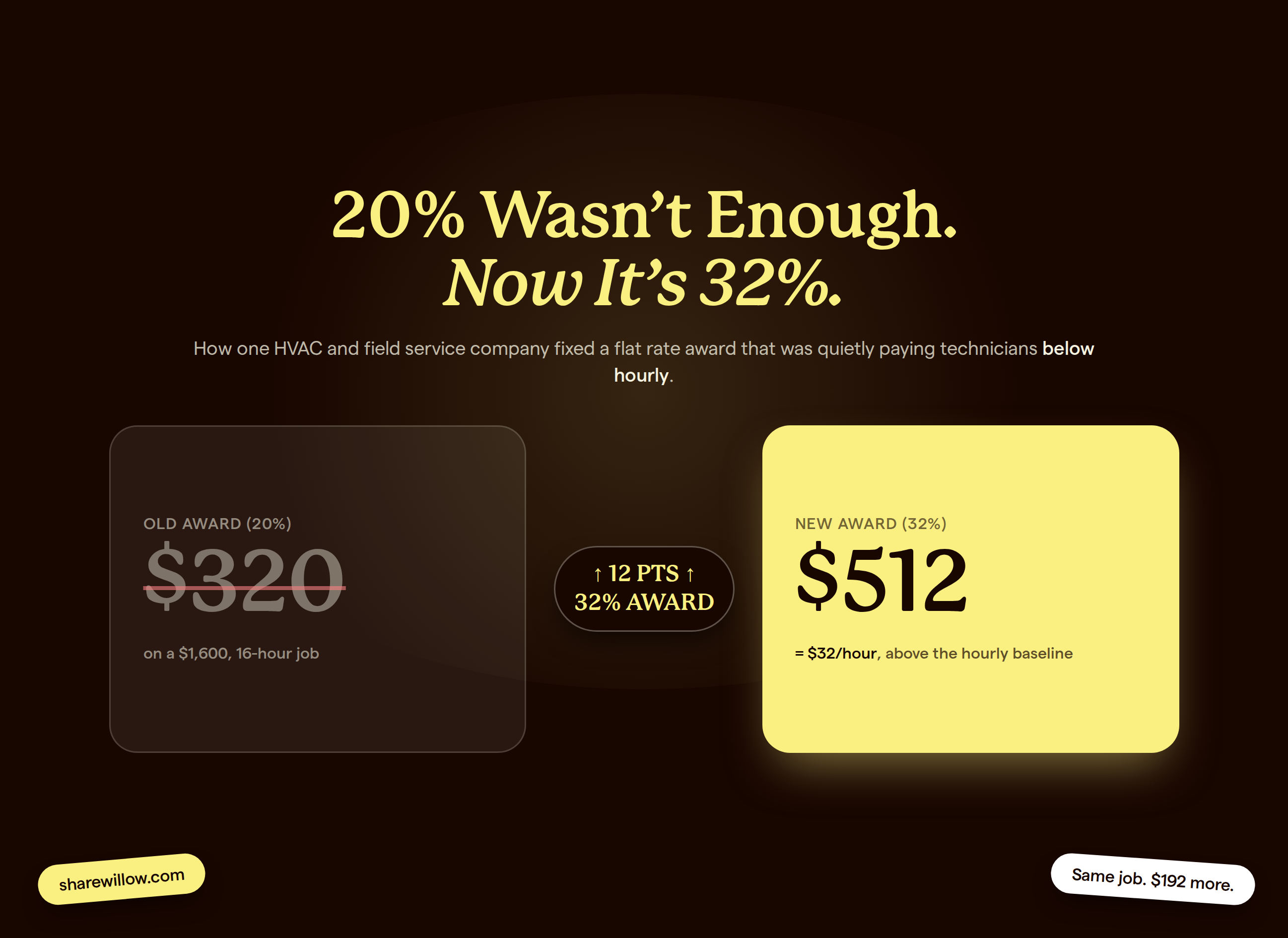
A five-person HVAC and plumbing company had a bonus tier almost nobody could reach. Rebuilding it around real sold hours turned into a $3,000 paycheck, and a team that finally checks its own numbers.
When The Top Tier Might As Well Not Exist
Every incentive plan starts with good intentions. Hit a number, get a bonus. Simple enough on a whiteboard. The trouble shows up months later, when the owner looks around and realizes almost nobody on the team has ever actually touched the top tier. The plan is technically still running. It just isn't doing anything.
That's roughly where a small HVAC and plumbing company found itself. Five technicians, one owner who built the business from a single truck, and a commission structure with three tiers that looked reasonable on paper. The problem was the thresholds. They'd been set high enough, early enough, that most techs were landing in the bottom bracket month after month: a token payout, sometimes as little as one percent of what they'd sold, barely worth mentioning on a paycheck. A bonus that small doesn't motivate anyone. If anything, it does the opposite. It tells a tech the plan isn't really for them.
Quick facts
- Five-person residential HVAC and plumbing company, owner-operated
- Original plan: three commission tiers based on sold hours, top bracket rarely reached
- Rebuilt plan: recalibrated thresholds, reviewed and finalized monthly inside ShareWillow
- Result: one technician earned a $3,000 bonus in a single month, largely from selling rather than installing
The owner had been quietly benchmarking his numbers against a competing field service payroll tool, trying to make sure his team's take-home was actually competitive. That's a healthy instinct, but it also meant he already suspected something was off before he sat down to fix it. A bonus tier that nobody reaches isn't a compensation plan. It's a rounding error with a name, and every month it stays broken, it teaches the team a little more not to bother chasing it.
Why Sold Hours, Not Job Count
The first real decision in the rebuild was what to measure. A lot of shops default to counting jobs, or gross revenue, because those numbers are the easiest to pull from a dispatch board. But job count rewards volume over value, and raw revenue can hide who's actually doing the selling versus who's just closing out tickets someone else booked. This company's plan is built around sold hours instead: a measure that credits a technician for the work they actually generated, whether that's a straightforward repair or a full system they sold on the spot.
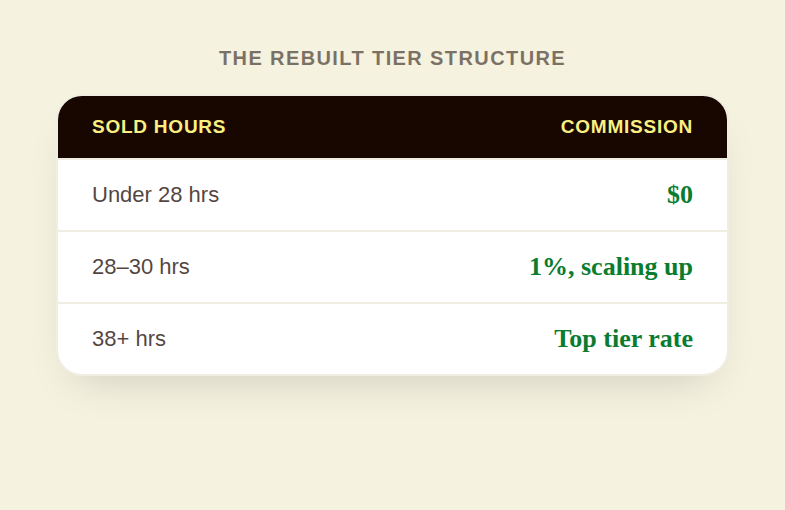
The rebuilt structure runs three levels. The first threshold, which used to sit at 26 sold hours a month, came down to 24, a small change that made the entry bonus reachable for techs having a normal month instead of an exceptional one. The second level got a real floor: anything under 28 hours pays nothing extra, but 28 to 30 hours starts paying 1 percent and scales up from there, so the jump from close to qualified actually means something. The top tier kicks in at 38 or more sold hours, with a commission rate high enough that hitting it is worth chasing.
None of this required new software or a new dispatch process. The sold-hours numbers were already sitting in the company's field service system. What changed was the math layered on top of them, and how visible that math became to the people it was paying.
“He still makes a pretty good bonus for not touching a wrench. That's a great bonus.”
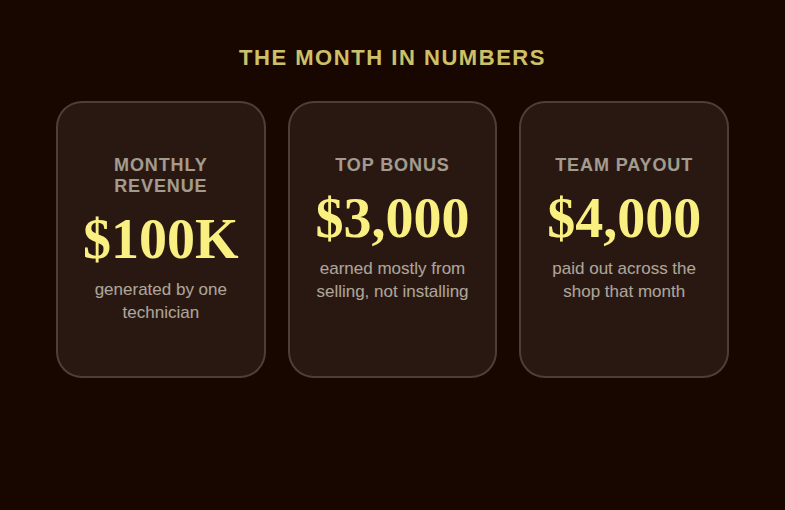
That's the owner, describing one of his technicians whose strength is sales rather than install work. Under the old structure, that kind of contribution barely registered. Under the rebuilt tiers, it turned into one of the biggest paychecks anyone on the team had seen: a $3,000 bonus in a single month, on top of a normal hourly wage, earned almost entirely by selling roughly $100,000 worth of work rather than swinging tools.
A Monthly Rhythm The Team Can Trust
The plan runs on a monthly review and finalize cycle inside ShareWillow. Each month, the numbers get checked and locked before payout, and if the current month isn't closed yet when a correction is needed, the fix applies retroactively rather than waiting for next cycle. That might sound like a small operational detail, but it's the difference between a bonus system technicians trust and one they quietly stop believing in. If a plan pays out wrong even once and nobody catches it, word travels fast on a five-person team.
It also changed how often the owner and his technicians talk about the numbers at all. Before, bonus conversations happened once, awkwardly, whenever a check looked off. Now they happen constantly, and not because anything is broken.
“They're really plugged into it. I mean, they're always calling me and say, ‘Hey, why does this show this?’”
That's not a complaint. For an owner who spent years running incentive pay off gut feel and a calculator, having technicians who actually study their own numbers is close to the whole point. A tech who checks the app to see how close they are to the next tier is a tech who's thinking about the business the way an owner does, at least for a few minutes a day.
Profit sharing
made simple.
Give your team a stake in the company’s success. ShareWillow helps you create and manage profit-sharing programs that motivate employees and drive business results.
The Result
The headline number is the $3,000 bonus, but it's worth looking at the shape of the whole month. Total bonus payout across the five-person team came to roughly $4,000, meaning one technician's selling accounted for the large majority of it. That's not a flaw in the plan. It's evidence the plan is finally rewarding the specific behavior the owner wanted more of: technicians who sell the work in front of them instead of just completing the ticket and moving to the next address.
It also gave the owner something concrete to compare against that rival platform's numbers he'd been benchmarking. Instead of guessing whether his shop's pay was competitive, he had an actual bonus, on an actual paycheck, that he could hold up next to what other tools claimed their customers were paying out. “I'm gonna make a big, big paycheck, and I'm gonna present it to him tomorrow for the guys,” is how he put it, planning to show the whole team what the new structure had produced. That's a very different conversation than explaining, again, why the top tier still hasn't paid out.
Why This Matters For Your Shop
Most incentive plans don't fail because the idea behind them is wrong. They fail because the thresholds get set once, based on a guess, and never get revisited once real data starts coming in. If a tier sits unreached for six straight months, that's not a motivation problem on the technician's side. It's a calibration problem on the plan's side, and it's fixable without touching pay rates, headcount, or anything else that feels risky to change.
If you're running a plumbing or HVAC shop with a commission structure that technicians have stopped mentioning, that silence is usually the tell. A plan people believe in gets talked about, argued over, and checked constantly. One that's quietly failed just goes quiet. Take a look at ShareWillow's plan-building features to see how a sold-hours structure like this one gets built and reviewed month over month, or read how another HVAC company tied commission to sold hours instead of job count for a similar rebuild with a different set of numbers.
The technicians on this team didn't get a more complicated plan. They got a fairer one, calibrated to hours a normal month can actually produce, reviewed monthly instead of left to run on autopilot. That's a smaller change than it sounds like, and it's the kind of fix most shops can make without waiting for a slow season to try it.
Related reading
Conclusion
A bonus tier only works if someone can actually reach it. Recalibrate around real performance data, not a number that sounded fair on a whiteboard.
Create incentives
that
drive results
You shouldn't need complex equity plans to align your team. ShareWillow makes it simple to create transparent profit-sharing programs that motivate employees and grow your business.

Incentive plans to help
small businesses thrive.
.png)
"I was able to leverage the knowledge of the ShareWillow team to learn how other companies were designing their bonus plans. The template was extremely helpful."

Brian Tustin
Owner, First Rate Movers