A restoration franchise nearly turned a 20% annual bonus cap into 80% of salary paid quarterly. Here's the mix-up, the catch, and how to write comp plans that can't be misread.
A "20% Bonus" That Almost Became an 80% Bonus
A regional fire and water damage restoration franchise was in growth mode. New territory, new work, and a leadership bench that needed to expand fast. The company brought on several new managers at salaries higher than anything it had paid before, and it wanted to roll out an incentive program to that group along with existing upper management. The plan, as described to the operations leader, was simple on paper: a 20% bonus.
Simple, until he actually sat down to plan the payroll around it. On a call with his ShareWillow customer success manager, he worked through what a "20% bonus" meant if it were paid out quarterly, the way he'd been picturing it. Twenty percent of salary, four times a year. He did the multiplication out loud, and you could hear him catch the number as it landed.
"I'm, if I were to give someone 20% of their salary 4 times a year, now we're talking pretty considerable... I mean, I'm doubling the salary."
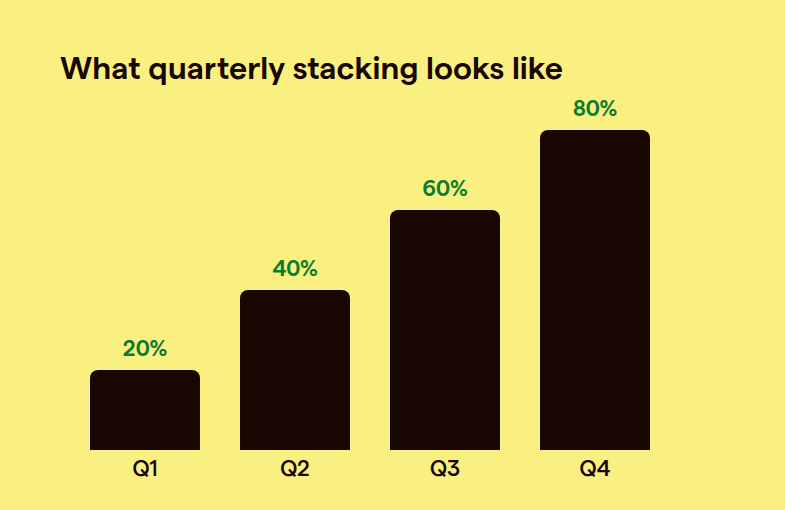
He wasn't wrong. Twenty percent, paid four separate times in a year, is 80% of salary in additional compensation. Add that to a base salary and you're not looking at a bonus program anymore. You're looking at nearly double the total comp for every manager and new hire enrolled, a payroll swing that would have blown past whatever budget the company had modeled and created a serious equity problem with every manager who wasn't in that new cohort.
This is the moment worth pausing on, because it's not a story about a mistake that happened. It's a story about a mistake that got caught. The operations leader ran the math out loud, on a call, before a single email went out, before a single new hire heard a number, before a single dollar was promised to anyone. That's the best possible place for a compensation error to surface: in a planning conversation, not in a paycheck.
Any owner who has tried to design an incentive plan for a restoration company, an HVAC shop, a facility services crew, or any trades business with hourly and salaried staff has run into some version of this same fork in the road. You decide on a target payout, say 20% of salary as a strong annual incentive. Then you decide to pay it out quarterly instead of once a year, because quarterly payouts keep the incentive fresh and give people faster feedback on their performance. Those are two separate, reasonable decisions. The trouble starts when the words used to describe them get compressed into one sentence, like "20% bonus, paid quarterly," and two different people in the room fill in the missing word two different ways.
The Word That Was Missing: "Of" What, Exactly
Here's the actual structure of the plan, once it got untangled. The 20% was never meant to be a per-quarter number. It was the annual ceiling, the maximum a manager could earn under the plan across the whole year. That ceiling then gets divided across four quarterly payout periods, so the real quarterly opportunity is one-fourth of 20%, or about 5% of salary per quarter. Add up all four quarters at full payout and you land back at 20% for the year, not 80%.
The ShareWillow customer success manager caught the gap immediately and corrected it on the spot.
"It's not 20% of their salary each quarter. It's 20% of their salary divided by 4... one-fourth of it."
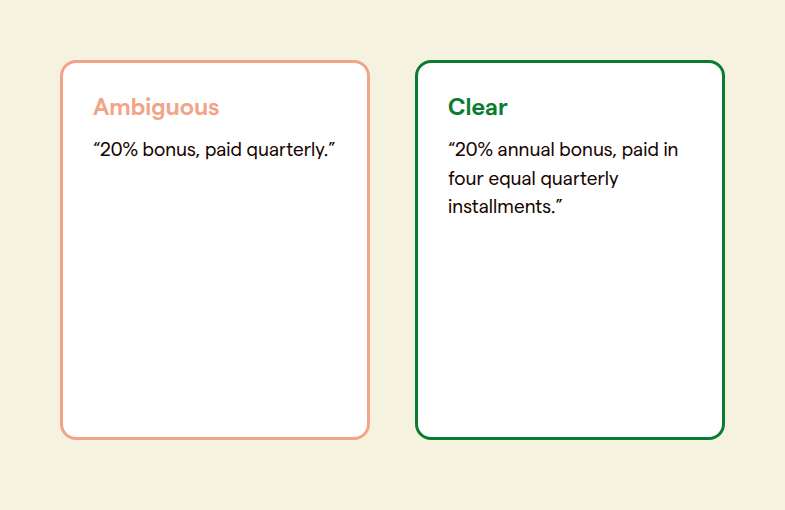
That one sentence is the difference between a manageable, well-designed incentive plan and a payroll number that would have needed to go back to ownership for an emergency conversation. It's worth sitting with why this particular mix-up is so easy to make, because it isn't a math problem. Everyone involved can do division. It's a language problem. "20% bonus, quarterly" is genuinely ambiguous. It can mean 20% total, spread over four payments. It can also mean 20% per payment, four times a year. Both readings are grammatically valid. Only one of them was the plan.
Put real numbers on it and the stakes get obvious fast. Say a newly hired operations manager is earning $70,000 a year. Under the plan as designed, a full 20% annual payout is $14,000 spread across four quarters of roughly $3,500 each. Under the misread version, that same manager would be earning $3,500 four times... except no, under the misread version each quarterly payment would itself be 20% of $70,000, or $14,000 per quarter, $56,000 for the year on top of salary. That's not a rounding error. That's the kind of number that shows up in a board meeting with someone's name attached to why it happened.
Multiply that gap across a handful of new managers hired at higher salaries, which is exactly the situation this operations leader was in, and the exposure moves from "expensive mistake" to "the kind of number that changes whether the company can make payroll." That's the real argument for why comp plan language deserves the same precision as a contract. Nobody would sign a lease that said "rent is 10%, paid monthly" without asking 10% of what. Bonus plans get talked about far more loosely than that, usually because they're discussed out loud in meetings before anyone writes the actual formula down.
This is also the exact problem ShareWillow's plan-building tools are designed to remove. When a plan is built inside the platform rather than described verbally in a meeting, the structure has to be explicit: what's the pool, what's the cap, what's the payout frequency, and what does each individual period actually pay out. You can browse the specifics on ShareWillow's plan-building features, but the underlying idea is simple. A plan that lives only in a sentence is a plan that can be misheard. A plan that lives in a defined structure, with the annual cap and the per-period amount both stated as separate numbers, isn't open to interpretation.
Profit sharing
made simple.
Give your team a stake in the company’s success. ShareWillow helps you create and manage profit-sharing programs that motivate employees and drive business results.
How to Design a Plan That Can't Be Misread
The good news in this story is that nothing went wrong. No manager was promised 80% of salary. No new hire heard a wrong number and repeated it to a peer. No payroll run went out at the wrong amount. The error surfaced in a planning call, got corrected in the same call, and the company moved forward with the plan it actually meant to build. That's the outcome every business owner designing an incentive program should be aiming for: catch it in the room, not in the paycheck.
A few habits make that far more likely.
- State the annual cap and the per-period amount as two separate numbers, every time. Don't just say "20% bonus, paid quarterly." Say "20% of salary is the annual maximum, paid out in four quarterly installments of 5% each." Force both numbers onto the page.
- Put comp structures in writing before anyone talks about them out loud. A verbal description in a meeting is where ambiguity hides. A written formula, reviewed before the meeting, is where it gets caught.
- Never let a new plan reach an employee's ears before it's been confirmed in writing internally. New hires and newly promoted managers are the most likely to repeat a number exactly as they first heard it, with no context to sanity-check it against.
- Run the annual total out loud, the way the operations leader did. If a "quarterly bonus" doesn't obviously reduce back down to a sane annual number when you multiply it by four, stop and check which number is the total and which is the slice.
This near miss became a standing rule for how ShareWillow and this client communicate going forward. Any comp structure question or new plan detail gets sent by email first, in writing, before it's discussed live in a meeting. It's a small process change, but it closes the exact gap that almost caused the problem: a verbal description that two people can hear two different ways. Writing it down first forces the "of what" question to get answered before anyone's in the room doing math on the fly.
The lesson here isn't specific to restoration companies, and it isn't specific to this one plan. Any HVAC shop rolling out a spiff program, any facility services company setting up a manager bonus tied to margin or retention, any trades business owner who has ever said "we'll do a percentage bonus" without immediately following it with "percentage of what, over what period, capped at what" is one ambiguous sentence away from the same conversation this operations leader had. The math isn't hard. The English is what trips people up.
If you're building out a bonus or profit-sharing structure for crew leads, technicians, or newly hired managers, it's worth reading how other restoration operators have structured incentive pay around real performance metrics, including this breakdown of a crew chief margin bonus plan, to see what an unambiguous, well-documented plan actually looks like on paper.
The company in this story never had to unwind a bad announcement, never had to explain to a room of new managers why the number they heard on day one wasn't real, and never had to find $56,000 per manager it hadn't budgeted for. It got there by saying the math out loud before it went out the door, and by having someone in the room who caught the gap in language before it became a gap in the bank account. That's not a customer support anecdote. That's the whole discipline of building comp plans that hold up under pressure.
Related reading
Conclusion
A 20% bonus and a 20%-per-quarter bonus are four times apart, and the only defense is writing the math down before anyone says it out loud.
Create incentives
that
drive results
You shouldn't need complex equity plans to align your team. ShareWillow makes it simple to create transparent profit-sharing programs that motivate employees and grow your business.

Incentive plans to help
small businesses thrive.
.png)
"I was able to leverage the knowledge of the ShareWillow team to learn how other companies were designing their bonus plans. The template was extremely helpful."

Brian Tustin
Owner, First Rate Movers