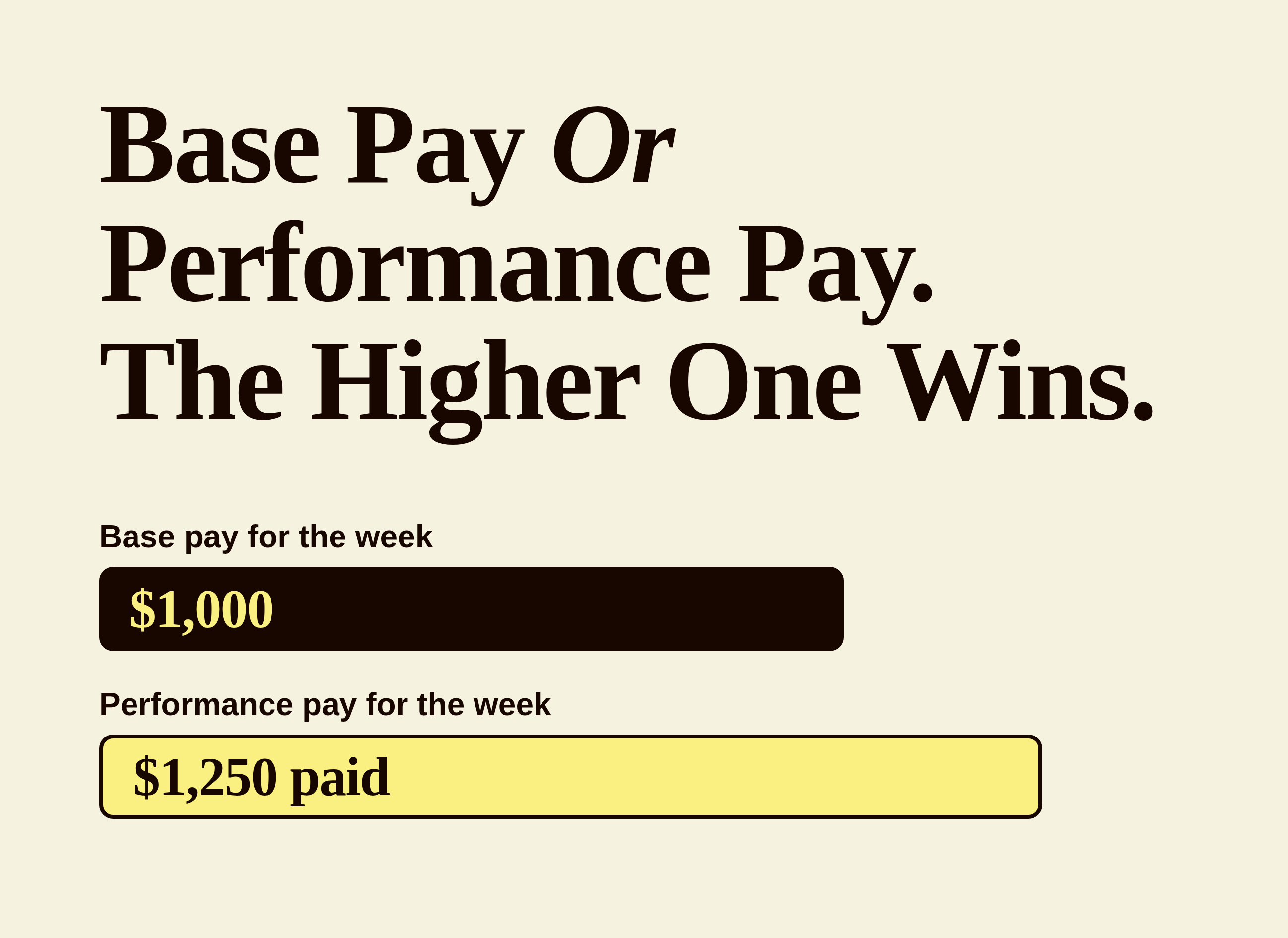
Electrician bonus plan that pays 1% of first-visit job value for each passed inspection, split among assigned techs, plus a weekly apprentice scorecard.
An electrician bonus plan looks simple on a whiteboard: reward the crew for passing inspections, reward the apprentices for getting better, and pay out on time. Then the software gets involved. One electrical services company found that its inspections were logged as separate job segments assigned to an office lead, which meant the technicians who did the work showed up with zero credit. The fix took a small rule change and a weekly form.
The company runs technician plans, a separate plan for apprentices, and an admin view of technician revenue production. Jobs often span many visits and several people; one example had ten visits and roughly five different technicians. Before launching, the owner wanted the inspection incentive to be fair, the apprentice incentive to be measurable, and the first payout to be a real example the team could look at, not a slide deck.
The Problem: Inspection Credit Went to the Wrong Person
Inspection-pass bonuses are popular in electrical work for good reason. A passed inspection means the work was done right the first time, no callback, no re-pull, no lost afternoon. Paying for it aligns the crew with the outcome the customer cares about.
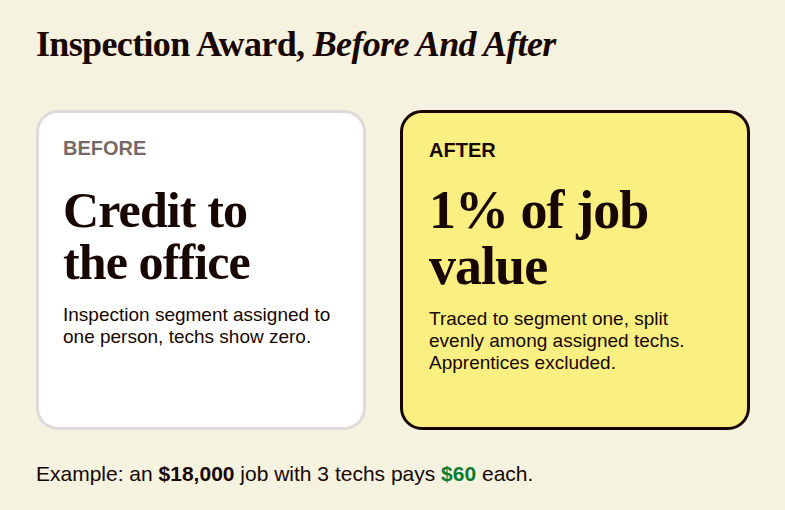
The trouble was attribution. In the company's system, an inspection is its own segment of the job, and that segment was assigned to one person in the office rather than to the technicians who ran the original work. When the plan looked for "who passed this inspection," it found the office lead. The technicians' metrics read zero even when every inspection had passed.
Wrong credit is more than a bookkeeping error. Technicians watch their own numbers closely, and a metric that reads zero for a crew that passed every inspection teaches them that the plan is broken and that nobody is checking. Once that belief sets in, no percentage will fix it. The company decided the rule had to be right before the plan was announced.
A second problem sat underneath it. On multi-visit jobs, the lead technician is not always obvious, and clock-in data cannot settle the question because not every technician clocks in on every visit. Any rule that depends on naming a single lead would be wrong some of the time, and technicians remember the times it was wrong.
An Electrician Bonus Plan That Pays 1% of the First Visit's Job Value
The new rule traces every inspection back to segment one of the job, the original work, and pays from there. Each technician assigned to segment one shares 1% of the total job value, split evenly. Apprentices are excluded from this award, because they have their own plan. A possible flat $100 award was set aside in favor of the percentage, since a percentage scales with the size of the job. A $30,000 panel upgrade and a $600 service call should not carry the same inspection bonus.
Only passed inspections earn the award. Failed inspections are still tracked so the office can see them, but they do not reduce anyone's pay. That was a deliberate choice: the incentive rewards the result the company wants, and it avoids turning a failed inspection into a payroll argument. If the company later decides that failures need a consequence, the data is already there.
The fallback for multi-technician jobs is equally direct. Where the lead cannot be identified, every assigned technician who qualifies as a technician receives a share. It is not perfect, but it is predictable, and a predictable rule that everyone understands beats a clever one that nobody can predict. The owner is double-checking that 1% of job value is the right level before finalizing it, which is the right instinct for a number that will be paid out hundreds of times.
The math shows why a percentage makes sense. On an $18,000 panel and service upgrade with three technicians assigned to the first segment, 1% is $180, or $60 each. On a $600 service call with one technician, 1% is $6. Nobody argues that a $6 bonus is unfair on a $600 call, and nobody feels shortchanged on the big job either. A flat $100 would have paid the service call far too much and the panel upgrade far too little.
Paying for Work That Has Not Happened Yet
The plan also includes a 5% commission on estimates for future work: estimates in a specific status that carry a future-work tag. Technicians see more of a customer's home than anyone else in the company, and a tech who spots an aging panel or a missing GFCI protection is sitting on a real opportunity. Paying for the estimate rewards the tech for flagging it. So far no estimates with the required tag have appeared, so the company plans to review the configuration once qualifying records show up rather than guess at how it will behave.
Scoring Apprentices Every Week
Apprentices cannot be paid on job revenue the way journeymen can, and a plan that ignores them tends to lose them. The company built a separate incentive around a weekly assessment. A short Google Form collects scores in four areas: shop cleanliness, vehicle maintenance, attendance and reliability, and learning and development. Responses sync to a Google Sheet and then into the plan, where the scores are averaged. Hitting the threshold earns the existing $100 apprentice award.
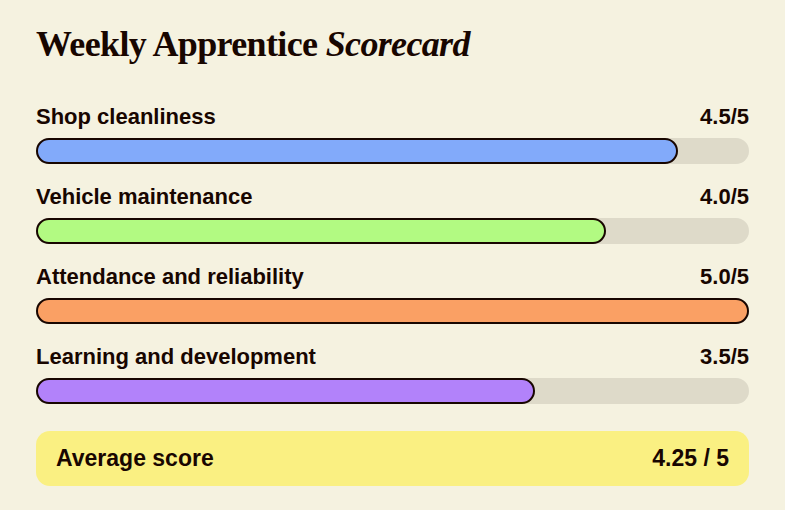
Two things make this work. The categories are things an apprentice can control, and the form takes a supervisor a couple of minutes. Scoring only occasionally would turn it into a performance review; scoring weekly makes it feedback. It also gives the company a record when a promotion or a raise conversation comes up. Other companies have built career-based structures for the same reason, as in the plumbing company that replaced flat commission with a career ladder.
Profit sharing
made simple.
Give your team a stake in the company’s success. ShareWillow helps you create and manage profit-sharing programs that motivate employees and drive business results.
The Result: An Electrician Bonus Plan the Team Can See Before It Counts
The plan is configured and ready, and the rollout method is the part worth copying. Instead of announcing the plan and hoping, the company is using the current two-week pay period to calculate sample payouts, showing each technician what the next paycheck would look like, and going live on the second payout after that. Technicians get to check the math while the stakes are still zero.
Not every piece has data yet, and that is worth saying plainly. An "estimates for future work" commission of 5% is configured, but no qualifying records have appeared, so it will be reviewed once they do. Five-star reviews stay as manual entries. The inspection logic, the apprentice form, and the segment-one rule are the parts producing numbers today.
Before launching a similar plan, check five things:
- Which job segment holds the original work, and who is assigned to it
- Whether inspection results are tagged as passed and failed, so both are visible
- Who counts as a technician and who counts as an apprentice
- Whether payouts use the completed date, so the bonus lands in the period the work finished
- Who reviews the sample payouts with the crew before they become real
If you run an electrical company and want a starting point, keep the list short. Pay for outcomes that a technician controls, trace credit to the person who did the work, and give apprentices a scoreboard of their own. For deeper reading, see how an electrical company built its commission plan and how another team handled labor cost percentage across a 20-tech, multi-trade operation. For structure ideas beyond the electrical trade, browse bonus structure examples. Electrical companies that would rather not build this in spreadsheets can see how ShareWillow automates it.
One last point: write the rules down in plain language before launch. A single page that says what earns a bonus, what does not, and who decides edge cases will save the office manager more hours than any software setting. Technicians trust a plan they can read.
Frequently Asked Questions
What is a good bonus for electricians who pass inspections?
A percentage of job value usually works better than a flat dollar amount because it scales with the work. This company uses 1% of the first segment's job value, split evenly among the technicians assigned to it, and pays nothing extra for failures but does not penalize them either.
Should apprentices be on the same bonus plan as journeymen?
Usually not. Apprentices are learning, and revenue-based pay can reward speed over care. A weekly scorecard covering cleanliness, vehicle care, reliability, and learning gives them targets they control and a defined award.
How do you handle inspections that are logged as separate jobs?
Trace the inspection back to the original job segment and credit the technicians assigned there. Otherwise the person who scheduled the inspection gets the credit and the crew that earned it gets nothing.
Related reading
- Five Pay Plans, One Standard: How an 18-Person Electrical Contractor Unified Its Sales Commission Plan
- Electrical Labor Cost Percentage: How a 20-Tech Multi-Trade Company Is Turning $40K a Month in Overtime Into Growth
- How a 10-Person Electrical Shop Turned One Number Into Real Technician Pay
- 9 Bonus Structure Examples Employees and Employers Love
Conclusion
Pay for outcomes techs control, trace credit to the crew that did the work, and let apprentices see a scoreboard every week.
Create incentives
that
drive results
You shouldn't need complex equity plans to align your team. ShareWillow makes it simple to create transparent profit-sharing programs that motivate employees and grow your business.

Incentive plans to help
small businesses thrive.
.png)
"I was able to leverage the knowledge of the ShareWillow team to learn how other companies were designing their bonus plans. The template was extremely helpful."

Brian Tustin
Owner, First Rate Movers