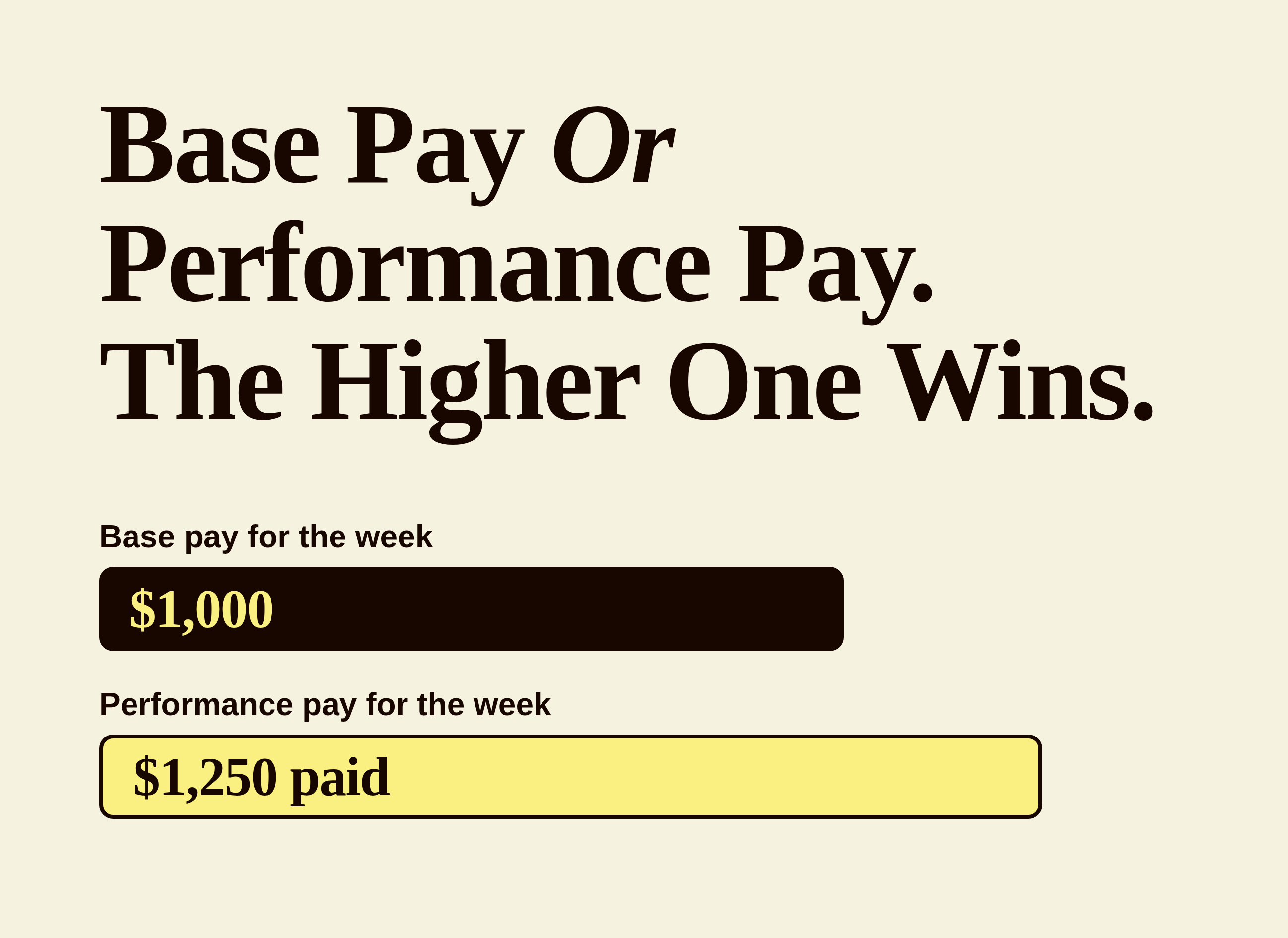
Plumbing commission structure that splits a 22% pool: 5% to the seller, 17% to techs by time on the job, paying whichever is higher, hourly or commission.
A workable plumbing commission structure has to answer a question most pay plans skip: what happens when the person who sold the job is not the person who finishes it? One plumbing company with three commission-eligible technicians, a few hourly helpers, and an owner who stays out of the plan sat down to build one from scratch, and that single question shaped everything else.
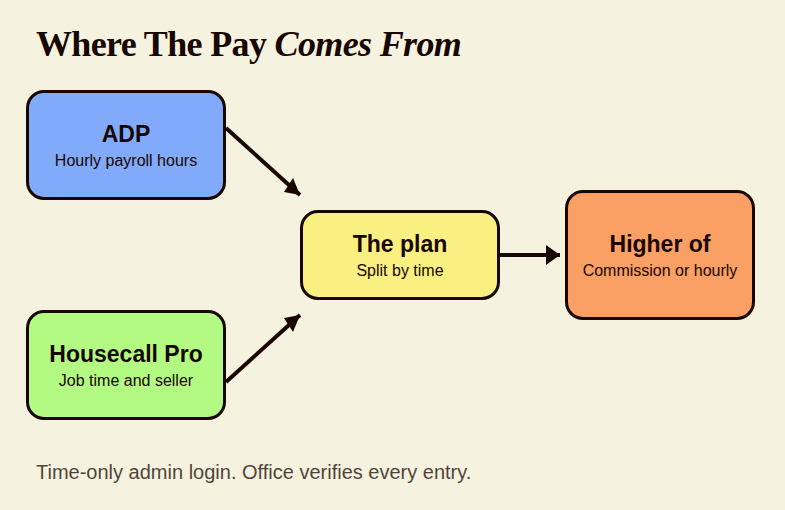
The company runs payroll through ADP and runs every job through Housecall Pro. Technicians have been paid hourly. The goal is to move the three lead techs onto commission, keep helpers on hourly pay, and make sure nobody takes home less than they would have earned under the old system. That last requirement matters more than most owners expect, and we will come back to it.
The Problem: Sold Revenue and Completed Revenue Are Two Different Things
On a small plumbing crew, the tech who diagnoses the problem and writes the estimate is often not the only person who turns wrenches on the job. A repipe might start with one plumber, continue with a second, and wrap up with a third after a parts run. If commission goes entirely to whoever is listed on the invoice, the people who did most of the work watch someone else collect. If commission goes entirely to whoever is on site, the person who found the work has no reason to sell it.
Most companies pick one side and live with the resentment. This company decided to pay both sides, which meant tracking two separate kinds of credit: sold credit for the technician who sold the work, and completion credit for the technicians who did it.
Two data problems stood in the way. First, Housecall Pro has an Add Seller feature, but the team was not sure the sold-by field could be pulled through its API. Second, technicians were not entering start and end times reliably. Some timers auto-stopped, some showed totals that were clearly off, and the office was correcting entries by hand. A plan that splits revenue by time on the job is only as fair as the clock behind it.
Payroll added a third wrinkle. ADP has no third-party integration for this kind of setup, so getting hours into the plan requires a dedicated time-only admin login and an automated tool that pulls them in, rather than someone retyping numbers every week. Small companies tend to underestimate this part. The percentages take an afternoon to decide; the plumbing behind them takes weeks.
A Plumbing Commission Structure Built on a 22% Pool: 5% for the Seller, 17% for Completion
The working proposal sets the total commission pool at 22% of job revenue. That compares with 18% in the company's original setup and an 18% figure often used as an HVAC benchmark, so the plumbing pool is intentionally richer. Inside the 22%, 5% goes to the seller and 17% goes to the technicians who complete the work.
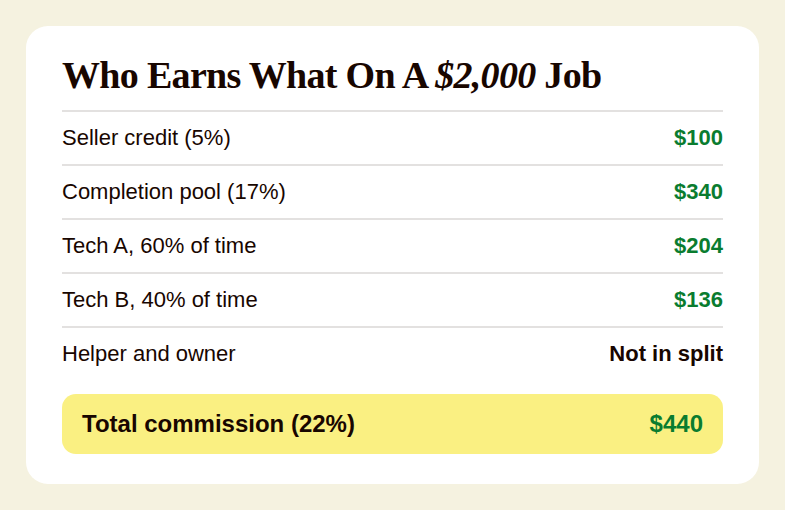
Completion credit is divided by tracked time on the job. If two technicians work a job and one logs 60% of the hours, that technician earns 60% of the 17% completion share. Helpers and the owner are excluded from the split, which keeps the math clean and keeps the pool from leaking to people who are not on the plan. Here is the arithmetic on a $2,000 job, using illustrative numbers:
- Seller credit: 5% of $2,000 = $100
- Completion pool: 17% of $2,000 = $340
- Tech A logged 60% of the time: $204
- Tech B logged 40% of the time: $136
The team also looked at a second way to frame the same money: giving the seller 30% of the pool and the technicians 70%, split by time. Both framings land in similar territory on a typical job. The 5% and 17% version is the working proposal, and it has one practical advantage: both numbers are percentages of revenue that a tech can check against an invoice without doing any extra math.
Whichever Is Higher: The Safety Net That Makes Commission Easier to Accept
Every week, the plan compares what a technician earned on commission with what that technician would have earned hourly, and pays the higher of the two. Nobody takes a pay cut for trying the new plan. A slow week or a run of low-ticket calls does not punish a tech who showed up and worked, and the owner keeps the upside of a plan that rewards production.
Here is how a pair of weeks might look for one technician, again with illustrative numbers. In week one, the tech logs 40 hours at $25, which is $1,000 hourly, and earns $1,180 in commission, so the commission amount is paid. In week two, the same tech logs 40 hours and earns $860 in commission, so the $1,000 hourly amount is paid instead. Over the two weeks the tech never dips below the old pay, and the good week is worth a real premium.
The greater-of rule also gives the company a way to test whether the target is realistic. Using an example rate of $25 an hour, the team is analyzing actual hours and revenue to recommend hourly rates by technician level, then adjusting the commission ratio if the numbers show the plan is either too easy or out of reach. If the hourly floor wins most weeks, the commission target is probably too high. If commission wins every week by a wide margin, the pool may be too generous. A fire protection company describes the same trade-off in how it built a greater-of rule techs could trust.
Getting the Data Right Before Anyone Is Paid
Before a single commission check goes out, the company is putting its effort into data. Housecall Pro will supply per-job time, and technicians must enter accurate start and end times, with office staff verifying the entries. Seller credit will come from the sold-by field when it can be extracted. If it cannot, the fallback is a simple tagging habit: a job or estimate tag such as "Sold by" followed by the technician's name.
That fallback is worth borrowing. Tags are not glamorous, but a tag entered at the moment of sale is far more reliable than a report someone reconstructs at the end of the week. The same lesson shows up in a plumbing company that closed a $1,700 payroll gap by fixing when its data was captured, where timing mattered as much as the percentages.
Profit sharing
made simple.
Give your team a stake in the company’s success. ShareWillow helps you create and manage profit-sharing programs that motivate employees and drive business results.
The Result: A Plumbing Commission Structure Built to Be Checked
This plan is still at the build-and-validate stage, so there is no payout total to celebrate yet, and we would rather say that plainly than invent one. What exists is a structure with three numbers anyone can verify: a 22% pool, a 5% and 17% split, and a rule that pays the higher of commission or hourly. A review is scheduled for the first week of October to test the calculations against real jobs before any technician sees a dollar.
Three habits will decide whether the plan works. Time entries get verified weekly, not monthly. Sellers get tagged at the time of sale, not reconstructed later. And the greater-of comparison gets reviewed every month, so the owner can see whether commission or hourly is winning and adjust the ratio before the plan drifts. A team that does those three things can run the plan without arguing about it.
Companies mixing trades under one roof should also read about a multi-trade company that fixed a commission blind spot worth $76,000, because the same attribution gaps show up when plumbers and electricians share a job. Owners still deciding between pay models can start with the differences between incentives, commissions, and bonuses. Plumbing companies that want the split, the time tracking, and the weekly comparison handled automatically can see how ShareWillow's incentive tools work.
Frequently Asked Questions
What is a good commission percentage for plumbers?
It depends on how much of the work is sold versus performed, and on what the company pays for materials and overhead. This company is working with a 22% pool of job revenue, split 5% to the seller and 17% to the completing techs, and comparing it to hourly pay every week so the number can be tuned with real data.
Should helpers be part of a plumbing commission plan?
Not automatically. Here, helpers stay hourly and are excluded from the split, which keeps the pool focused on the three lead techs. If helpers take on real production work later, add them to the plan on purpose instead of letting them dilute the split by accident.
How do you split commission when two plumbers work the same job?
Divide the completion share by the time each person logged on the job. It only works when start and end times are accurate, so require the entries and have the office verify them before payroll closes.
Related reading
- How to Pay Plumbing Technicians: The Timing Fix That Closed a $1,700 Payroll Gap
- The Comp Plan Split That Took One Plumbing Technician to a $114,000 Month
- The Greater-Of Rule: How a Fire Protection Company Built Pay Techs Could Trust
- Incentives, Commissions, and Bonuses: What’s the Difference and Why It Matters
Conclusion
Split sold credit and completion credit, pay the higher of commission or hourly, and fix the data before the first check.
Create incentives
that
drive results
You shouldn't need complex equity plans to align your team. ShareWillow makes it simple to create transparent profit-sharing programs that motivate employees and grow your business.

Incentive plans to help
small businesses thrive.
.png)
"I was able to leverage the knowledge of the ShareWillow team to learn how other companies were designing their bonus plans. The template was extremely helpful."

Brian Tustin
Owner, First Rate Movers