Comfort advisor commission structure: how an HVAC company is replacing a 6% to 12% volume plan with pay tied to job margin, now 38% against a 50% goal.
If you are trying to work out a fair comfort advisor commission structure, the first plan most HVAC owners land on is a percentage of what the advisor sells, with the percentage rising as the year's total rises. It is simple, it rewards the people who sell the most, and it is exactly what an HVAC company we started working with this month has been running. Their comfort advisor earns a $20,000 salary plus 6% commission, and the rate climbs by half a point for every $500,000 sold until it caps at 12%.
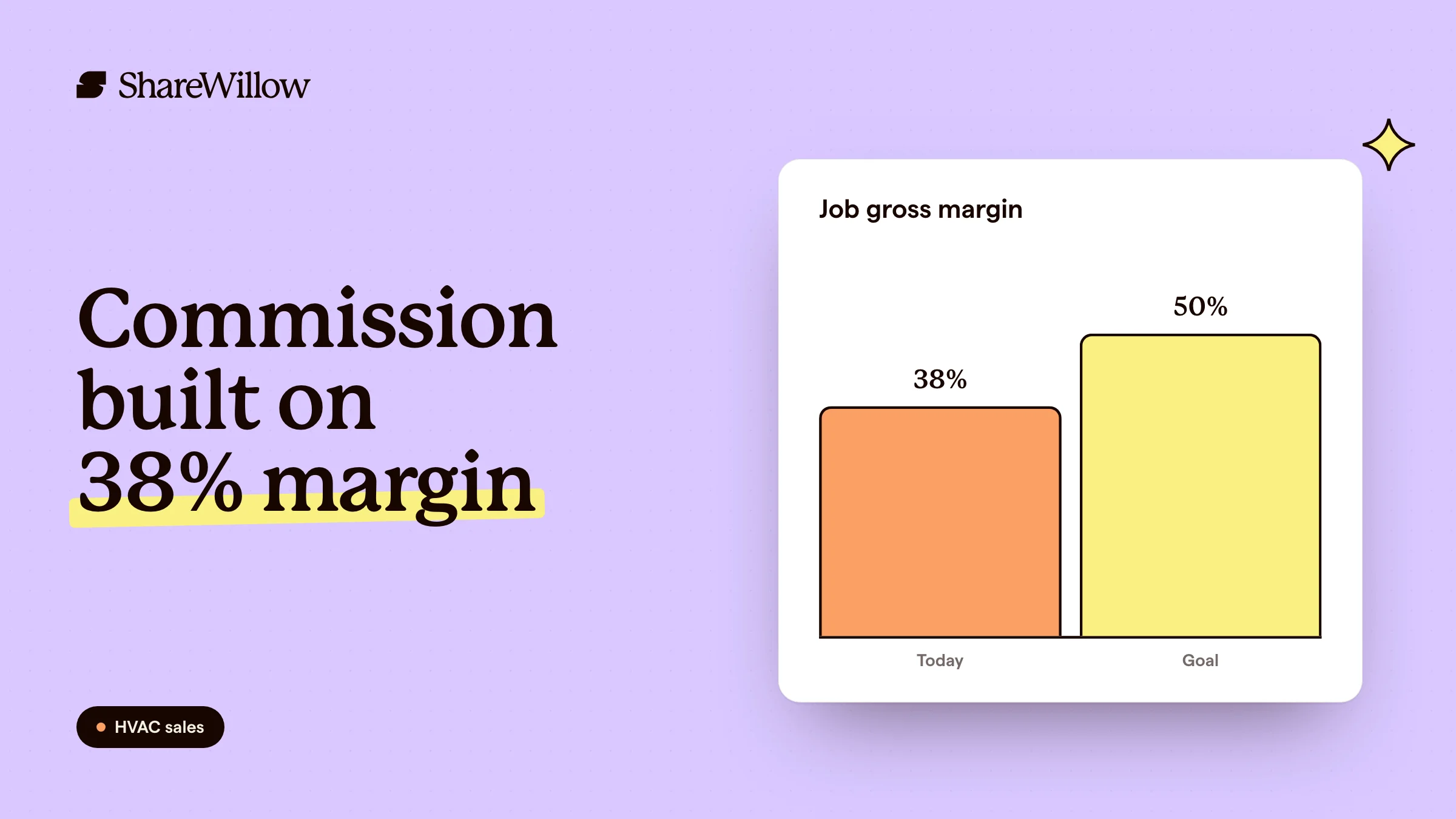
The plan does what it was built to do. The problem is what it was not built to do. The company's gross margin is sitting at 38%. Leadership considers 45% acceptable and wants to reach 50%. Nothing in a volume-based commission plan pushes in that direction, so the owners have asked for a replacement that ties the advisor's pay to how profitable each job is.
This is a plan-design story. The new structure is being built now, with a target of finishing the design by the end of November and running a shadow payroll next to normal payroll in December. There are no payout results to report yet. What the company does have is a clear picture of why the old structure stopped fitting, and a set of decisions that any owner paying a comfort advisor will recognize.
The Current Comfort Advisor Commission Structure: Salary Plus a Rate That Climbs With Volume
Here is the plan as it runs today:
- Base: a $20,000 annual salary.
- Starting commission: 6% of sold revenue.
- Escalator: the rate rises 0.5 percentage points for every $500,000 sold.
- Cap: 12%, which by that math arrives at $6 million in sales.
- Timing: commission is paid after the job is completed and the customer has paid, not when the contract is signed.
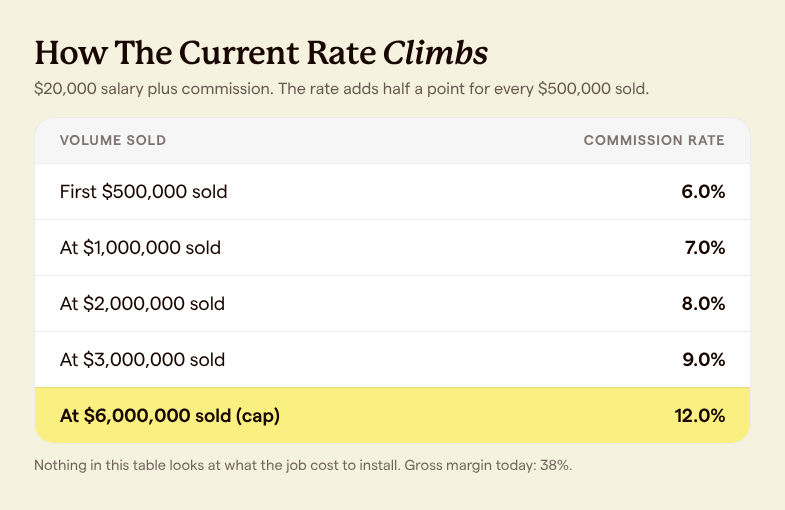
Two parts of that are worth keeping. Paying on completed and collected work means nobody earns commission on a job that cancels or never gets paid. And a rate that grows gives a strong seller a reason to keep pushing in the back half of the year.
The weak spot is that every input is a sales number. The plan knows how much the advisor sold. It does not know what the equipment cost, how many labor hours the install took, or whether a discount was needed to close.
Why a Volume-Based Plan Struggles at a 38% Gross Margin
When margin is healthy, paying on revenue is a reasonable shortcut. Revenue and profit move together closely enough that rewarding one rewards the other. At 38%, the shortcut starts to cost money, because the advisor and the company feel a discount very differently.
Take a simple illustration. These are example numbers, not this company's jobs. A system sells for $12,000 and costs $7,440 to install, which is a 38% gross margin and $4,560 in gross profit. At a 7.5% commission rate, the advisor earns $900. Now the same system closes at $11,000 after a $1,000 discount. The advisor's commission drops to $825. The company's gross profit drops to $3,560, and the margin on the job falls to about 32%.
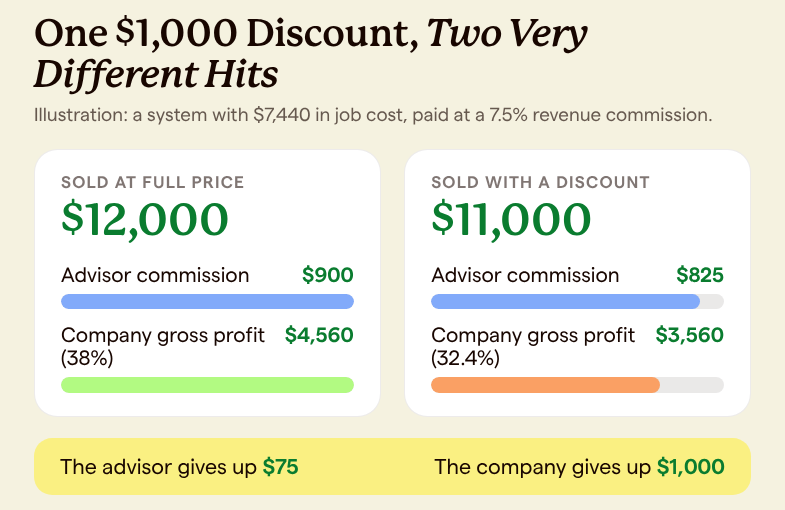
The advisor gave up $75 to close the deal. The company gave up $1,000. That is not a character flaw in the advisor. It is the plan working as written: in this example, a revenue commission makes a discount about 13 times cheaper for the seller than for the business.
The escalator adds a second pull in the same direction. Every extra dollar of sold volume moves the advisor closer to the next half point, so a thin job still helps the advisor's rate even when it hurts the company's margin.
The operations leader at this company had already been correcting for it by hand, sometimes reducing commission on a job based on how profitable it turned out. That is an honest fix, and it is also the kind that causes arguments. An adjustment the advisor cannot predict feels like a penalty, even when the reasoning is sound.
The same company saw a version of this problem in the field. When technicians were paid a flat 5% on the service work they sold, they drifted toward selling entry-level options, because a flat rate does not care which option the customer picks.
Three Ways to Tie Comfort Advisor Pay to Job Profit
The company has not picked its final structure, and the right answer will come out of testing real job history. But the options on the table are the same ones most HVAC companies choose from, and our guide to HVAC commission pay covers the wider tradeoffs.
- Pay on gross profit dollars instead of revenue. The advisor earns a percentage of what is left after equipment, materials, and install labor. A discount now costs the advisor in the same proportion it costs the company. The catch is that job costing has to be accurate and visible, or every payout becomes a debate.
- Keep paying on revenue, but set the rate by the job's margin. For example, a lower rate when a job finishes under 38%, a middle rate between 38% and 45%, and the top rates reserved for jobs at 45% and above. The advisor still thinks in sold dollars, which is familiar, and the rate does the steering. Another HVAC company we work with uses a simpler cousin of this, covered in our case study on sales commission on discounted jobs: 10% at the normal price and 8% when the price drops.
- Keep a base rate and add a margin kicker. Every job pays the same starting percentage, and jobs that clear a margin line earn extra on top. This is the gentlest change, since nobody's floor moves, only the upside. A door and install company took this route for its sales leader, with a sales manager commission structure built on a 1.25% override that scales with margin.
The 45% and 50% figures this company already uses give it natural breakpoints for any of the three. A structure that pays noticeably more at 45% and more again at 50% tells the advisor exactly which jobs the company wants, without a conversation about each one.
Fix the Commission Base Before You Fix the Rate
A margin-linked plan is only as good as the cost data behind it. Two details from this company's setup matter here.
Some costs live outside the field service software. Financing fees are tracked separately today, and job costing may need more setup before it is complete. If a customer finances a system and the dealer fee never reaches the job, the margin on that job looks better than it is, and a margin-based commission would overpay. Another company dealt with the same gap by defining exactly what comes out before commission is calculated, which we wrote up in commission on net revenue.
The advisor needs to see the math. Job and invoice data flows from the field service platform into the pay calculation, but the commission result does not get written back onto the job. So the advisor needs one place to see each job, its margin, the rate it earned, and the payout. Without that, a margin-based plan feels like the old hand adjustment with extra steps.
There is a workload reason to automate it too. Checking field incentives by hand already takes this company's managers about two days a month. A commission that depends on job margin would add to that pile if someone had to verify every job in a spreadsheet.
The Rollout: Design in November, Shadow Payroll in December
The company set a clear sequence, and it is a good one to copy:
- Design the plan options by the end of the month.
- Run them against historical jobs to compare what the current plan paid with what each option would have paid.
- Run a shadow payroll in December. Normal payroll goes out as usual while the new plan is calculated next to it, so nobody's check changes during the test.
- Adjust the rates based on what the comparison shows, then go live.
The shadow month should answer three questions. Does total commission cost land where the company can afford it? Does an advisor who sells healthy-margin jobs earn at least what they earn today? And which jobs pay less under the new plan, and are those the jobs the company wants fewer of? If the answer to the last one is no, the breakpoints are wrong, and it is far cheaper to learn that in a test than in a resignation letter.
The owners also want to revisit the $20,000 salary. That is worth deciding together with the rate, not after it. A low base with a high rate and a higher base with a lower rate can cost the same in a normal year and behave very differently in a slow one.
How to Review Your Own Comfort Advisor Commission Structure
- Write down your gross margin today and the number you want. This company's are 38% and 50%. The gap tells you how much steering the plan needs to do.
- List every input your current plan uses. If they are all sales numbers, the plan cannot protect margin.
- Price a discount from both sides. Run the $1,000 example above with your own rate and job cost.
- Pick one way to bring margin in: gross profit dollars, a margin-based rate, or a kicker. If you go with tiers, our guide to a tiered bonus structure explains how to set breakpoints people can actually reach.
- Shadow it for a month before anyone's pay changes.
If you want the comparison run automatically from your field service data, see how ShareWillow works for HVAC companies.
A commission plan answers one question for the person being paid: what does the company want more of? At 38% margin, the honest answer is not more volume. It is better jobs, and the plan should say so.
What is a typical comfort advisor commission structure?
Most HVAC companies pay comfort advisors either a salary plus commission or straight commission on sold revenue, often with a rate that rises as sales climb. The company in this article pays a $20,000 salary plus 6%, rising half a point per $500,000 sold to a 12% cap. Rates vary widely depending on whether the company supplies the leads and how much base pay is included.
Should a comfort advisor be paid on revenue or gross profit?
Revenue is simpler and works when margins are healthy and discounting is controlled. Gross profit, or a revenue rate that changes with job margin, is the better fit when margin is below target, because a discount then costs the advisor in proportion to what it costs the company. Either way, the job cost data has to be accurate.
When should comfort advisor commission be paid?
Paying after the job is installed and the customer has paid is the safest approach. It avoids clawbacks on cancelled jobs and keeps commission tied to money the company has actually collected. If the wait between sale and install is long, some companies pay part at the sale and the rest at completion.
More real examples
The same question comes up with other companies. Here is how a few of them answered it, with their numbers.
How an HVAC Company Is Paying 10% Normally and 8% When the Price Drops
Sales commission on discounted jobs: an HVAC company pays 10% on standard sales, 8% when the price drops, and splits tech-sourced leads 7% and 3%.
The company is small and busy: service technicians paid hourly, a handful of journeyman installers, and an office of two people who handle dispatch, payroll, and every plan spreadsheet. The owner is clear about what they do not want. They are not ready to move anyone to commission-only pay. They want the hourly base to stay, with incentives on top that people can actually read and trust.
Today the salesperson earns 10% on a standard sale. That number is simple, and simple is good. The weakness shows up the moment a customer asks for a better price. If the rep says yes, the company absorbs the whole hit. If the rep says no, the sale might walk. Neither choice has anything to do with what the rep earns, so there is no reason to care about margin.
Related reading
- Sales Commission on Discounted Jobs: How an HVAC Company Is Paying 10% Normally and 8% When the Price Drops
- Sales Manager Commission Structure: How a Door and Install Company Is Paying a 1.25% Override That Scales With Margin
- HVAC Inside Sales Commission: How One Company Fixed a September Report That Showed 31 New Memberships and Zero Renewals
- HVAC Commission Pay: How to Design a Plan That Drives Profit (Not Problems)
- Incentives, Commissions, and Bonuses: What’s the Difference and Why It Matters
Conclusion
A commission that only counts sold dollars cannot protect margin. Tie the rate to job profit, and test it on real history before it reaches a paycheck.
See what performance pay would pay your techs.
On a free call, we'll show you what your techs would earn for the great work they already do.
Book a free call
Ryan Shank is the founder of ShareWillow. Before ShareWillow, he spent 15 years building software for the trades and founded PhoneWagon, which CallRail acquired.