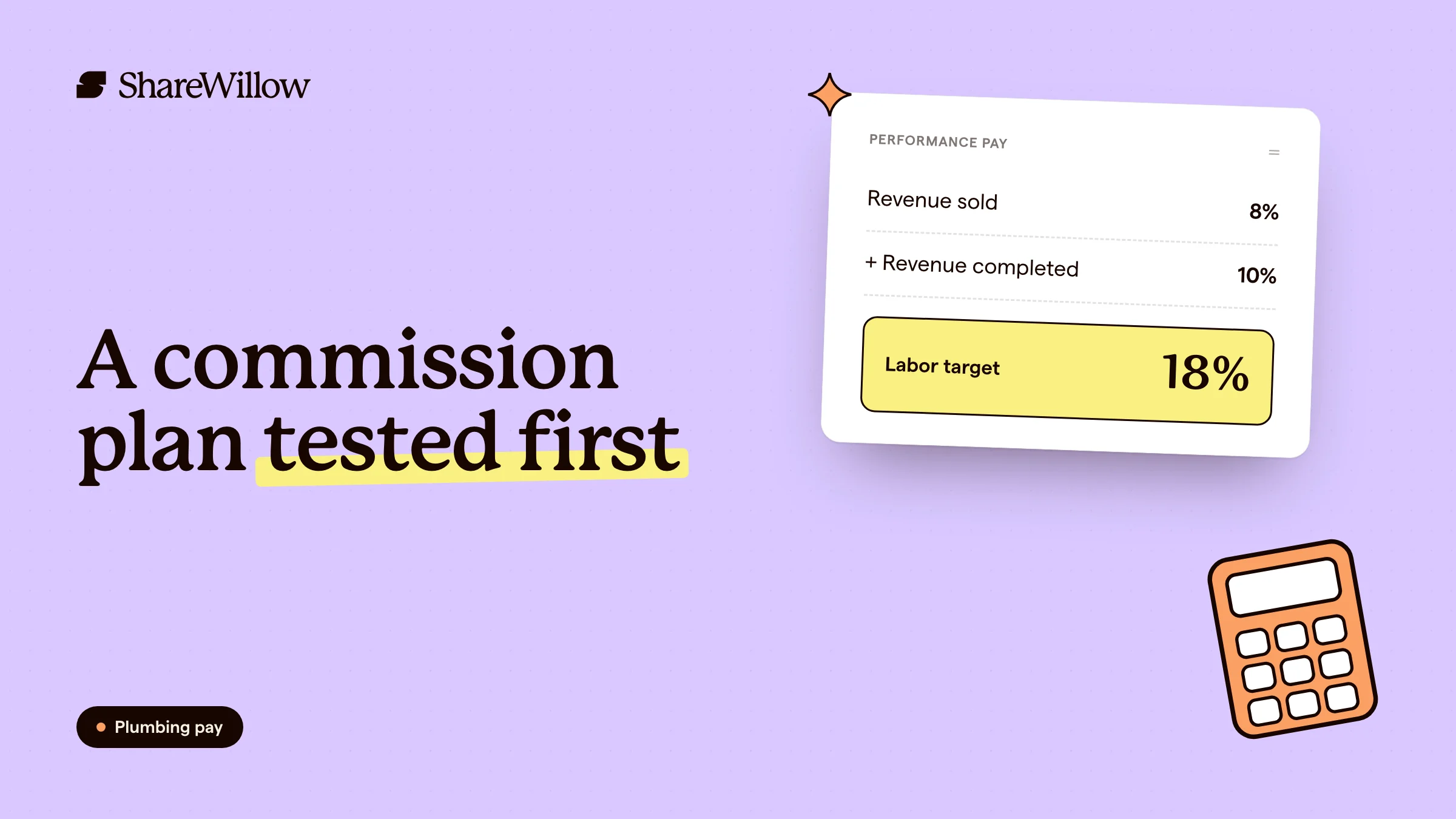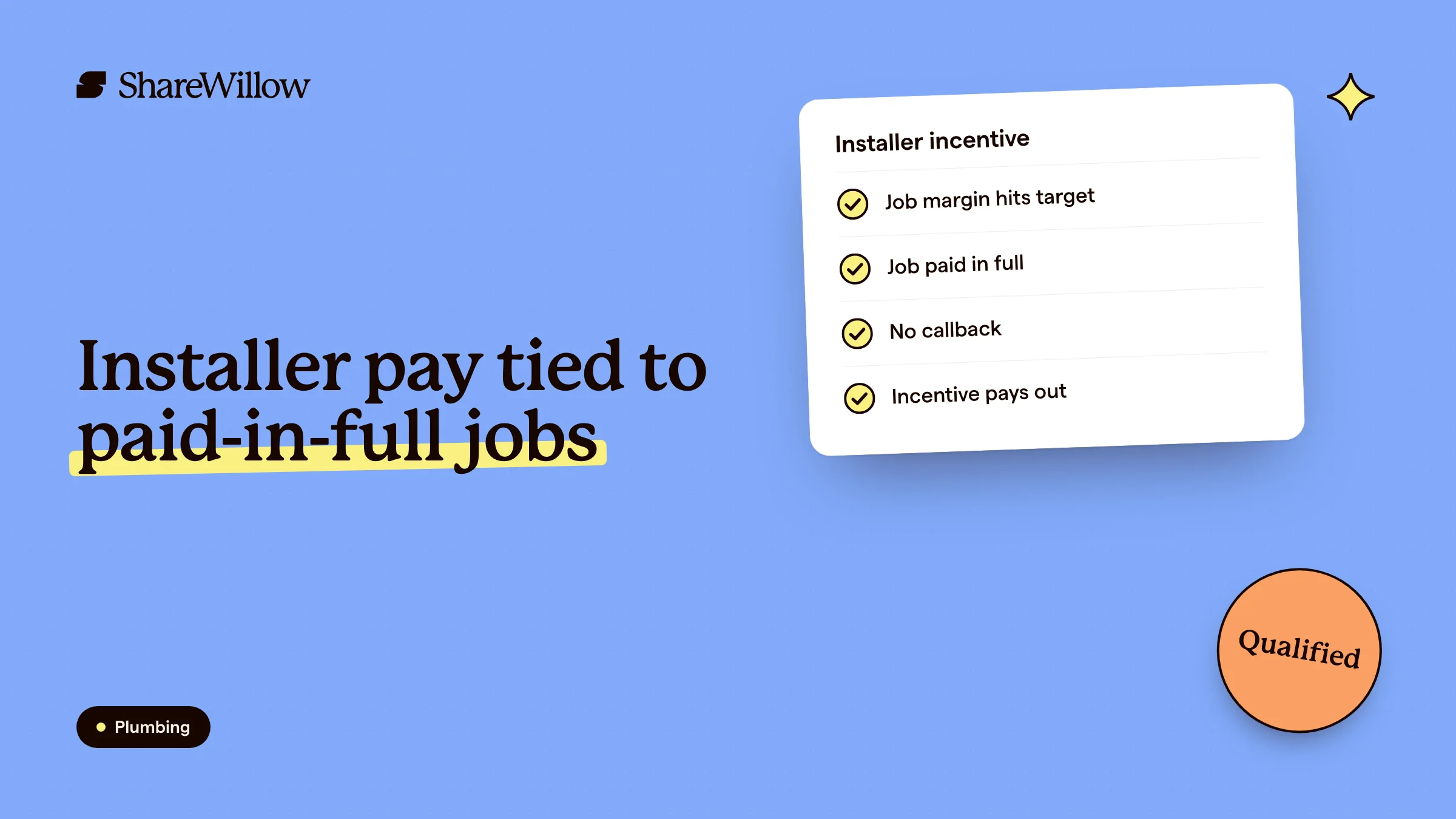
Plumbing installer pay: how a California plumbing company ties installer incentives to job margin and paid-in-full jobs, with callbacks as a qualifier.
Most conversations about plumbing installer pay start with an hourly rate and end with a vague promise of a bonus. A plumbing company in California sat down for a ShareWillow kickoff with a more specific question: how do you reward installers for revenue without paying out on jobs that lose money, never get collected, or come back as callbacks? The plan they are building has five people in scope, two hybrid sales technicians and three installers, and a handful of rules that any plumbing company could borrow.
This is a kickoff story, not a results story. The plans were still being configured when we talked, and about six weeks of past job data was about to be loaded to test them. There are no payout results to report yet. What is worth sharing is the design logic and the numbers the owner used to make decisions.
Where Installer Pay Starts: Hourly Rates and a Weekly Threshold
The company pays its sales technicians a base of $40 to $45 per hour, plus 10% of earnings after they pass $10,000 in a week. Installers earn roughly $30 to $40 per hour. The pay week runs Monday through Sunday, though the team mostly works Monday through Friday. Technicians clock their time to jobs in the company's field service software, which turned out to matter later.
The two roles work very differently. Sales technicians usually work alone. They diagnose the problem, present options, handle smaller same-day work, and sell the larger jobs that the install crew will do. Installers work in teams. That difference is the whole reason one plan will not fit both groups, a point we cover in how to pay a technician who works both install and service.
The Design Goal: Reward Installers Without Rewarding Bad Jobs
The owner wanted two things from the installer plan. First, installers should be rewarded for identifying more work: spotting an extra repair, writing up options, or bringing a sales technician back for a bigger sale. Second, the incentive should protect profitability. A plan that pays on revenue alone can make installers faster at jobs that barely clear their costs.
That led to a revenue-based installer incentive with a margin condition attached. The owner asked directly whether payouts could require a target margin, and the answer is yes. Another company took the same approach and funds a 2% bonus pool only on jobs above a set margin, as described in this electrical installer bonus plan with a 45% gross margin gate.
Using Labor Rate Targets to Set the Revenue Goal
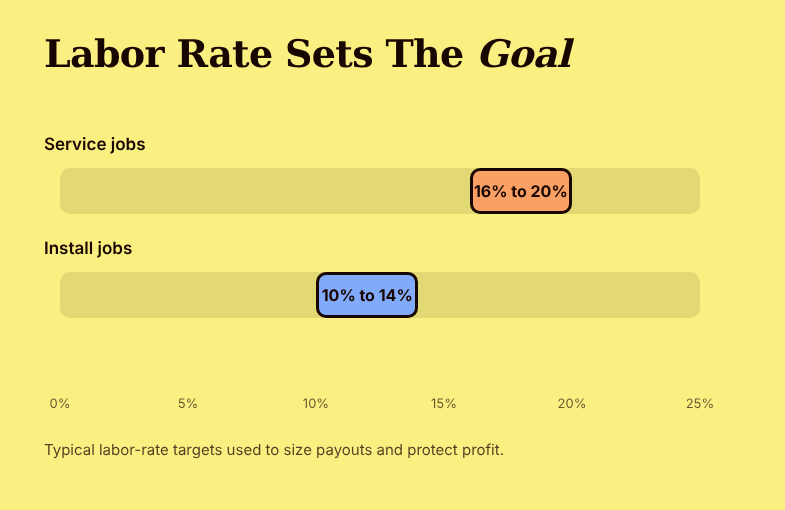
To set revenue goals without guessing, the customer success manager used labor-rate targets as the starting point. For service jobs, a typical target is 16 to 20% of revenue going to labor. For install jobs, it is lower, around 10 to 14%, because install work carries more material cost and the crew is larger.
The math is simple. If installer labor on a job should land near 12% of revenue, you can work backward from a technician's hourly cost to the revenue a crew needs to produce in a week to stay on target. Pay above that line, and you are subsidizing the job. Pay below it, and you have room to share the upside. If you want to practice the arithmetic yourself, our guide on how to calculate bonus pay walks through it step by step.
Only Pay on Jobs That Are Finished and Paid in Full
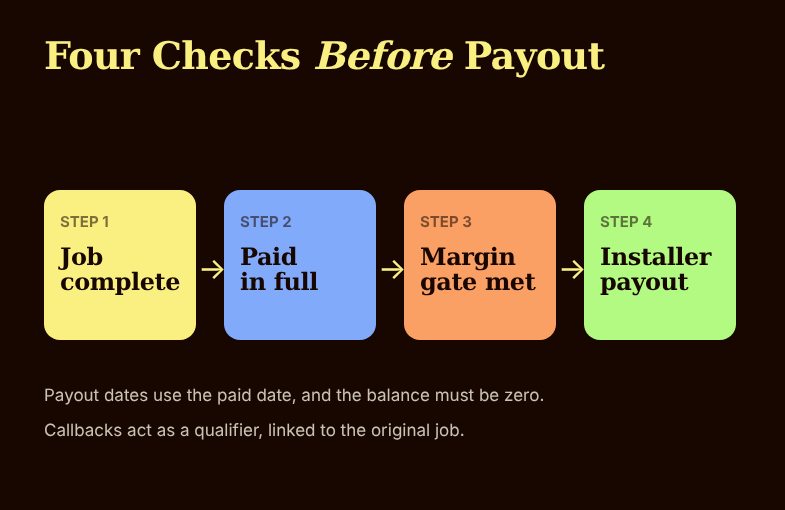
The company already paid incentives only on work that was both completed and paid for. The new plan makes that rule explicit and mechanical. Payouts use the paid date, and the job must show a zero balance. That prevents the classic leak where an installer is paid on a job the customer never settles.
It also changes how weekly totals read. A job finished on Friday and paid the next Wednesday counts in the week it was paid, not the week it was finished. That can surprise technicians the first time they see it, so it is worth explaining before the first payout. For a real example of what happens when a company does not set this rule early, see the story of completed date versus paid date and $6,600 in open balances.
Splitting Revenue When a Crew Includes Helpers
Fairness was the owner's biggest worry. If an installer team includes a lead and a helper, splitting job revenue evenly feels wrong to the lead and generous to the helper. Two inputs can fix that. Time records show how many hours each person actually logged on the job, and technician levels, such as apprentice or lead, can weight the share. The plan will start with those two inputs and adjust after the data is in.
This is the same problem solved in a plumbing comp plan that split service and install credit, and it applies to any company where more than one person touches a sale.
Callbacks in California: A Qualifier, Not a Deduction
Because the team is in California, callbacks cannot be deducted from plan payouts. The owner needs a way to hold installers accountable for quality without docking pay. The approach discussed was to use callbacks as a qualifier. An installer who has too many callbacks would not qualify for the incentive in that period, and every callback is linked to the original job so responsibility is clear.
Callbacks are marked in the company's software when the call is booked, but the technician who handles the return visit varies, so the link back to the original job is what makes the qualifier fair. Wage rules differ by state, so check with an employment professional before you add any callback rule. For a different way to handle callbacks, read about a free weekly callback allowance.
What the Owner Chose Not to Incentivize
It was also a design choice to leave things out. The owner is unhappy with the current membership program and wants to revise it, so membership sales will not carry an incentive for now. The plan will track sales conversion rate for visibility only, with no payout attached. That is a sound instinct. Paying people to sell something you plan to change creates exactly the confusion you were trying to avoid.
Review rewards are handled in a separate review tool today. The team will check whether that data can be pulled into the plan automatically, and until then reviews will stay where they are. Not every metric has to go in on day one.
How the Company Will Test the Plan Before Launch
The next step is a backfill. The customer success manager will map the agreed metrics to the company's field service data, sync the technician list, and load roughly six weeks of past jobs. Then comes the comparison: modeled payouts under the new plans against what people were actually paid. Where the two disagree, the plan gets adjusted before anyone sees a real check.
Once the plans look right, the team will walk technicians through the structure so they can see how their pay is calculated. If you want to see how a platform presents those payouts to each person, take a look at the ShareWillow product features.
What to Take From This
- Set the installer revenue goal from a labor-rate target, not from a gut feeling.
- Attach a margin condition so installers are paid on profitable jobs only.
- Pay on the paid date, and require a zero balance.
- Split crew revenue with logged time and technician level.
- Where pay deductions are restricted, use callbacks as a qualifier and link each one to the original job.
- Backfill past data and compare before you launch.
None of these rules are exotic. What makes them work is writing them down before the first payout, so every installer reads the same plan.
How should you pay plumbing installers?
A common structure is an hourly base plus an incentive tied to job revenue, with a margin condition so installers are only rewarded on profitable work. Pay on completed jobs that are fully paid, and split team jobs using logged hours and technician level.
What labor rate should a plumbing install job target?
A typical range is about 10 to 14% of job revenue for install work and 16 to 20% for service work. Your own numbers will differ, so use these as a starting point and test them against past jobs before you set a plan.
Can you deduct callbacks from a plumber's pay?
It depends on your state. In California, callbacks generally cannot be deducted from earned pay, so many companies use callbacks as a qualifier for a bonus instead. Confirm the rules with an employment professional before you apply them.
Related reading
- Electrical Installer Bonus Plan: How a Contractor Funds a 2% Pool Only on Jobs Above a 45% Gross Margin
- HVAC Installer Bonus: How One Company Set $300 to $1,000 Awards by Job Type Before Its First Payout
- When to Pay Technician Commission: Completed Date vs. Paid Date, and the $6,600 in Open Balances That Forced the Question
- The Comp Plan Split That Took One Plumbing Technician to a $114,000 Month
- Performance-Based Pay: Definition, Benefits, Challenges & Tips
Conclusion
Pay installers on jobs that are finished, paid in full, and profitable, and treat callbacks as a qualifier you can defend instead of a deduction you cannot.
See what performance pay would pay your techs.
On a free call, we'll show you what your techs would earn for the great work they already do.
Book a free call
Ryan Shank is the founder of ShareWillow. Before ShareWillow, he spent 15 years building software for the trades and founded PhoneWagon, which CallRail acquired.